
Unbiased headlines. Facts, not spin.
Every story is an unbiased news briefing written from 110+ sources across the spectrum — sources linked so you can verify it yourself.
 economy
Notable (5/10)
May 27, 2026 at 06:23 PM
economy
Notable (5/10)
May 27, 2026 at 06:23 PM
Boeing Clears FAA Hurdle to Boost 737 MAX Production to 47 Per Month — Still Has a Long Way to Go
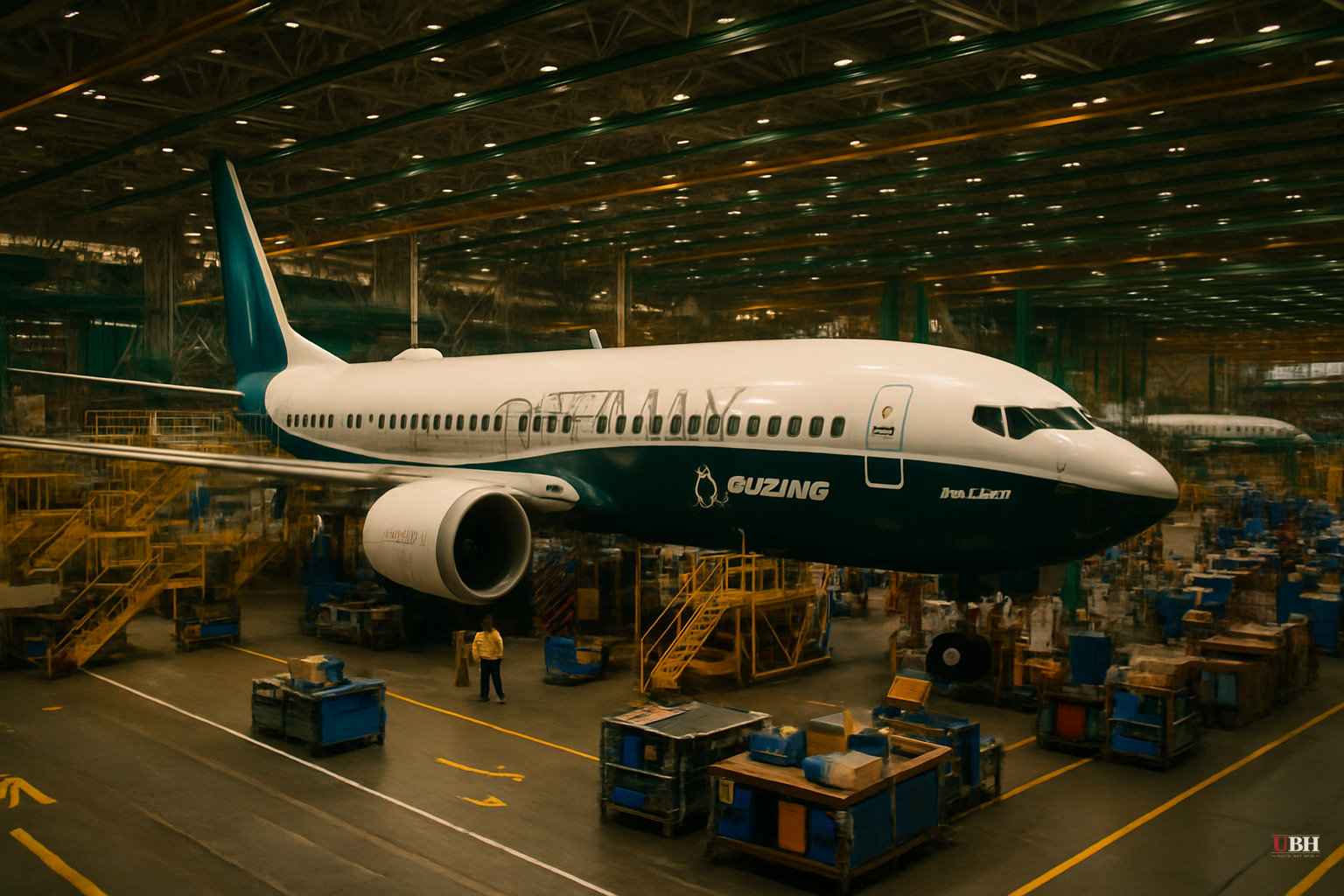
Boeing Gets the Green Light — For Now
Boeing CEO Kelly Ortberg announced Wednesday at a Bernstein conference that the company has passed the FAA's capstone review to raise 737 MAX production to 47 aircraft per month, up from the current rate of 42. According to CNBC, Ortberg said Boeing is "highly confident" it can hit that mark, likely within "a couple months" once the line stabilizes.
The move signals regulatory progress. But the broader recovery story is more complicated than recent headlines suggest.
How We Got Here
Boeing didn't reach 42 per month through smooth operations. It dug out of a hole it created.
In January 2024, a door plug blew out of Alaska Airlines Flight 1282 — a 737 MAX 9 — mid-flight. No one died, but it could have been catastrophic. The FAA responded by capping Boeing's production at 38 aircraft per month and stripping the company of its self-certification authority for airworthiness. That's a privilege the FAA doesn't revoke lightly.
According to Air Data News, Boeing was only cleared to move from 38 to 42 per month in October 2025, after the FAA conducted extensive inspections of Boeing's Renton, Washington assembly lines. The agency kept on-site oversight in place even as it lifted the cap, according to Aerotime. This was supervised oversight, not a full restoration of trust.
The Numbers That Actually Matter
Boeing carries $53 billion in debt, according to Air Data News. The company has not been profitable, and analysts had not expected a return to profitability until 2026 at the earliest.
To buffer against supply chain chaos, Boeing has stockpiled $11 billion in materials.
Ortberg's production roadmap goes like this: 42 now, 47 within months, then 52, and eventually a target of 63 per month. For reference, Boeing was hitting 57 per month before the MAX disasters. Ortberg himself admitted the company cannot currently sustain 57 with its current safety and quality processes.
What Mainstream Coverage Is Missing
Most business coverage is treating this as a clean recovery story. The reality is more fraught.
First, Boeing still hasn't secured FAA certification for two key variants: the 737 MAX 7 and the 737 MAX 10. These aren't minor details. Airlines have orders waiting on these planes. According to Air Data News, Boeing plans to dedicate an entire Everett assembly line to the MAX 10, but without certification, those planes remain grounded.
Second, Spirit AeroSystems — the Wichita, Kansas supplier that builds 737 fuselages — remains a critical vulnerability. According to Aerotime, both Boeing and Spirit have experienced component shortages and rework delays under FAA monitoring since 2024. Ramping production only works if your supply chain ramps with you. Spirit has had its own quality problems.
Third, Boeing still has a backlog of more than 4,600 unfilled 737 MAX orders, according to Aerotime. The demand is real, but it also means Boeing has been failing its airline customers for years. Delivery bottlenecks were not expected to meaningfully ease until 2026.
Ortberg's Candor
Ortberg has been more straightforward than his predecessors. He's not pretending the company is fine. He acknowledged Boeing has "work to do" on the path from 47 to 52 per month, and he noted that process alone could take at least six months, with the 47-rate projected to go live around July or August 2025.
"I think the whole world's watching to make sure we make 47 and 52," Ortberg said, according to CNBC. That's an unusually honest thing for a CEO to say publicly.
But Ortberg inherited this mess. The executives who presided over the MAX 8 crashes in 2018 and 2019, the 787 production nightmares, and the January 2024 door plug incident are largely gone. The bill — in debt, lost market share, and regulatory distrust — remains.
What This Means for Airlines and Passengers
If you fly, this matters. Boeing's production failures have contributed to aircraft shortages that give airlines cover to keep ticket prices elevated. Airbus has been eating Boeing's lunch for years now, and a duopoly where one competitor is weakened is not good for consumers.
Airlines waiting on MAX deliveries have had to extend leases on older planes, delay fleet upgrades, and in some cases cancel routes. The faster Boeing can reliably deliver certified aircraft, the better the competitive pressure on fares.
But "reliably" is the key word. Boeing has made promises before. The FAA is still watching. The supply chain is still fragile. A $53 billion debt load doesn't disappear because the stock ticked up on a conference call.
The proof will be in the planes delivered, not the speeches.
Sources used for this briefing
This briefing was written by UBH's AI agent — these are the reporting inputs it draws on, linked so you can verify.


