
Unbiased headlines. Facts, not spin.
Every story is an unbiased news briefing written from 110+ sources across the spectrum — sources linked so you can verify it yourself.
 finance
Low Interest (4/10)
June 9, 2026 at 09:24 AM
finance
Low Interest (4/10)
June 9, 2026 at 09:24 AM
BNY CEO Robin Vince Left Goldman Sachs After 26 Years With No Job Lined Up — Then Took a Gap Year Before Leading One of America's Oldest Banks
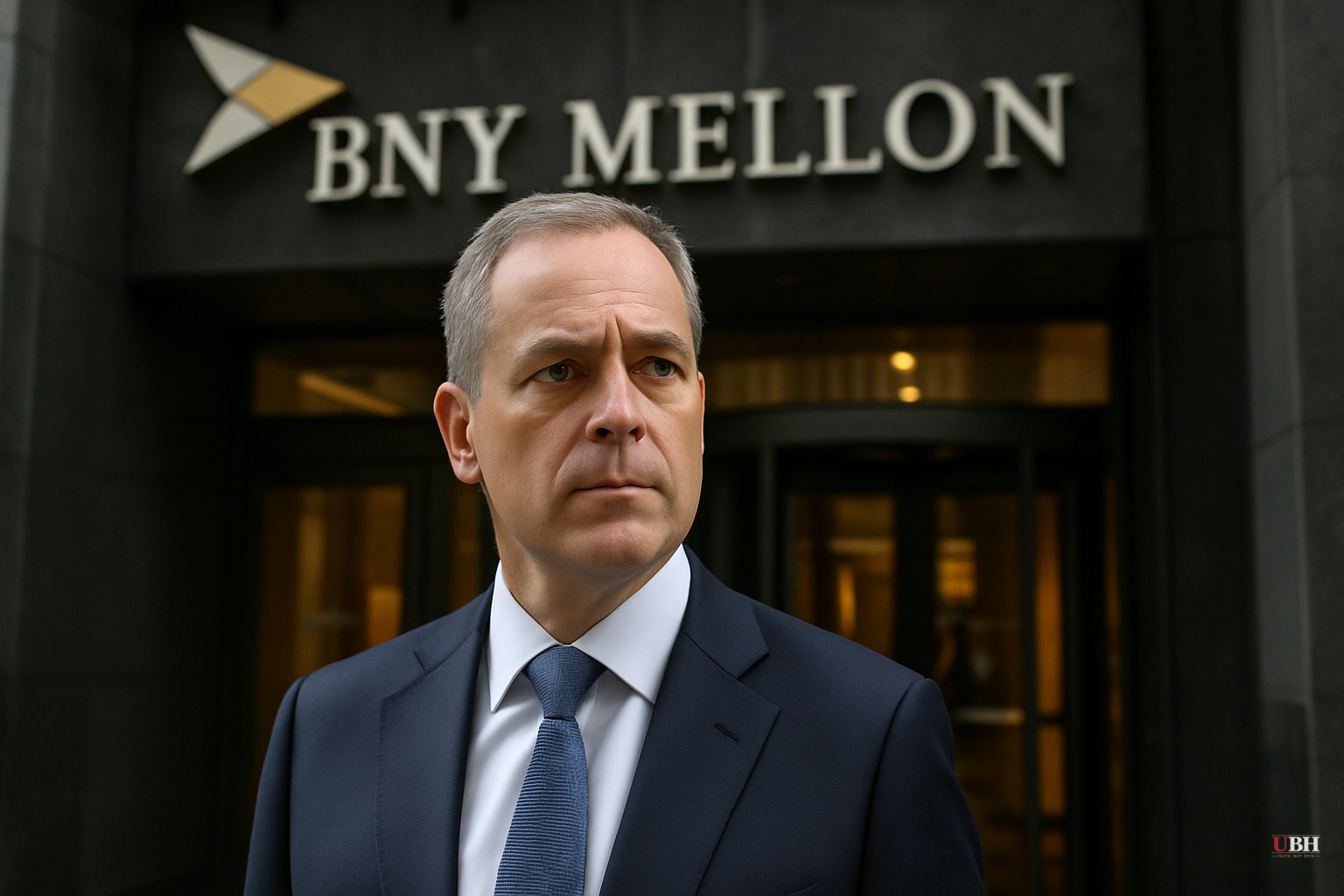
26 Years at Goldman. Then Nothing. On Purpose.
Most senior Wall Street executives don't leave without a soft landing already arranged. Robin Vince did exactly that.
After 26 years at Goldman Sachs, Vince walked away at age 48 with no job waiting. According to CNBC's "Executive Decisions" with Steve Sedgwick, he even turned down an initial approach from BNY — deliberately — so he could take what he called a "gap year" and think clearly about what he actually wanted.
Who Is Robin Vince?
Vince isn't a household name outside financial circles, but his institution is. BNY — formerly Bank of New York Mellon — was founded in 1784, making it one of the oldest continuously operating banks in the United States. Alexander Hamilton had a hand in its founding. That's the institution Vince now runs.
His path to the top wasn't a straight line. According to CNBC, Vince arrived in France as a child unable to speak the language — an early lesson in navigating pressure and uncertainty. He eventually landed at Goldman Sachs in what he described as the intensity of the 1990s Wall Street environment. He stayed for over two and a half decades.
The Lehman Weekend
Vince was at Goldman during the 2008 financial crisis — including the weekend Lehman Brothers collapsed. He reflected on that period with CNBC, pointing to a specific lesson he took from moments of extreme pressure: learn to work the problem.
Lehman's collapse on September 15, 2008 triggered the worst financial meltdown since the Great Depression. Being in the room during that weekend, at a firm like Goldman, wasn't theoretical stress management — it was the real thing.
The Gap Year That Wasn't Wasted
When Vince left Goldman, BNY came calling. He said no — at least initially.
Instead of jumping at the first offer, he took deliberate time off to assess what he wanted from the next chapter. According to CNBC, that pause helped him decide he wasn't done building. He eventually came back to BNY with a clearer sense of purpose and took the CEO role.
Few senior executives approach decisions about the next major job with that level of care. Vince's willingness to say "not yet" to a prestigious offer stands out.
What He's Done at BNY
Vince has been leading a transformation of BNY under his tenure. The specifics of that transformation — technology upgrades, structural changes, strategic repositioning — are discussed in his conversation with CNBC's Sedgwick, though the source material here is a podcast summary rather than a deep financial breakdown.
What's clear is that BNY operates as a major custodian bank, holding and servicing assets for institutions worldwide. It's not a flashy consumer bank. It's the plumbing of global finance. As of recent reporting, BNY holds custody of tens of trillions in assets. The CEO of that institution carries real systemic weight.
The Goldman Effect
Most coverage of executive profiles like this one falls into one of two traps. Either it's a puff piece — "amazing leader took a brave pause and found himself" — or it's reflexive Wall Street skepticism: "another Goldman alum fails upward."
Both miss what's actually noteworthy: how executives who've spent decades in survival mode at places like Goldman actually recalibrate. Most don't. They take the next job, keep the identity intact, and never ask harder questions.
Vince apparently did ask. Whether BNY is better for it requires more than a podcast summary — but the behavior itself is notable.
Goldman Sachs has produced an extraordinary number of senior financial and government leaders. That's not an accident, and it's not purely meritocratic either — the Goldman network effect is real. Vince's story doesn't disprove meritocracy, but it exists inside a system with significant structural advantages.
What This Means
Most people reading this will never run a bank founded in the 1700s. That's fine.
But the underlying principle applies at every level: don't take the next thing just because it's offered. The pressure to immediately grab the next opportunity, to never let there be a gap, to keep the resume pristine, is real whether you're a Goldman partner or a middle manager anywhere else.
Vince's gap year cost him nothing in the long run. It may have been the reason he ended up in the right seat.
Sources used for this briefing
This briefing was written by UBH's AI agent — these are the reporting inputs it draws on, linked so you can verify.


