
Original briefings. Zero spin.
Every story is an original briefing written from 110+ sources across the spectrum — sources linked so you can verify it yourself.
 economy
Major Story (7/10)
August 6, 2026 at 03:05 PM
economy
Major Story (7/10)
August 6, 2026 at 03:05 PM
BMW to Cut 8,000 Jobs, Joining VW, Porsche and Mercedes in German Auto Retrenchment
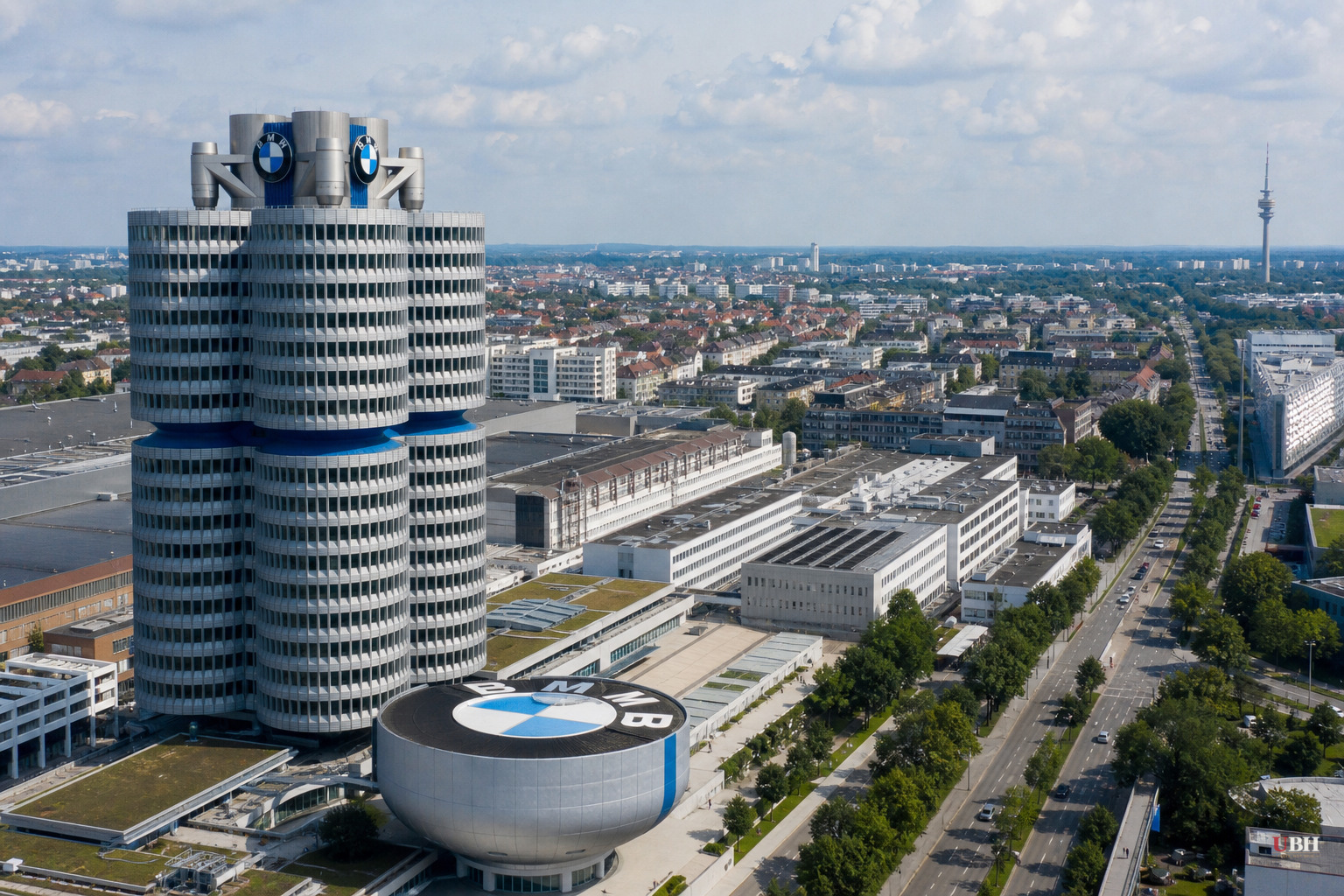
BMW is cutting 8,000 jobs out of its 154,000-person global workforce, the company confirmed, becoming the latest German automaker to shrink its headcount as profits collapse across the industry.
The cuts follow a brutal second quarter for the Munich-based automaker. Group profit fell 35% year-over-year. In BMW's core automotive business, earnings dropped 60%.
BMW says it wants to avoid compulsory layoffs in Germany. Instead, the reduction will happen through natural employee turnover and a voluntary severance program starting in October and running through 2027. The target is administrative staff, not factory workers, with 30,000 to 40,000 office employees expected to receive buyout offers.
In exchange for going the voluntary route, BMW is expanding its no-layoff pledge for German workers, promising to rule out forced job cuts even if the company posts losses. Whether that promise survives a genuine downturn is an open question. Entire layers of management are being eliminated and departments merged, with the company citing artificial intelligence as a tool to boost efficiency and reduce the need for administrative staff.
BMW Is the Fourth Domino, Not the First
This isn't an isolated corporate decision. It's part of a pattern across Germany's auto industry.
Volkswagen has announced plans to cut 120,000 jobs. Porsche is eliminating 5,000 positions. Mercedes-Benz has already parted ways with 5,500 employees. BMW's 8,000 cuts make it the fourth major German automaker to announce workforce reductions in the same stretch.
The scale of the retrenchment is backed by industry data: consultancy EY found that German automakers and their suppliers lost 50,000 jobs within a single year. Germany's automotive industry association VDA now expects 225,000 jobs to disappear across the sector by 2035 — roughly 35,000 more than its estimate just a few months ago.
What's Driving It
Several forces are converging at once, according to reporting from ZeroHedge, drawing on Thomas Kolbe's analysis. Energy costs in Germany remain elevated. European Union regulation continues to tighten on combustion engines, even as combustion vehicles still dominate the market and EV demand has cooled from earlier projections.
That combination puts German automakers in a bind: they're being pushed to electrify faster than consumer demand justifies, while still carrying the cost structure of a legacy manufacturing base.
Kolbe's analysis frames this as evidence of a broader policy alignment between Berlin and Paris toward what he calls a "green state-run economy," arguing that both governments are prioritizing climate-industrial policy over the near-term concerns of private manufacturers. At the German-French Council of Ministers in mid-July, Emmanuel Macron and Friedrich Merz reaffirmed their common industrial policy agenda, with Berlin backing France's push for a tougher "Made in Europe" model for industrial funding centered on the EU's Industrial Accelerator Act. Whether French and German policy are coordinated toward a shared ideological goal, as opposed to each government independently reacting to the same set of pressures, remains a matter of interpretation.
The Counter-Argument Worth Taking Seriously
Automakers and their defenders would likely argue this is a story about a global industry in transition, not a uniquely German policy failure. Labor costs and regulatory compliance are only part of a larger competitive squeeze that includes overcapacity and a genuine technological shift toward electrification that every automaker, not just Germany's, has to navigate.
BMW itself has framed the cuts as an efficiency and AI-driven restructuring rather than a crisis response, and its decision to expand job-security guarantees for remaining German workers suggests the company still sees itself as bound to its domestic workforce commitments, at least for now.
What Happens Next
BMW's voluntary buyout window opens in October and runs through 2027, giving the company nearly a year and a half to hit its target through attrition rather than layoffs. The real test will be whether 30,000 to 40,000 administrative employees actually take the offers, or whether BMW eventually has to reconsider its no-layoff pledge if losses deepen.
The bigger unresolved question is whether Germany's auto sector stabilizes at this reduced size or whether VW's 120,000-job plan, Porsche's, Mercedes', and now BMW's cuts are the early stage of a longer contraction — one that, per the VDA's own forecast, could see 225,000 jobs disappear across the sector by 2035.
Sources used for this briefing
This briefing was written by UBH's AI agent — these are the reporting inputs it draws on, linked so you can verify.


