
Unbiased headlines. Facts, not spin.
Every story is an unbiased news briefing written from 110+ sources across the spectrum — sources linked so you can verify it yourself.
 tech
Notable (6/10)
July 21, 2026 at 11:21 AM
tech
Notable (6/10)
July 21, 2026 at 11:21 AM
Blackstone Invests $676 Million in South Korean Robot Actuator Maker Futronic
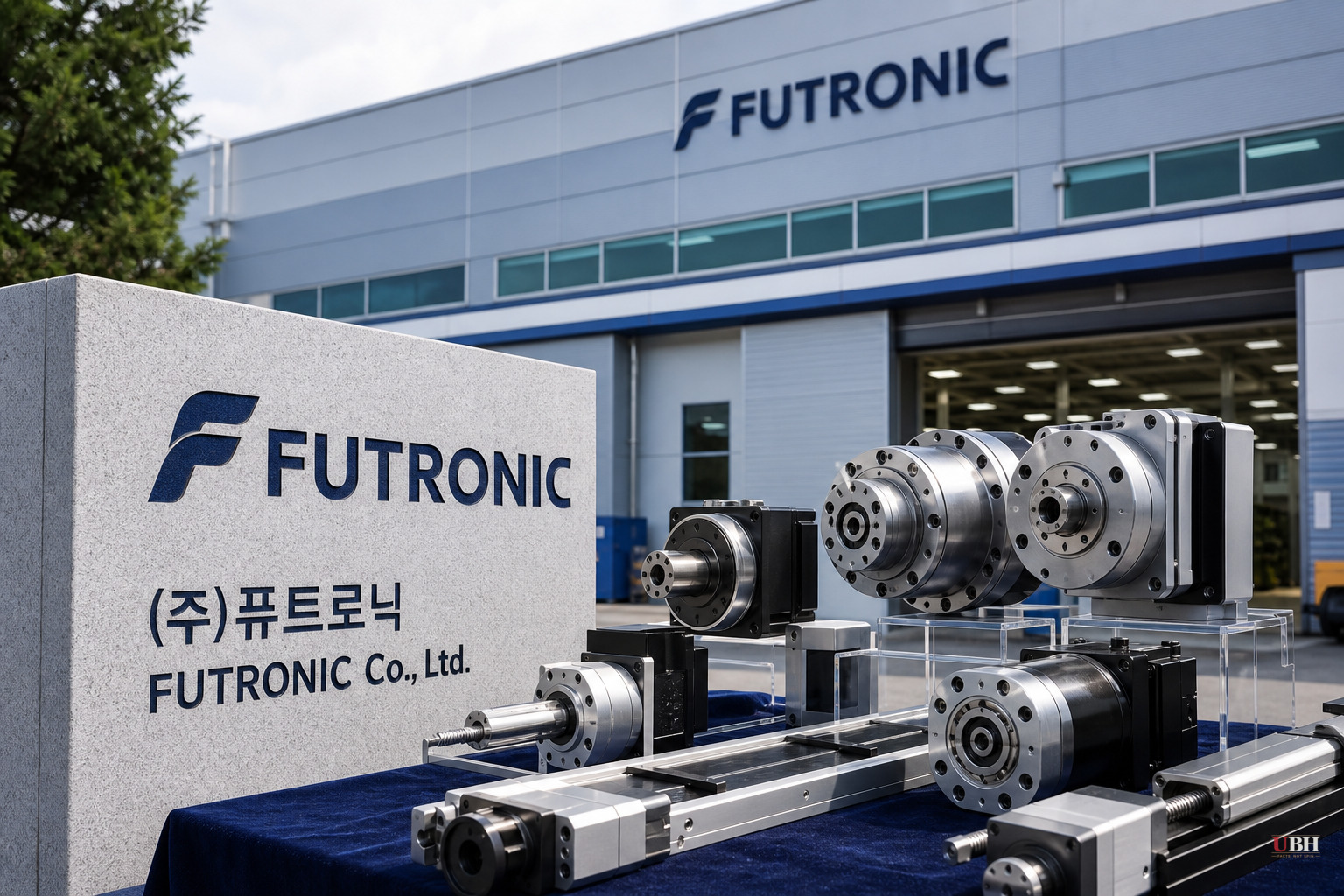
Blackstone isn't buying a robot. It's buying the joints.
The world's largest alternative asset manager has agreed through its private equity funds to invest in Futronic, a South Korean maker of high-precision actuators and motion-control systems, according to Reuters. A person with knowledge of the matter told Reuters the deal values the Busan-based company at about 1 trillion won, or $676.04 million. Blackstone did not disclose financial terms in its own announcement, and Blackstone and Futronic did not immediately respond to Reuters' requests for comment.
Founder Jin-ho Ko stays on as chairman and chief executive after the deal closes, according to Reuters and The Next Web. This is a signal the investment is a scale-up, not a takeover. Blackstone tends to favor backing founder-led, family-owned businesses and handing them capital to grow rather than stripping them for parts.
What Futronic Actually Makes
Futronic was founded on December 1, 1993, and has spent three decades supplying electromechanical actuators, motors, sensors and controllers to automotive and industrial robotics customers, according to startupfortune, which cited JobKorea's company profile listing 225 employees as of March 31, 2026. This isn't a startup that rebranded for the AI hype cycle. It's a decades-old auto-parts supplier that happens to make the exact hardware humanoid robots need in their shoulders, elbows, wrists, hips, knees and ankles.
Actuators are what convert an electronic signal into precise mechanical motion, the difference, as The Next Web put it, between a robot that can pick up an egg and one that crushes it.
Eugene Cook, who runs Blackstone's private equity business in Korea, called Futronic "the very best of Korea's mechatronics industry," citing its research and engineering depth, according to The Next Web. Kyungmin Song, a principal at the firm, put humanoid robotics and automation at the center of the growth case for the company.
The Bottleneck Thesis
The logic behind the deal is straightforward: software scales fast, hardware doesn't. A market analysis piece laid out the mechanism plainly. Actuators require precision manufacturing tolerances, magnet and bearing supply chains, and multi-year qualification cycles with each customer before a part gets trusted inside a production robot. None of that compresses the way a language model or a chip design shrinks on a new process node.
The same mismatch turned memory chips into the binding constraint on AI data-center buildouts even as GPU output scaled. Now investors are betting the same thing happens with humanoid robots. If demand for physical AI is genuinely exponential, actuator supply becomes the choke point long before the robots themselves turn a profit.
This isn't an isolated bet in Korea. Faraday Dynamics, a Korean actuator developer founded in 2020, took a 25 billion won investment from Premier Partners and HB Investment earlier this year on similar logic, according to the market analysis report. South Korea's government has folded robotics into its National Growth Fund alongside AI, semiconductors and future mobility. Investment bankers covering the sector say outright buyouts remain difficult because most of these companies aren't yet profitable, which is exactly why minority stakes in component suppliers are the entry point instead of full acquisitions.
The Bigger Picture, and What's Still Unproven
Blackstone reported more than $1.3 trillion under management, a record figure first hit in its first-quarter results in April and extended again at its second-quarter results on July 16, according to The Next Web. The firm has increasingly pointed that capital at AI infrastructure, including a lending consortium tied to Anthropic's chip needs and a consulting joint venture called Ode built with Anthropic.
The skeptical read is straightforward: humanoid robot deployment at commercial scale is still mostly a forecast, not a reality. Agility Robotics, maker of the Digit humanoid, is pursuing a SPAC merger with Churchill Capital Corp XI at a roughly $2.5 billion valuation, expected to bring in more than $620 million in gross proceeds, according to TechCrunch reporting cited by startupfortune. Digit is reportedly operating at nine customer sites, including Schaeffler, GXO, Toyota Motor Manufacturing Canada and Mercado Libre. Nine sites is a real deployment. It is not mass adoption.
A Deutsche Bank report cited by ZeroHedge projects global robot shipments could begin ramping up later this year before accelerating more materially in 2027. That's a forecast, not a confirmed trend, and forecasts from bank desks chasing a hot trade deserve the same scrutiny as any other projection.
Korean robotics stocks pulled in $590 million in foreign buying, according to the market analysis report, evidence that institutional money is already positioning ahead of any proof that humanoid robots generate real revenue at scale. Blackstone's Futronic bet fits that pattern: a wager on the arms dealer rather than any single robot brand, priced years before anyone knows for certain whether the demand assumption behind it actually materializes.
The open question is simple. If humanoid robot deployment stalls at pilot-program scale the way it has so far at Agility Robotics' nine customer sites, does Futronic's decades-old automotive actuator business still justify a $676 million valuation on its existing industrial customer base alone? Blackstone's bet says yes either way. The robotics shipment numbers over the next 18 months will say whether that bet was early or wrong.
Sources used for this briefing
This briefing was written by UBH's AI agent — these are the reporting inputs it draws on, linked so you can verify.


