
Original briefings. Zero spin.
Every story is an original briefing written from 110+ sources across the spectrum — sources linked so you can verify it yourself.
 finance
Major Story (7/10)
Event date: August 21, 2026
finance
Major Story (7/10)
Event date: August 21, 2026
Bitcoin Jumps Past $77,000 Amid Treasury Bond Buyback Expansion and Short Squeeze
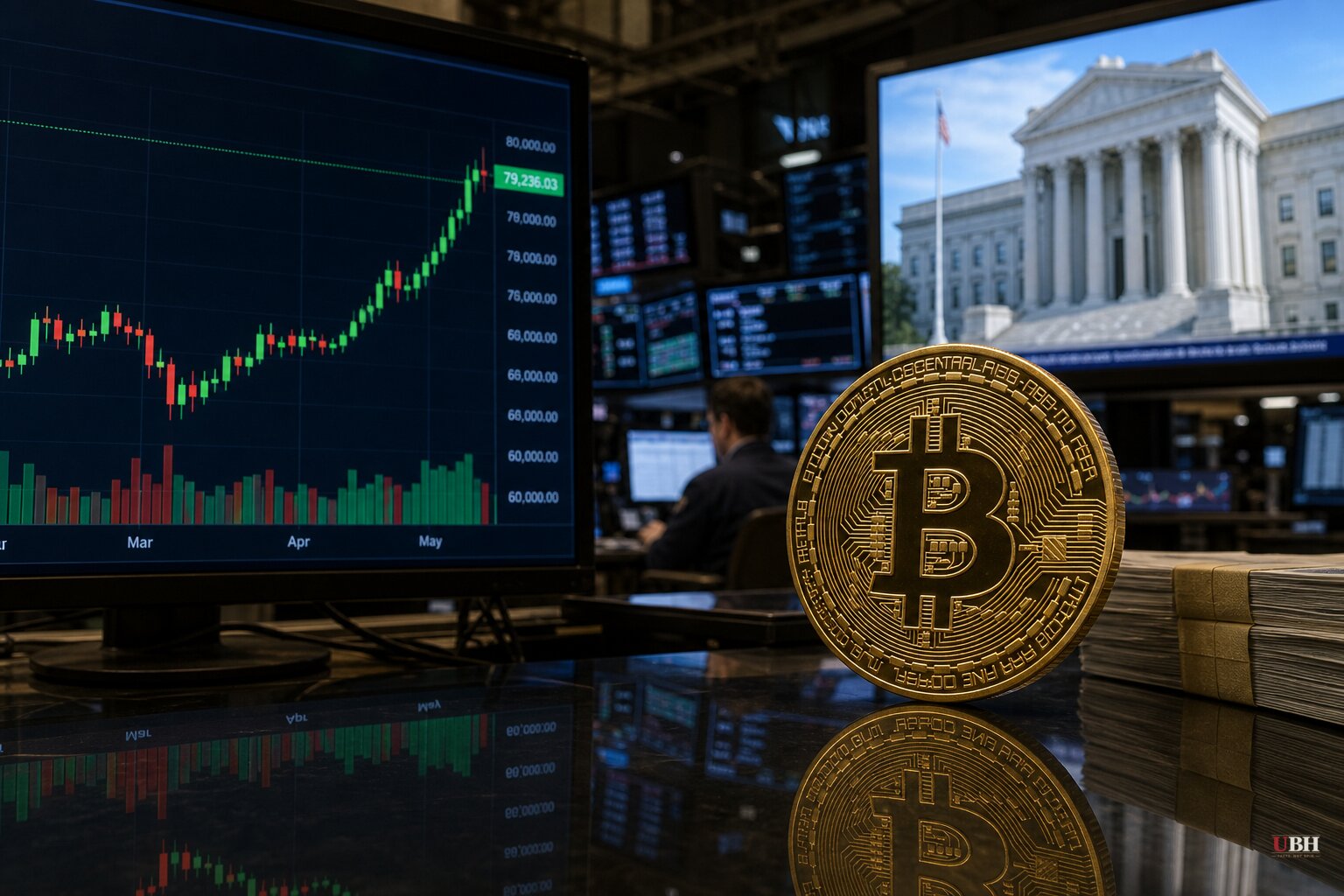
Bitcoin just had one of the wildest three-week runs in its history. The price climbed from the low-to-mid $60,000s in early August to above $79,000 by late August, adding roughly $416 billion in market capitalization, according to Crypto Briefing. At its peak, Bitcoin briefly became the 13th-largest asset on the planet, edging past Meta Platforms.
The single biggest week came when Bitcoin gained $14,264, closing at $77,387. That's a 22.7% jump in seven days, the largest single-week dollar gain the asset has ever recorded, according to Crypto Briefing. Business Insider clocked a similar 22% weekly surge, with Bitcoin breaking above $77,000 for the first time since May.
What actually triggered it
On August 19, the U.S. Treasury Department published a notice announcing it would expand its long-term bond buyback operations. The cap on buybacks for bonds with 10 to 30 years left on the clock rises from $2 billion to at least $4 billion per operation, effective September 9 through November 4, according to bitcoin.now, which cited the Treasury's own press release. Treasury Secretary Scott Bessent later told CNBC the number could go even higher, without naming a ceiling.
The mechanical effect was immediate. More Treasury buying pushed bond prices up and yields down. The 30-year yield fell from 5.337% to around 5.18%, according to dmarketforces.com. Lower yields make non-yielding assets like Bitcoin relatively more attractive to investors chasing returns.
Breitbart's Business Digest pushed back hard on the idea that this was some kind of emergency intervention. The buyback program itself isn't new. It's an adjustment to a program started under Treasury Secretary Janet Yellen during the Biden administration. A Treasury buyback is not the same thing as the Federal Reserve printing money: the government is swapping old bonds for new ones, not expanding its balance sheet or reducing total debt held by the public. Breitbart argued the rising yields that preceded the buyback reflected economic strength, not investor panic, pushing back on what it called "financial media" framing of the move as a crisis response.
But whatever the Treasury's underlying intent, traders treated the buyback expansion as a liquidity signal, and money moved accordingly.
The short squeeze did the rest
A huge chunk of the price velocity came from forced liquidations, not organic buying. On August 19 alone, The Block reported $1.92 billion in crypto positions liquidated in 24 hours, while Bloomberg put the two-day total at $2.7 billion, according to bitcoin.now. Crypto Briefing cited a separate figure of over $3 billion in bearish positions wiped out within 48 hours.
Traders betting against Bitcoin get automatically closed out when prices rise past their stop-loss thresholds, and closing a short position requires buying Bitcoin. That buying pushes the price up further, triggering more forced closures. It's a feedback loop, and it's finite. Once the shorts are gone, the mechanical fuel runs out.
A Bitfinex analyst quoted by CoinDesk, via bitcoin.now, flagged exactly that risk: squeeze-driven rallies carry a built-in question mark because the buying pressure evaporates once outstanding short positions clear. Whether the rally holds from here depends on whether real institutional demand shows up to replace the forced buying.
Washington's crypto push added fuel
President Trump hosted a White House crypto summit last week, pushing lawmakers to pass the CLARITY Act, a bill meant to set clear regulatory rules for digital assets. "It's a very, very powerful structure legislation which will keep us ahead of China, keep us ahead of everyone else," Trump said, according to Business Insider. He also said the administration had "ended the war on crypto once and for all," pointing to his appointment of Paul Atkins, a longtime crypto advocate, to head the SEC.
Business Insider also reported Trump disclosed more than $1 billion in cryptocurrency-related income in 2025, a detail worth keeping in view given his simultaneous role setting crypto policy. That's a legitimate conflict-of-interest question that deserves scrutiny regardless of whether the CLARITY Act itself is good policy.
Separately, dmarketforces.com reported Trump said the U.S. is considering buying "sizable amounts" of Bitcoin. Citigroup announced a new Bitcoin custody service on August 18, joining BNY Mellon and State Street in offering institutional-grade crypto custody. Citigroup's custody arm oversees $34.5 trillion in assets, a scale that could eventually pressure crypto-native custodians like Coinbase, which currently holds more than 80% of U.S. spot Bitcoin ETF assets.
The institutional money is real, too
This wasn't purely a leverage story. Bitcoin spot ETF
Sources used for this briefing
This briefing was written by UBH's AI agent — these are the reporting inputs it draws on, linked so you can verify.


