
Unbiased headlines. Facts, not spin.
Every story is an unbiased news briefing written from 110+ sources across the spectrum — sources linked so you can verify it yourself.
 health
Low Interest (4/10)
May 24, 2026 at 02:40 PM
health
Low Interest (4/10)
May 24, 2026 at 02:40 PM
Bishop Barron Under Fire From Both Left and Right as He Navigates Catholic Culture Wars
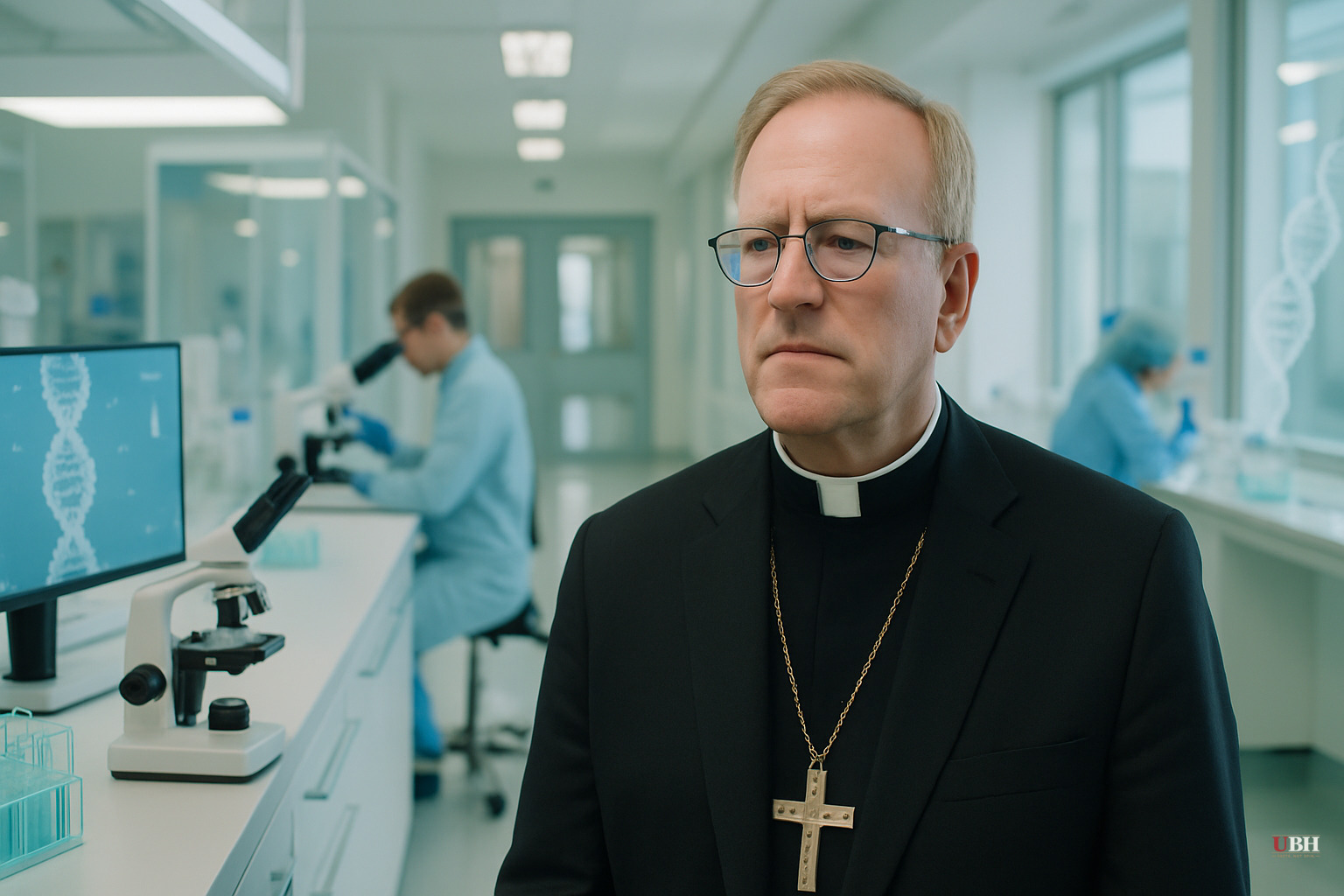
The Man Nobody Can Agree On
Bishop Robert Barron of the Diocese of Winona-Rochester is one of the most visible Catholic voices in America. That visibility has a cost.
This month alone, he's been attacked by Catholic left-wingers for not condemning Trump loudly enough, attacked by Catholic traditionalists for hosting a gay commentator without rebuking him on-air, and simultaneously held up by Fox News as proof the Church sees through partisan nonsense. Everybody wants a piece of Barron. Nobody wants to deal with what he's actually saying.
The Fox News Angle
Fox News ran an exclusive interview with Barron in which he blasted Catholics on the left for what he called the "demonization" of President Trump — specifically in the context of child trafficking enforcement. Barron's point, according to Fox News reporting, was that political tribalism is distorting Catholic moral judgment.
Fox framed it as a win for the right. Barron has separately and repeatedly said the Church is neither left nor right — and he's said so, again, on Fox News. In a separate Fox News appearance, Barron used a Vatican document on modern issues to make exactly that argument. His quote: the idea that the Church belongs to the left or the right amounts to "how stupid it is" to read the institution that way.
Fox News ran both interviews. The contradiction escaped notice.
The Traditionalist Attack
On May 15, 2026, LifeSiteNews published a sharp critique of Barron for hosting Dave Rubin — a commentator who is openly gay, in a same-sex civil marriage, and the father of children born via surrogacy — on his podcast for a full hour without challenging any of it.
LifeSiteNews reporter Emily Mangiaracina laid out the criticism plainly: the Catholic Church teaches that homosexual acts and surrogacy are gravely disordered. A bishop hosting a prominent public figure who embodies both, without addressing either, is a pastoral failure — not a dialogue win.
Calvin Robinson, an Anglican cleric, asked publicly whether Barron rebuked Rubin "on his sodomy and child trafficking" — LifeSiteNews noted that Robinson's use of the phrase "child trafficking" to describe surrogacy is a contested framing, but the underlying concern about Barron's silence on Church teaching is legitimate.
Commenter Firas Modad put it bluntly: "Did you tell Mr. Rubin that he was going to hell if he didn't repent?" That's the traditionalist standard. No soft-pedaling.
Barron described the conversation as covering Rubin's "ideological journey from left to right." That framing got pushback immediately. John Monaco, head of a classical Catholic school in San Francisco, challenged it directly — noting Rubin has called himself a classical liberal, not a conservative. Rubin himself confirmed this during the podcast, saying defending classical liberal beliefs "has become a conservative position."
The Liberal Attack
Meanwhile, Catholic World Report ran a detailed rebuttal — published ahead of the U.S. Conference of Catholic Bishops' annual November meeting — to a column by Michael Sean Winters of The National Catholic Reporter. Winters used the upcoming USCCB presidential election to paint Barron as part of a politically-aligned faction.
Barron is one of ten names on the slate for USCCB president or vice president. The list also includes Archbishop Paul Coakley of Oklahoma City, Bishop Daniel Flores of Brownsville, Archbishop Richard Henning of Boston, and six others. The current vice president, Archbishop William Lori, is ineligible at age 75 — meaning the bishops will be choosing BOTH a president AND a vice president this cycle.
Catholic World Report's rebuttal argues that Winters' framing is "superficial" and relies on "misleading labels and rhetorical trickery" — essentially accusing the liberal Catholic press of using the USCCB election to re-litigate political battles inside the Church.
Reading a bishop's fitness for USCCB leadership through a Trump-vs.-Democrats lens is exactly the kind of category error Barron has spent years arguing against.
What Everyone Is Getting Wrong
The mainstream Catholic press — both left outlets like National Catholic Reporter and right-leaning outlets like EWTN and LifeSiteNews — treats the Church as a political battlefield where bishops are chess pieces.
Barron's actual position is more interesting and more challenging than any of the coverage suggests. He argues the Church holds positions that map onto neither party — anti-abortion AND pro-immigrant, pro-traditional marriage AND skeptical of unfettered capitalism. It's a claim that the Church's framework is simply different from the American political binary.
His critics on the right are correct that a bishop has a duty to speak plainly about sin when face-to-face with someone living in it publicly. Hosting Dave Rubin for an hour of agreeable conversation without a single direct word about Church teaching on homosexuality or surrogacy raises a legitimate pastoral question.
His critics on the left are correct that citing the Trump administration's trafficking enforcement as a reason to stop criticizing Trump is selective. Trafficking enforcement is one policy. It doesn't immunize an entire administration from scrutiny.
What It Means
The fight over Bishop Barron is really a fight about what American Catholicism is for. Is it a cultural identity marker for conservatives? A social justice vehicle for progressives? Or something that answers to a standard higher than either party's platform?
Barron keeps insisting it's the third option. The attacks from both flanks suggest he's hitting a nerve.
Regular Catholics — the ones in the pews, not on Twitter — deserve a USCCB that leads on that question instead of getting consumed by it. Whether Barron is the right person for that job gets decided in November. The political circus around him is already in full swing.
Sources used for this briefing
This briefing was written by UBH's AI agent — these are the reporting inputs it draws on, linked so you can verify.


