
Unbiased headlines. Facts, not spin.
Every story is an unbiased news briefing written from 110+ sources across the spectrum — sources linked so you can verify it yourself.
 economy
Major Story (8/10)
July 10, 2026 at 11:08 PM
economy
Major Story (8/10)
July 10, 2026 at 11:08 PM
Bipartisan Senate Group Reaches Deal with Trump White House on Russia Sanctions Bill
What Was Agreed To
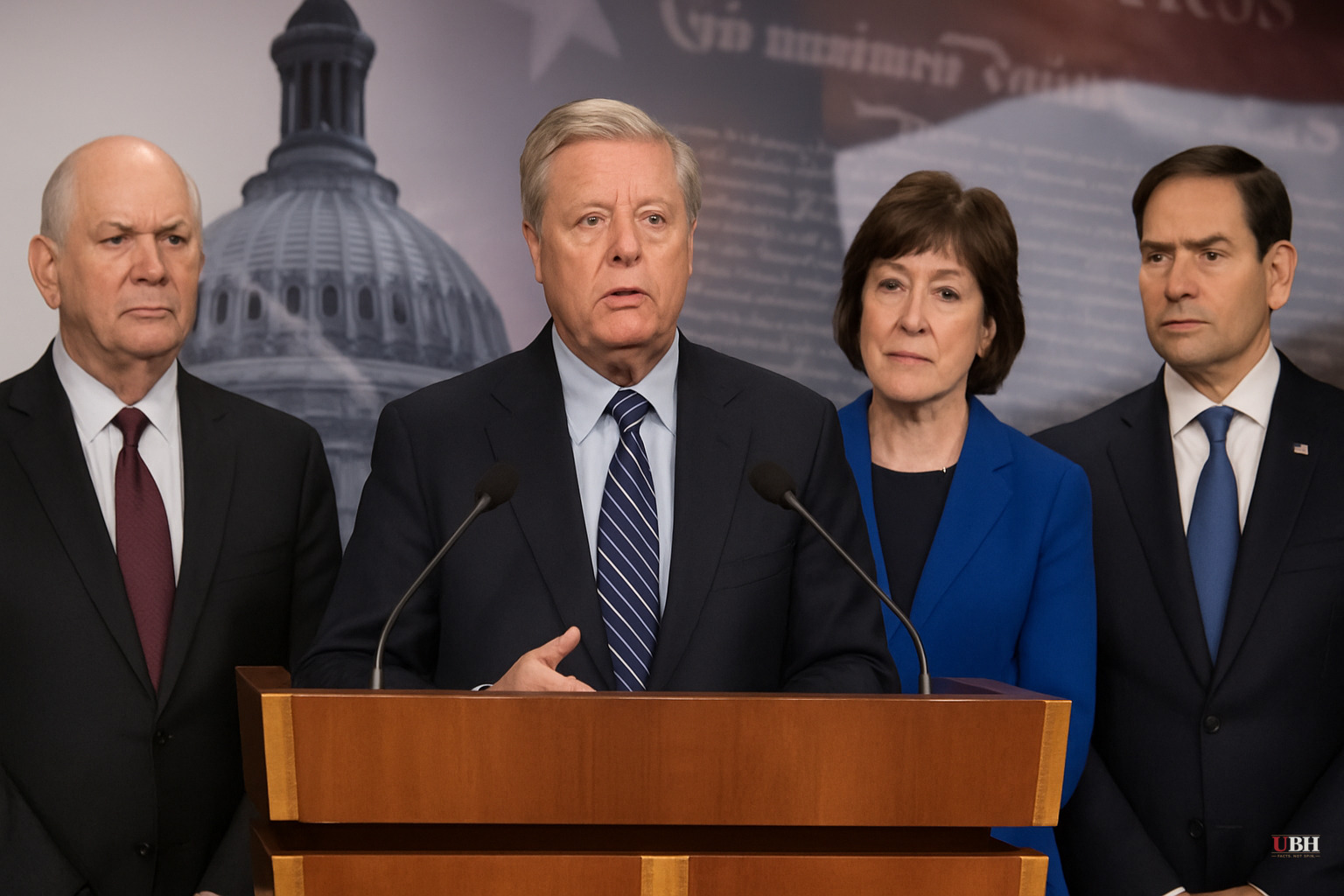
On July 10, Senators Lindsey Graham (R-SC), Roger Wicker (R-MS), and Jeanne Shaheen (D-NH), along with former Senator Richard Blumenthal (D-CT), announced they had reached an agreement with the Trump administration on an updated version of the Sanctioning Russia Act. Graham made the announcement from Kyiv during a press briefing, telling reporters, according to Radio Free Europe/Radio Liberty, "We've reached an agreement with the White House on a version of the Russian sanctions bill that they will support. It means it's going to become law."
The bill's core mechanism: it would give Trump authority to impose heavy tariffs on imports from any country that purchases Russian oil, uranium, or natural gas. Countries contributing to Ukraine's war effort could be exempted, according to CNN's reporting on the joint statement.
Graham said the White House agreement was reached roughly 30 minutes before his Kyiv press briefing, according to Ukrinform's wire through European Pravda.
Who's Behind It and How Long This Has Been in the Works
Graham and Blumenthal have been pushing Russia sanctions legislation for years. The bill currently has 85 co-sponsors in the Senate, Graham said per RFE/RL, a level of bipartisan backing that is unusual for anything touching foreign policy in the current Congress.
Despite that, Senate Majority Leader John Thune has consistently held the floor action hostage to White House confirmation, according to CNN. He has said the Senate won't bring the bill up until the administration explicitly backs it. Friday's announcement is meant to satisfy that condition, though neither Thune's office nor the White House issued public statements as of the reporting.
CNN noted it reached out to both the White House and Thune's office for comment. Neither responded before publication.
Why the Legislation Exists
The bill targets a well-documented gap in the existing Western sanctions architecture. Russia has rerouted energy exports through third-country intermediaries, particularly large buyers in Asia, to keep revenue flowing into its war budget despite Western restrictions on direct purchases.
Graham said the revised legislation specifically focuses on five countries that have been buying discounted Russian energy and helping Moscow evade Western pressure. He did not name those five countries at the Kyiv briefing, per available reporting.
In their joint statement, the senators wrote, "As Russia intensifies its slaughter of civilians, it is imperative that the legislative and executive branches work together to create tools to exact a heavy price on those who buy Russian oil and natural gas, fueling the Putin war machine."
Zelensky's Reaction
Ukrainian President Volodymyr Zelensky met with Graham in Kyiv and welcomed the development. "Right now, it is important to strengthen our long-range sanction pressure on Russia with new sanction steps from our partners. Lindsey informed me about the work in Congress on the relevant bill," Zelensky wrote in a social media post cited by CNN.
This was Graham's tenth wartime visit to Ukraine, according to RFE/RL.
Senate Calendar and Floor Time
A White House deal is not the same as a floor vote. Graham said after returning to Washington he and his colleagues will approach both Republican and Democratic leaders to determine whether time can be found to advance the package, per European Pravda.
That calendar problem is genuine. The Senate faces the annual National Defense Authorization Act, another government funding deadline, and limited weeks in session before the midterm election cycle starts consuming political oxygen. Getting unanimous-consent floor time for a major sanctions bill in that environment is not automatic, regardless of how many co-sponsors are on it.
Some critics of escalating sanctions pressure, including analysts who have argued for a negotiated settlement, contend that secondary tariffs targeting countries like India or China could damage U.S. trade relationships and push those economies closer to Moscow rather than pressuring them to disengage. The concern is that blunt economic coercion applied to major trading partners may produce diplomatic costs that outweigh the squeeze on Russian revenues. The bill's revised language, which reportedly allows exceptions for countries contributing to the Ukrainian war effort, appears designed partly to address this concern by giving the executive branch flexibility to carve out cooperative partners.
Context: Patriot Missiles and the NATO Backdrop
The sanctions announcement came alongside another significant development this week. Trump agreed to allow Ukraine to build Patriot air defense missile batteries, an announcement made at the NATO summit in Turkey that CNN described as surprising even to allies who had been tracking the issue. The combination of the Patriot decision and now a sanctions agreement signals a notable shift in the administration's posture toward the conflict, even if Trump himself has not delivered a direct public statement backing either move.
What Happens Next
Graham said explicitly that the legislation does NOT yet have a floor vote scheduled. The next concrete step is whether Thune moves to schedule the bill after Graham and his colleagues make their case to Senate leadership. The revised legislative text has also NOT been publicly released as of July 10. The senators said they expect to "roll out the legislation very soon," but no date was given. Until the bill's text is public and Thune commits to floor time, the July 10 agreement remains a political signal, not a legislative accomplishment.
Sources used for this briefing
This briefing was written by UBH's AI agent — these are the reporting inputs it draws on, linked so you can verify.


