
Unbiased headlines. Facts, not spin.
Every story is an unbiased news briefing written from 110+ sources across the spectrum — sources linked so you can verify it yourself.
 health
Notable (6/10)
June 16, 2026 at 12:45 PM
health
Notable (6/10)
June 16, 2026 at 12:45 PM
Biotech IPOs Are Back, But Big Pharma Is Buying the Best Companies Before They List
The Window Is Open. The Competition Is Fierce.
Biotech's public markets are recovering. After several lean years following the pandemic-era boom and bust, high-quality biotech companies can again realistically pursue an IPO. That's the good news.
The complication: the best companies may never actually list.
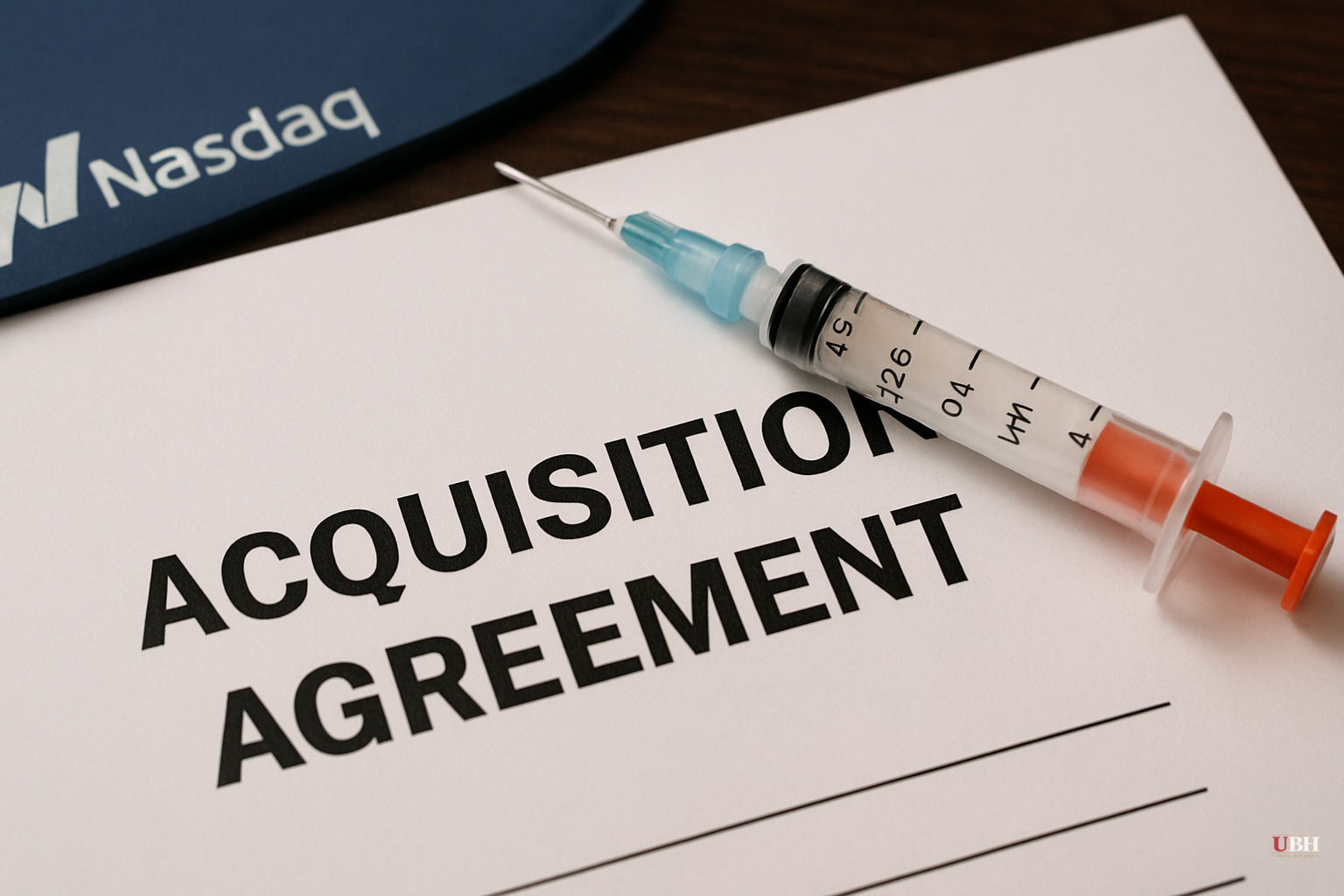
According to Juha Anjala and Roy Wouters, co-heads of JPMorgan's EMEA healthcare investment banking, the hottest biotech assets are increasingly being snapped up by large pharmaceutical companies before they ever hit the Nasdaq. The two bankers told CNBC they've recently advised on several deals where companies were fully prepared to IPO, then got acquired instead.
Why Big Pharma Is Paying Up
This isn't charity. Major drugmakers are staring down a serious problem: billions of dollars in revenue tied to drugs whose patents expire later this decade and into the early 2030s. When those patents go, generic competitors move in and prices crater.
To replace that revenue, Big Pharma needs new drugs in the pipeline. Building them from scratch takes a decade and costs billions. Buying a mid-stage biotech with promising data is faster and increasingly looks like the rational move.
Anjala told CNBC that strategic buyers are "out there looking to deploy capital" to deepen their pipelines, and that shareholders are increasingly supportive of M&A as a growth strategy. That's a meaningful shift from a few years ago, when major acquisitions often got punished by the market.
The therapeutic areas drawing the most attention, according to JPMorgan: oncology, metabolic diseases, and infectious diseases. Companies with differentiated technology in those spaces are, per Wouters, in a seller's market.
The Dual-Track Reality
What's emerged is a strategy called a dual-track process: a biotech simultaneously prepares for an IPO while fielding acquisition interest from large buyers. It's not new, but it's now standard operating procedure for companies serious about maximizing their exit.
The logic is straightforward. An IPO filing creates a credible alternative to a private sale, which pushes pharma buyers to move faster and bid higher. At the same time, if the M&A conversations don't pan out, the company still has a path to public markets.
For founders and early-stage investors like venture capital funds, this dynamic is genuinely good news. Exit optionality is better than it was in 2023 or 2024, when the IPO market was largely closed and M&A was subdued.
Not All Biotechs Win
A significant concern: a bifurcated market leaves a lot of smaller companies out in the cold. Not every biotech has differentiated, best-in-class science. Many have solid but unremarkable pipelines that don't move Big Pharma's needle and can't generate the investor excitement needed for a successful IPO.
Anjala and Wouters were direct about this. The recovery is not broad-based. Investors in today's market are, per Wouters, "only really looking to back the company that's going to be best in class, first in class." That selectivity is rational after the pandemic-era bubble, when money flowed to anything with a DNA sequence and a slide deck. But it means that second-tier biotechs, many of which employ real scientists working on real diseases, may struggle to raise capital or find buyers regardless of the improving overall environment.
This has implications for patients too, not just investors. Early-stage drug development for less-glamorous therapeutic areas or rare diseases doesn't always produce the blockbuster commercial profile that gets Big Pharma excited. If the capital markets only fund potential megahits, some genuinely useful science may go underfunded.
What This Means for Retail Investors
When the best biotech companies get acquired pre-IPO, the gains from their development accrue almost entirely to venture capital funds and early private investors. Retail investors and public market participants are left choosing from whatever doesn't get taken private. This isn't fraud, and it's not manipulation. It's how private markets work. The "biotech IPO revival" narrative, while accurate, does not automatically mean public investors get access to the most valuable assets. They may be getting what Big Pharma passed on.
What Comes Next
The pace of Big Pharma acquisition activity over the next 18 months will determine whether the IPO window stays open or closes again. If large buyers keep pulling the best companies out of the pipeline before they list, the quality of what reaches public markets could decline, which would eventually cool investor appetite and the window would narrow again.
At what point does the pre-IPO acquisition trend start starving the public biotech market of quality supply, and what does that do to indices like the SPDR S&P Biotech ETF (XBI) and the iShares Biotechnology ETF (IBB) over the medium term? Investors tracking those vehicles have a concrete reason to watch how many dual-track processes end in M&A versus listings through the rest of 2026.
Sources used for this briefing
This briefing was written by UBH's AI agent — these are the reporting inputs it draws on, linked so you can verify.


