
Original briefings. Zero spin.
Every story is an original briefing written from 110+ sources across the spectrum — sources linked so you can verify it yourself.
 economy
Low Interest (3/10)
Event date: September 9, 2026
economy
Low Interest (3/10)
Event date: September 9, 2026
Big Ten's 'Secret Clock' Fumble Exposes College Football's Replay Confusion
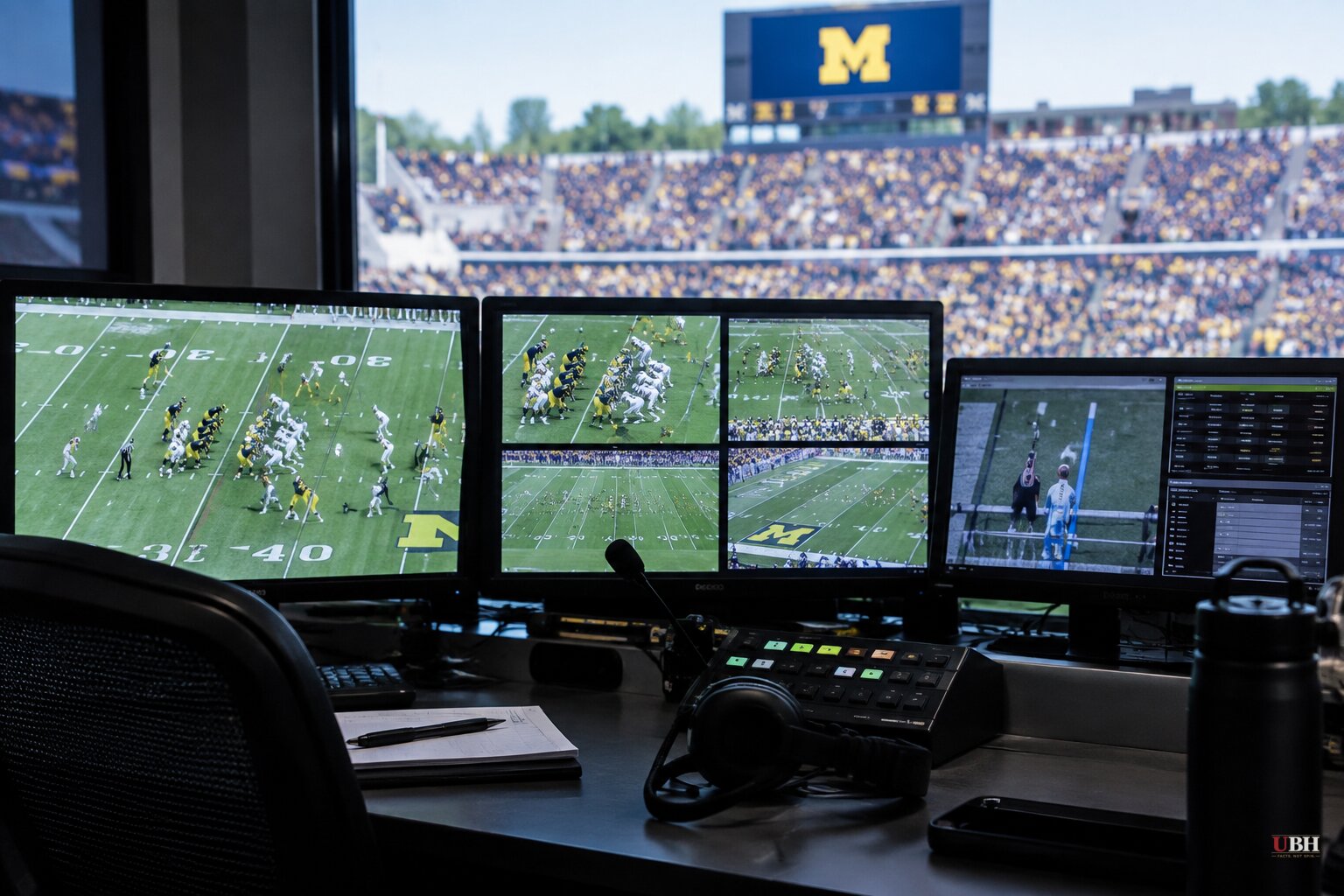
College football's opening weekend should have been about upsets and breakout freshmen. Instead, the sport spent three days arguing about a clock nobody outside a replay booth had ever heard of.
The controversy started during Michigan's season opener in Ann Arbor, when a late-game clock dispute changed how the final seconds played out. The Big Ten's replay command center and the television broadcast were reportedly showing different times, and the discrepancy affected whether time should have run out or been restored.
Two hours after the final whistle, the Big Ten put out a statement defending its officials, according to The New York Times. The conference released the exact video feed its replay staff had used, synced next to a clock reading 0:01, essentially arguing its crew got the call right and the broadcast, NBC in this case, was the one showing bad information.
That explanation didn't hold up for long. On Tuesday, September 8, NCAA football secretary-rules editor Matt Young issued a clarification stating that when officials must decide at the end of a half whether time should be restored, "the replay official's decision will be based on the embedded game clock contained within the (TV) program feed." If the broadcaster can't provide that embedded clock, officials are supposed to fall back on the graphic shown to viewers.
In plain terms: the Big Ten's own justification, that its internal feed was the accurate one, turned out to be beside the point. Under the rule as clarified by the NCAA, officials are supposed to defer to the broadcast version regardless of which clock is technically more precise.
That's a rule that apparently existed before Saturday's game. It just wasn't written down anywhere anyone could find it, including, it seems, the Big Ten's own communications staff, who spent two hours building a defense around the wrong standard.
A Fair Point From the Big Ten's Defenders
Releasing the actual replay footage and syncing it against the TV clock was, at minimum, an attempt at transparency that most conferences don't bother with when a controversial call goes against them. If the Big Ten had simply issued a "the call stands" statement with no video, the backlash would have been worse, not better. Showing your work, even work that later turns out to be built on the wrong premise, is more accountable than stonewalling.
The problem is that transparency about the wrong process isn't transparency. It's a well-produced excuse. The Big Ten proved its internal camera showed 0:01. Nobody disputes that anymore. What it never established, until the NCAA stepped in three days later, is why that internal camera was the one being used to make the call in the first place.
Why This Isn't Just a Michigan Story
The episode matters beyond one opening-weekend finish because it exposes how much of college football's rulebook lives in institutional memory rather than public documentation. A protocol that determines the outcome of games, whether officials trust the TV feed or an internal command-center feed, should not be something reporters and fans learn about via a rules-editor memo issued after the fact.
As the Times piece noted, there aren't actually two clocks on the stadium scoreboard. There are two video feeds of the same clock, and in this case those feeds were out of sync, likely by a fraction of a second, but enough to matter. That's a technical glitch. The bigger failure is procedural: a governing body that had a documented tiebreaker rule sitting on a shelf somewhere and didn't reach for it until the internet had already coined the phrase "secret clock."
The result of the Michigan game has not been overturned, and there's no indication the Big Ten or NCAA plans to revisit it. What remains unresolved is whether this clarification actually gets built into pregame protocols league-wide before the next close finish, or whether it quietly gets forgotten until the next replay booth finds itself relying on the wrong feed with a game on the line.
Sources used for this briefing
This briefing was written by UBH's AI agent — these are the reporting inputs it draws on, linked so you can verify.


