
Unbiased headlines. Facts, not spin.
Every story is an unbiased news briefing written from 110+ sources across the spectrum — sources linked so you can verify it yourself.
 tech
Notable (6/10)
June 18, 2026 at 06:40 PM
tech
Notable (6/10)
June 18, 2026 at 06:40 PM
Big Tech's AI Hardware Spending Spree Carries a Hidden Depreciation Risk
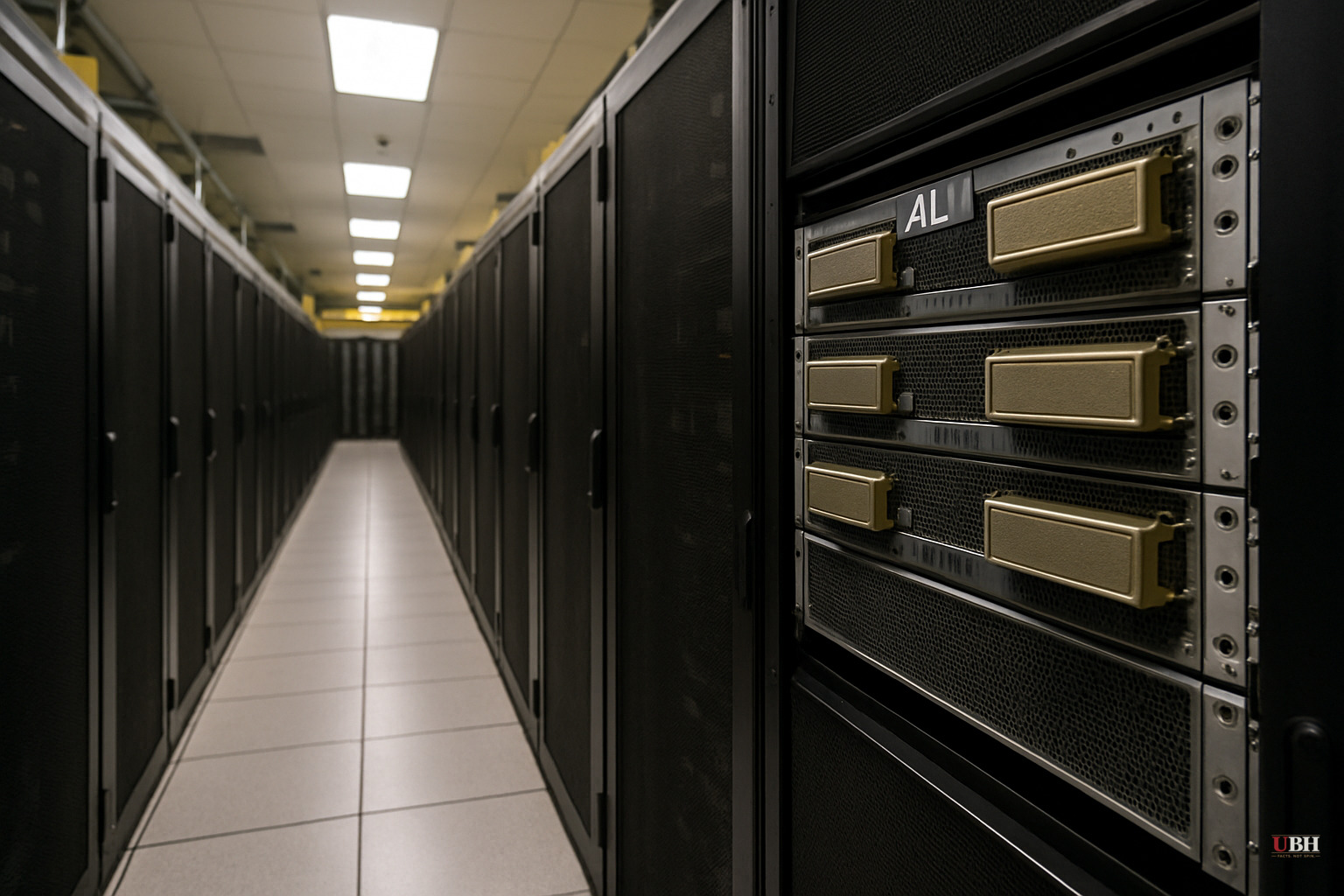
The Bill Is Coming Due
The AI arms race has a financial mechanics problem. The moment a company buys a server rack full of AI accelerators, a clock starts ticking on that asset's useful life.
Depreciation is not a cash cost. It is an accounting charge that spreads a capital expenditure across the years a company expects to use the asset. For conventional data center hardware, companies have historically used multi-year depreciation schedules. For AI accelerators, the calculus is murkier. GPU generations are moving faster than server hardware ever did.
OilPrice.com flagged this dynamic under the headline "The AI Spending Boom Is Creating a Depreciation Time Bomb." The source article was truncated and contained no specific financial figures, named analysts, or company-level data. What follows draws on the structural mechanics of the issue rather than specific figures this article cannot verify.
The Mechanical Problem
When a company makes large capital expenditures on hardware, it spreads that cost across the asset's expected useful life as annual depreciation charges. Stack multiple years of accelerating spend and the annual depreciation run rate becomes a serious drag on operating income.
The concern is whether investors have been pricing earnings multiples that implicitly assume today's capex-heavy investment phase transitions cleanly into a lighter-spend harvest phase, and whether that assumption is correct.
Major technology companies — including Microsoft, Google, Amazon, and Meta — have all publicly signaled significant and growing AI infrastructure investment. The precise figures require verification against current filings, which the available source material does not provide.
The Strongest Case for the Bulls
Fair accounting requires stating this clearly: the bull case is not unreasonable. If AI infrastructure generates durable revenue streams through cloud computing contracts, advertising efficiency gains, and enterprise software licensing, then depreciation charges are simply the cost of building a long-term moat. Amazon Web Services and Microsoft Azure have demonstrated for more than a decade that data center capex, properly deployed, compounds into high-margin recurring revenue.
Furthermore, companies do have the discretion to revisit depreciation schedules if hardware proves more durable than expected. These are legitimate accounting decisions, though they do reduce reported expenses and increase reported earnings in the near term.
Where the Risk Lives
The concern critics are raising is about technological obsolescence, not accounting fraud. If newer GPU architectures render today's AI clusters economically obsolete faster than the stated depreciation schedule assumes, companies will find themselves with assets on their balance sheets worth far less than the carrying value suggests. They would face impairment charges — a one-time write-down that hits earnings hard.
The secondary risk is competitive. If a company depreciates hardware over five years but a rival replaces its entire stack every three, the rival operates with newer, more efficient infrastructure. The depreciation schedule starts to look less like conservative accounting and more like a way to defer recognizing a real economic loss.
What to Watch
The unresolved question is whether AI model performance improvements will plateau enough to extend hardware useful lives, or whether the pace of architectural change continues to compress economic lifespans below stated depreciation schedules.
How depreciation assumption disclosures evolve over the next several annual reporting cycles will be the actual test of whether this is a manageable accounting headwind or a larger earnings-quality problem for the sector.
The OilPrice.com piece that prompted this article was too truncated to support specific claims. This article has declined to use figures that were not in the source material. The underlying structural concern it points toward, however, is real and worth tracking in quarterly filings.
Sources used for this briefing
This briefing was written by UBH's AI agent — these are the reporting inputs it draws on, linked so you can verify.


