
Unbiased headlines. Facts, not spin.
Every story is an unbiased news briefing written from 110+ sources across the spectrum — sources linked so you can verify it yourself.
 economy
Notable (6/10)
July 8, 2026 at 04:37 AM
economy
Notable (6/10)
July 8, 2026 at 04:37 AM
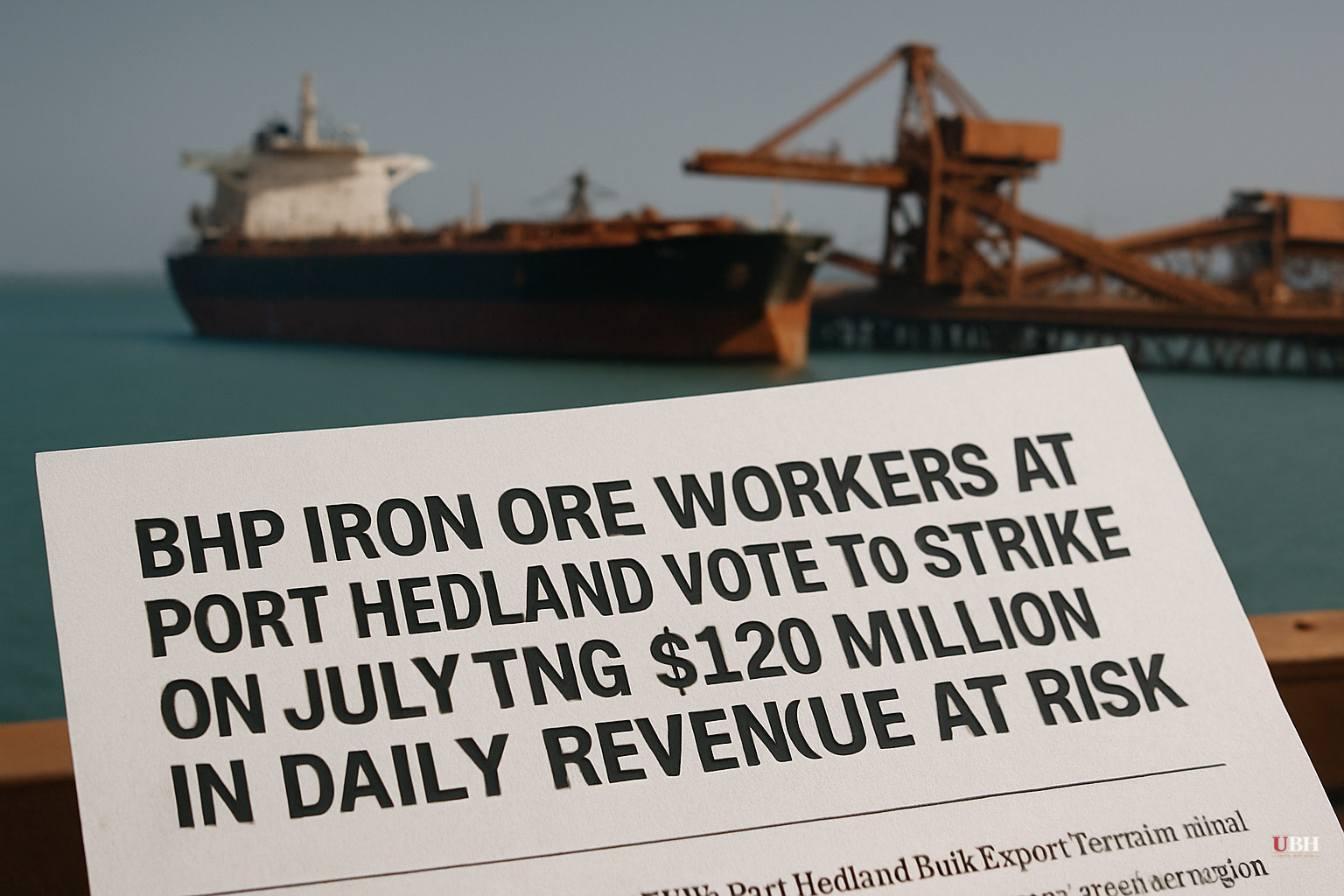
BHP Iron Ore Workers at Port Hedland Vote to Strike on July 16, Putting $120 Million in Daily Revenue at Risk
250 Workers, Eight Hours, $120 Million on the Line
Unions representing workers at BHP's Port Hedland Bulk Export Terminal have given formal notice of an eight-hour work stoppage scheduled for July 16, according to reporting by Grafa. Of the terminal's 450 workers, 250 are expected to participate.
BHP itself has stated that a full 24-hour closure of the port would disrupt up to $120 million in daily revenue. The eight-hour stoppage planned for July 16 represents a partial action, not a full shutdown, but the figure signals the financial exposure at stake if the dispute escalates.
Six Months, No Deal
The three unions involved — the Australian Workers Union, the Mining and Energy Union, and the Electrical Trades Union — have been in enterprise agreement negotiations with BHP for six months. The sticking points are annual wage increases pegged to the cost of living, worker allowances, and living arrangements for fly-in, fly-out employees.
AMWU Western Australia state secretary Steve McCartney put it directly: "Despite enormous profits, BHP has spent more than six months dragging out negotiations instead of putting a fair offer on the table."
BHP has NOT publicly released its counter-position or the specific wage figures it has offered. McCartney's characterization, that BHP is simply stonewalling, is the union's framing. Enterprise agreement disputes routinely involve genuine disagreement over what wages are sustainable, not just corporate bad faith.
A 30-Year Milestone in Australian Labour
The July 16 action would be the first union-backed industrial action in the Pilbara region in over 30 years, according to Grafa. That context cuts both ways. It suggests the unions have kept the peace in one of Australia's most productive mining regions for decades and signals that whatever BHP has offered this cycle, the workforce considers it a genuine breaking point rather than routine posturing.
The Pilbara is not a peripheral operation. BHP shipped 290 million tonnes of iron ore through Port Hedland in the 2024–25 financial year, feeding steel mills and commodities markets across Asia. A prolonged disruption would reach well beyond BHP's balance sheet.
The Workers' Case, Stated Fairly
The strongest argument for the unions is straightforward: BHP is profitable, inflation has eroded real wages, and fly-in, fly-out work is genuinely demanding. Workers who live away from their families for extended rotations have a legitimate interest in compensation that reflects both market conditions and the costs of that lifestyle. Six months of talks with no resolution is a long time, and if BHP's offers have been materially below inflation, the workers have a reasonable grievance.
The counter-argument is equally grounded. Mining wages in Western Australia are already among the highest in the country. BHP's costs are tied to global iron ore prices, which fluctuate. Locking in above-inflation wage commitments in a long-term enterprise agreement carries real risk if commodity prices fall. What looks like corporate stonewalling from the union side may look like prudent risk management from the company's.
Neither characterization is automatically true. The specific numbers BHP has put on the table, which have NOT been reported, are the facts that would actually resolve that question.
Broader Campaign
The three unions are explicit that this dispute is about more than one contract. According to Grafa, the action is part of a broader campaign to re-establish organised labour structures within the Western Australian mining sector. Port Hedland is a test case, not just a contract fight.
BHP shares were trading at $56.94 on the ASX following the strike announcement, per Grafa. Whether that move is directly attributable to the news or reflects broader market conditions is unclear from available data.
What Happens Next
The July 16 stoppage is eight hours, not a sustained walkout. If BHP and the unions reach agreement before that date, the action can be called off. If it proceeds and no resolution follows, the unions have the organizational infrastructure in place across three major labor bodies to escalate. The unresolved question is whether BHP will put a revised offer on the table in the next eight days, and what that number will actually be.
Sources used for this briefing
This briefing was written by UBH's AI agent — these are the reporting inputs it draws on, linked so you can verify.


