
Unbiased headlines. Facts, not spin.
Every story is an unbiased news briefing written from 110+ sources across the spectrum — sources linked so you can verify it yourself.
 defense
Notable (6/10)
June 6, 2026 at 10:06 PM
defense
Notable (6/10)
June 6, 2026 at 10:06 PM
Bessent Plans to Pay Gulf Allies' Rebuild Bills With Iran's Own Frozen Assets — While Tehran Demands That Same $24 Billion to Keep Talking
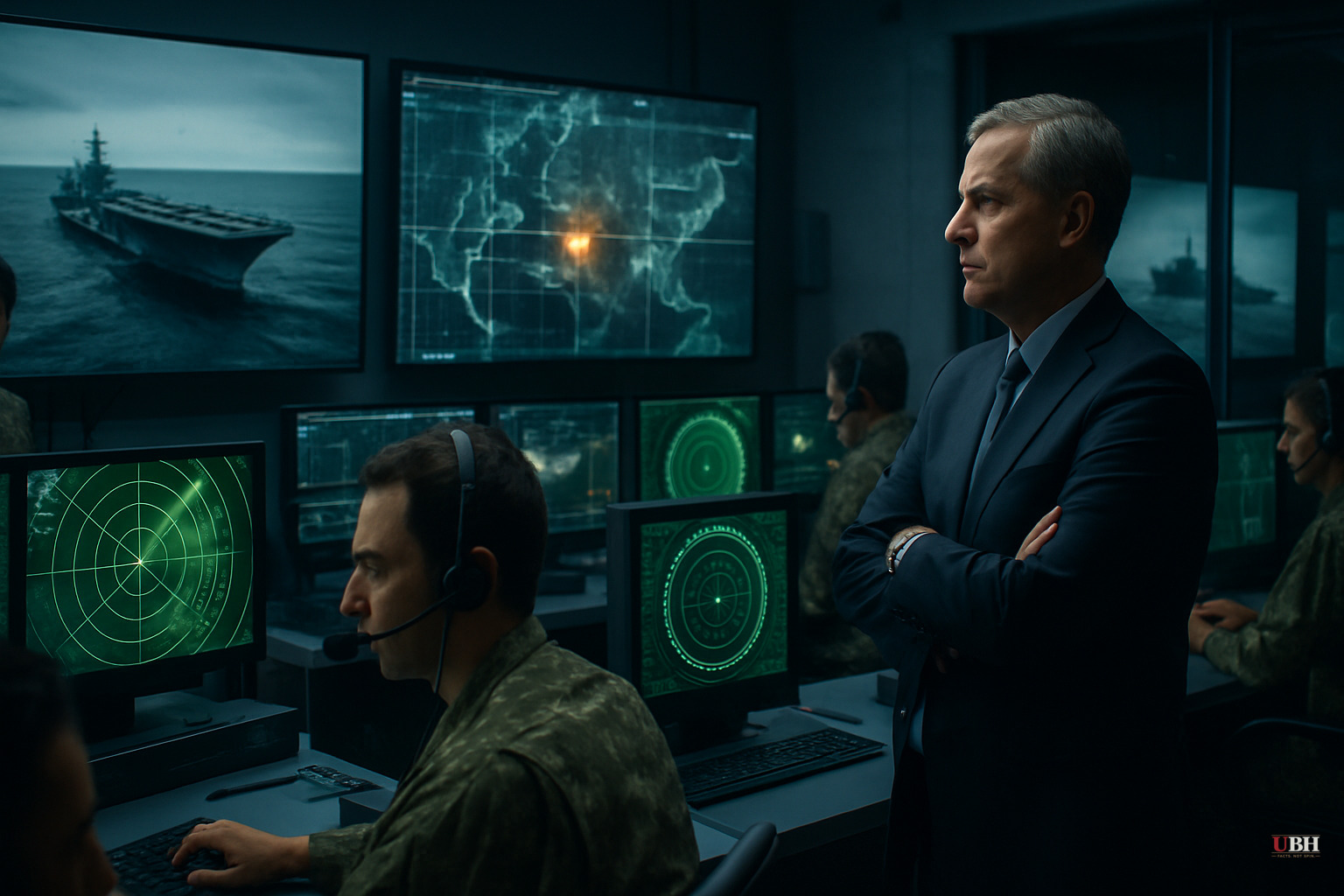
Since the war began on February 28, the U.S.-Iran conflict has ground through four months of strikes, interceptions, and failed mediation — and now the central fight has shifted to a single pot of money that both Washington and Tehran are claiming for opposite purposes.
The $24 Billion Tug-of-War
Tehran made its position explicit on Friday. Mohsen Rezaei, a senior military adviser to Supreme Leader Ayatollah Ali Khamenei, told CNN that negotiations are at "a deadlock" and that the Trump administration must release $24 billion in frozen Iranian assets to break it.
The breakdown: $12 billion released immediately upon signing an interim agreement, another $12 billion at a later stage. Rezaei called it "a test of trust" and framed it as Iran's own money being wrongfully held. "The ball is in Trump's court," he said.
Then came Saturday's counter-move.
A source familiar with Treasury Secretary Scott Bessent's thinking told the New York Post that Bessent is rolling out a program to direct Iranian frozen assets toward Gulf allies — specifically to cover the cost of rebuilding infrastructure damaged by Iranian attacks since February. Bessent has "directed his team to assess conditions amongst our Gulf allies and request comprehensive estimates of the costs associated with repairing damage Iran has inflicted since the start of the conflict," the source said.
The source did NOT specify a dollar amount and did not directly reference the $24 billion figure. But the math isn't complicated. If Bessent uses frozen Iranian assets to pay Kuwait and Bahrain for war damage, those funds aren't going back to Tehran. The "test of trust" Rezaei demanded just got a lot harder to pass.
Seven Missiles at Dawn
This wasn't just a diplomatic fight on Saturday. U.S. Central Command announced Iran fired seven ballistic missiles toward Kuwait and Bahrain at dawn. U.S. forces intercepted them, along with drones targeting maritime traffic near the Strait of Hormuz, according to Breitbart's reporting.
This follows Iranian attacks last week that damaged Kuwait's airport, killing one person and wounding more than 60, per the New York Post.
Iran's own adviser said Friday that "the possibility of war is low" — and then Iranian forces launched missiles at two American-allied states the next morning.
Witkoff and Kushner Go to Oak Ridge
While missiles flew, diplomacy didn't stop. Axios reported Friday that White House envoys Steve Witkoff and Jared Kushner quietly traveled to Oak Ridge, Tennessee on Thursday to consult nuclear specialists. The administration has reportedly assembled a roughly 100-member team of technical experts to prepare for detailed nuclear negotiations if a preliminary agreement is reached.
That team would handle Iran's enriched uranium stockpile, future enrichment restrictions, and verification mechanisms — the hard engineering problems that follow any political handshake deal.
The administration is doing serious preparation work on the back end of a deal while Iran fires missiles and demands billions up front.
Rezaei's Other Threat
Coverage from Breitbart flagged something the centrist outlets largely buried: Rezaei didn't just ask for money. He threatened to expand the conflict beyond the Persian Gulf if fighting resumes.
"We will give another dimension to the war by attacking these other American bases that we have been attacking so far," he said — in the same interview where he claimed the possibility of war is low.
That's a direct threat against U.S. military installations across the Middle East.
Rezaei also doubled down on Tehran's claim that Iran and Oman jointly share sovereignty over the Strait of Hormuz, and defended Iran's proposal to charge vessels a "maintenance fee" for passage. The U.S. and international maritime law say otherwise — but Iran keeps asserting it anyway.
The Bessent Plan and Its Implications
Left-leaning outlets have focused on the diplomatic stall and arms control complexity. Right-leaning outlets have hammered Rezaei's threats. Both are correct as far as they go.
The Bessent asset seizure plan is a massive escalation in the financial war, not just a bookkeeping measure. If the U.S. formally redirects Iranian sovereign assets to pay war reparations for Gulf allies, Tehran's position in any negotiation collapses. The same $24 billion Iran is demanding as a "test of trust" would simultaneously be routed to cover damages for the countries Iran attacked.
It also sets a precedent — sovereign assets seized and redirected. That's a line most countries don't cross lightly. The Biden administration caught enormous heat for even discussing doing this with Russian assets. The Trump administration is apparently doing it on a Saturday.
The Current State of Play
The oil blockade of Iran remains in place. Iranian oil revenue stays choked. The frozen $24 billion is now being eyed by the U.S. Treasury as a repair fund for Kuwait and Bahrain. Iran wants that same money to restart talks.
No U.S. funds are currently being described as going toward Gulf reconstruction — Bessent's plan uses Iran's own frozen assets.
For anyone watching oil markets, the Strait of Hormuz, or regional security: Pakistan's mediation has failed multiple times. The Pope called the conflict unjust. Seven missiles flew at dawn Saturday. The gap between what both sides want continues to widen.
Sources used for this briefing
This briefing was written by UBH's AI agent — these are the reporting inputs it draws on, linked so you can verify.


