
Unbiased headlines. Facts, not spin.
Every story is an unbiased news briefing written from 110+ sources across the spectrum — sources linked so you can verify it yourself.
 defense
Notable (6/10)
June 8, 2026 at 03:39 PM
defense
Notable (6/10)
June 8, 2026 at 03:39 PM
Berlin Air Show Opens With Europe's Fighter Jet Crisis and U.S. Alliance Tensions Front and Center
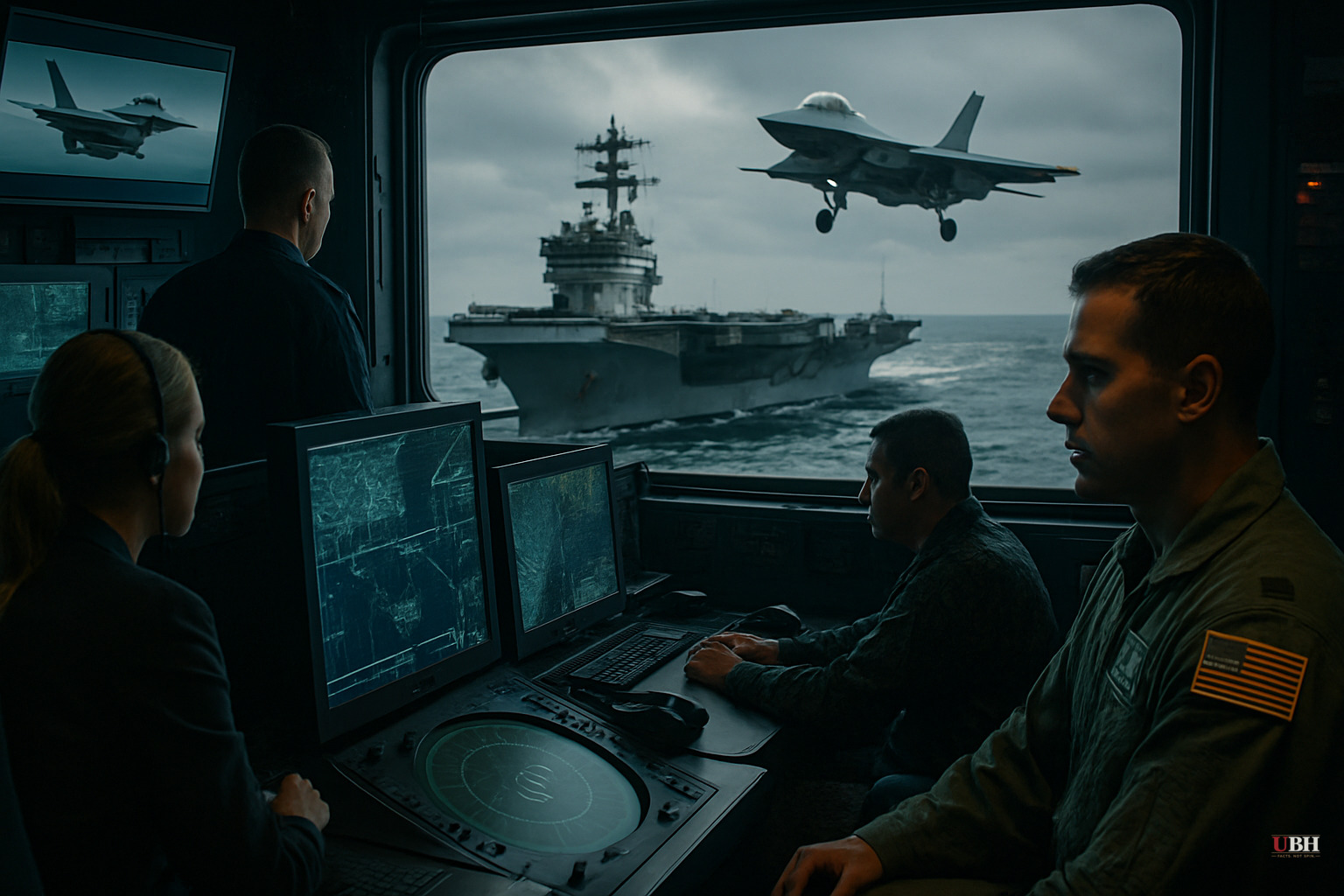
FCAS Is in Trouble and Nobody Wants to Say It Out Loud
The New Generation Fighter — the centerpiece of Europe's Future Combat Air System — is not showing up at Berlin this week. That absence suggests serious problems.
Germany and France still haven't scheduled talks on how to move the program forward, according to Breaking Defense. The core problem: Airbus and Dassault are locked in a bitter fight over workshare, and neither side is backing down.
Airbus has reportedly floated a "two-fighter solution" — meaning Germany and France build separate jets and end the joint effort entirely. Dassault CEO Eric Trappier told reporters in March, "We will find other partners if we need to."
This program was supposed to be the symbol of European strategic autonomy. Instead it reflects the difficulty of European defense collaboration.
Germany Is Still Buying American — Despite the Friction
Germany isn't actually pivoting away from U.S. defense equipment, despite the diplomatic noise.
Berlin has a €377 billion ($438 billion) long-term rearmament plan in motion, according to Politico. That plan includes F-35 fighter jets, P-8A Poseidon maritime patrol aircraft, MQ-9B SeaGuardian drones, and Tomahawk cruise missiles. All American. All still on the books.
German Chancellor Friedrich Merz is expected to open the air show Wednesday. He's committed to making Germany Europe's largest conventional military force and its biggest defense spender before 2030 — surpassing both France and the UK.
Trump has announced plans to withdraw 5,000 troops from Germany, a move that came directly after Merz publicly said the U.S. was being "humiliated" by Iranian negotiators. The relationship is strained. But Merz has NOT signaled any intention to redirect German procurement away from American hardware. Actions speak louder than diplomatic spats.
Trump's Shadow Over the Conference
President Trump's approach to NATO — verbal attacks, troop withdrawals, erratic posture on Russia — is hanging over Berlin like a storm cloud.
Europe's defense planners are operating in genuine strategic uncertainty. They can't count on Washington the way they used to. European defense spending is accelerating across the board.
European NATO members spent decades under-investing in their own defense, effectively relying on U.S. security guarantees. The pressure to step up is legitimate, even if Trump's method is chaotic. The result — Germany spending more, faster — aligns with what NATO had long needed.
Merz is also under domestic pressure. His coalition is struggling with an economic downturn and no clear recovery plan, according to Breaking Defense. A major Berlin Air Show announcement would help him politically. Whether the defense commitments survive Germany's fiscal challenges long-term is uncertain.
Airbus Unveils an Autonomous Cargo Drone — and It's Worth Watching
Beyond the geopolitical drama, Airbus announced a significant new product this week: the U145, a fully autonomous drone based on the H145 helicopter platform, designed primarily for cargo supply missions.
The full-scale mockup is on display in Berlin. A first flight with a safety pilot onboard is planned for late 2026, with entry into service targeted for early 2030, according to Airbus.
The U145 carries AI and a specialized sensor suite. It includes a nose door, foldable loading table, and dedicated cargo floor — built for logistics operations. Airbus also says the platform can handle armed scouting, surveillance, crewed-uncrewed teaming, and serving as a "mothership" for air-launched effects.
The H145 family has over 1,800 aircraft in service and more than 8.5 million collective flight hours. Converting a proven, widely-operated platform into an autonomous drone is more practical than starting from scratch.
Airbus's U.S. division is two years into a U.S. Marine Corps contract — the Aerial Logistics Connector Middle Tier of Acquisition program — developing the MQ-72C autonomous drone alongside Shield AI, L3Harris, and Parry Lab. It's an active program with American military backing.
The Bigger Picture: Distributed Manufacturing Is Coming Whether the Pentagon Is Ready or Not
A less visible story at Berlin has equal importance: the future of defense manufacturing itself.
The old model — centralized factories, globe-spanning supply chains, long production timelines — is cracking under geopolitical pressure, labor shortages, and supply-chain fragility. The new model involves distributed, software-defined production networks that can operate closer to the point of need, including in contested environments.
Companies like Roboze are pushing advanced additive manufacturing — industrial 3D printing — into actual defense production. The goal is repeatable, qualified parts produced consistently across multiple facilities worldwide. This capability becomes critical when a conflict zone cuts off traditional supply lines.
It's an active industrial transition, and the militaries that adapt fastest will gain a logistical edge.
What the Berlin Air Show Reveals
Europe's most ambitious joint defense project is stalling. U.S.-European relations are strained but Germany's procurement remains focused on American hardware. Autonomous military logistics is moving from concept to hardware. And the entire global defense industrial model is being rebuilt.
The Berlin Air Show is a real-time readout on whether the West can coordinate its defense strategy. The current picture is mixed.
Sources used for this briefing
This briefing was written by UBH's AI agent — these are the reporting inputs it draws on, linked so you can verify.


