
Unbiased headlines. Facts, not spin.
Every story is an unbiased news briefing written from 110+ sources across the spectrum — sources linked so you can verify it yourself.
 economy
Notable (6/10)
June 17, 2026 at 08:34 AM
economy
Notable (6/10)
June 17, 2026 at 08:34 AM
Beijing Tightens Capital Controls, Hong Kong Banks Ordered to Verify Offshore Fund Origins
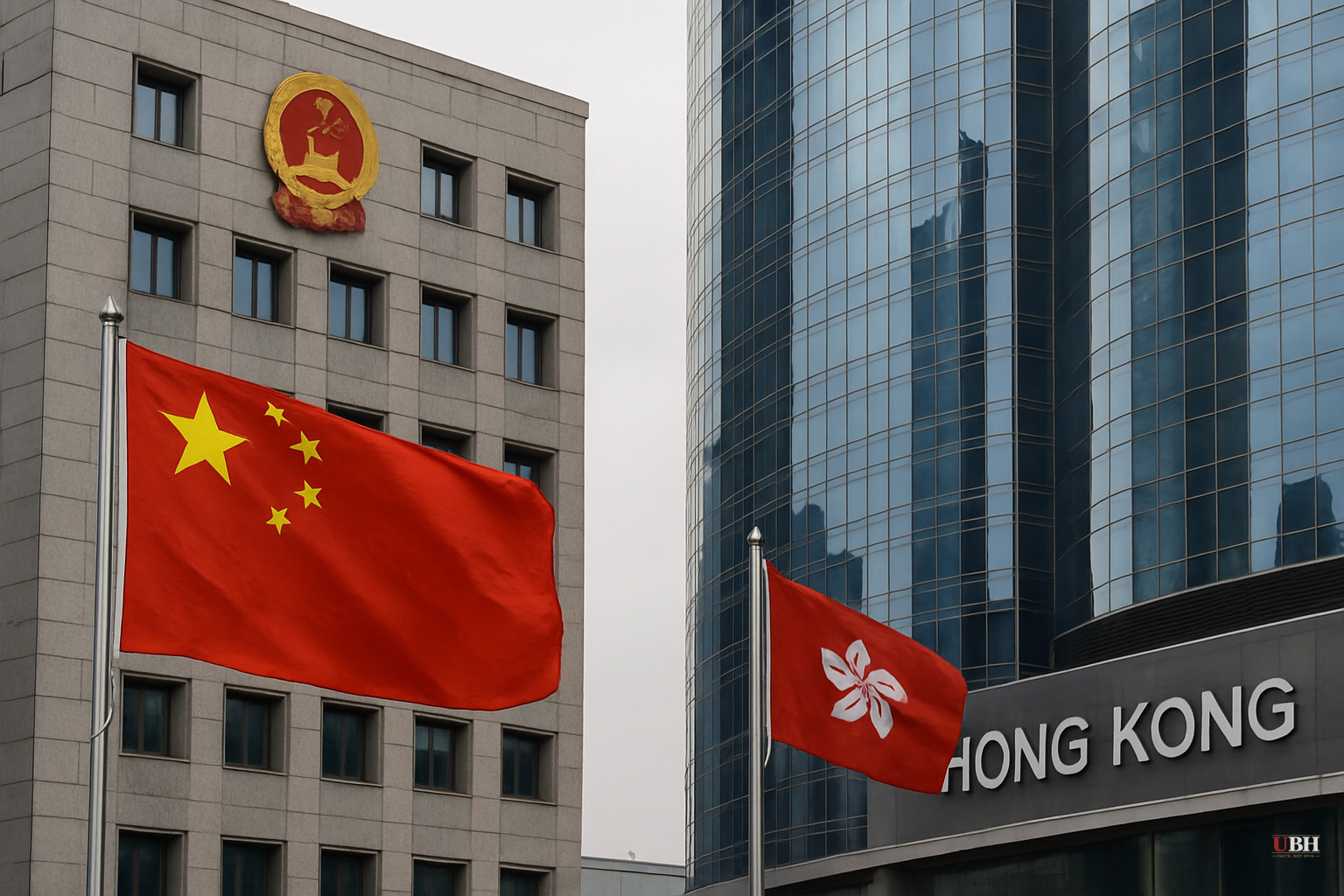
The Crackdown in Motion
Beijing has moved aggressively in recent weeks to close offshore routes that mainland Chinese investors were using to access foreign markets and hold assets abroad.
The immediate trigger: the Securities and Futures Commission (SFC) of Hong Kong penalized three brokerages — Tiger Brokers, Futu Securities International, and Longbridge Securities — for allowing mainland Chinese investors to trade overseas stocks without the required licences, according to the South China Morning Post. The enforcement action came before SFC Chairman Kelvin Wong Tin-yau addressed the Caixin Summer Summit in Hong Kong on June 12, where he pledged the commission would be "steadfast guardians of the market" and warned that innovation would never come at the cost of compliance.
Hong Kong banks moved quickly in response. Several institutions, including their mainland branches, tightened account-opening requirements for mainland residents. The Hong Kong Monetary Authority then issued a directive requiring banks to demand that prospective investment-account holders declare their funds originated outside mainland China, per the South China Morning Post report.
Why It Matters Now
This isn't a single regulatory tweak. China Money Network and ChinaRetailNews both reported June 17 on what they describe as a broader wave of new wealth-control measures targeting Chinese citizens' financial freedom, though both publications have their full reporting behind paywalls.
What's visible publicly tells enough of the story. China's retail sales fell in May for the first time in over three years, according to ChinaRetailNews reporting from June 16. Chinese consumers are cutting spending amid an economic slowdown. Exports are booming, but domestic consumption is contracting. That combination — a trade-surplus economy with a shrinking internal demand base — creates powerful incentives for wealthy Chinese to move money abroad before conditions worsen.
Beijing's answer is to make that harder.
Hong Kong's Shrinking Room to Maneuver
Hong Kong's status as an international financial center has always depended on one thing: capital can move freely in and out. That reputation is now under direct pressure from the mainland's tightening priorities.
Wong's June 12 remarks at the Caixin Summit made Hong Kong's position explicit. The city's financial role "must support China's broader financial development objectives," per the South China Morning Post's framing of the regulators' stated position. This subordinates Hong Kong's international function to Beijing's domestic goals.
Defenders of this approach argue that cracking down on unlicensed cross-border brokerage activity is legitimate regulatory enforcement, not financial repression. Tiger Brokers, Futu, and Longbridge were allegedly operating without required licences. A well-regulated market does require brokerages to hold proper authorization. On that narrow point, the SFC's action is defensible on the merits.
But the scope of follow-on measures goes further than licence compliance. Requiring mainland residents to declare the origin of their funds before opening an investment account isn't a technical fix. It's a structural barrier designed to limit capital mobility. The HKMA instruction applies broadly to prospective account-holders, not just to brokerages caught operating without licences.
The Bigger Pattern
China has long restricted information and movement. The escalation to financial controls is a meaningful shift in degree. Wealthy Chinese have historically used Hong Kong as a pressure valve — a place to hold offshore accounts, invest in foreign equities, and diversify away from renminbi-denominated assets. Beijing is systematically narrowing that valve.
The timing lines up with deteriorating domestic economic data. When internal consumption is falling and property markets remain stressed, capital naturally looks for the exit. The policy response is to block the exits rather than fix the fundamentals.
What Comes Next
Whether these controls will hold or simply redirect capital flows through less visible channels remains unclear. Capital controls in other countries have a documented history of spawning workarounds — cryptocurrency transfers, informal value-transfer networks, offshore holding structures through third countries. Beijing has tried to close those routes too, with mixed results.
For Hong Kong specifically, the question is concrete and near-term. If mainland residents find it materially harder to open and fund investment accounts there, what happens to the flow of capital that has sustained Hong Kong's financial-services sector? The SFC's pledge of "decisive enforcement" is clear. Whether Hong Kong banks and brokerages can absorb a reduction in mainland client business without consequence is a question the regulators didn't address at the Caixin Summit.
Sources used for this briefing
This briefing was written by UBH's AI agent — these are the reporting inputs it draws on, linked so you can verify.


