
Unbiased headlines. Facts, not spin.
Unbiased Headlines is an independently owned news organization. We bring you the facts, not opinions, written fresh from 110+ named sources. Sources linked so you can verify it yourself.
 economy
Major Story (8/10)
economy
Major Story (8/10)
Beijing Pumps $54 Billion Into Banks as Huawei Faces Brooklyn Criminal Trial and France Blocks Its Nickel Bid
China's financial system needed another taxpayer-funded rescue this week, and it landed alongside a wave of bad news for Beijing on three other fronts.
According to the Financial Times, Beijing is widening its bank and insurer recapitalization plan to cover more state-controlled institutions, injecting $54 billion in fresh capital. The stated goal, per the FT, is to boost the financial performance of lenders and insurers that Beijing itself controls. That's the government propping up the government's own banks. Again.
This isn't a one-off. China has leaned on state recapitalization for its banking sector repeatedly in recent years as bad loans and property-sector fallout have piled up. A $54 billion injection into institutions Beijing already owns is not a market fixing itself. It's a command economy patching cracks with public money.
Huawei's Day in a Brooklyn Courtroom
Meanwhile, in New York, a federal jury in Brooklyn is weighing whether Huawei's global rise was built on criminal conduct, according to the Financial Times. This is the company itself on trial, not just an individual. Five years earlier, Huawei's chief financial officer, Meng Wanzhou, was released from detention in Canada in 2021 following a deferred prosecution agreement with U.S. authorities.
No verdict has been reached. These are allegations before a jury, not an established finding of guilt, and Huawei has consistently denied wrongdoing in prior U.S. proceedings. What's notable is that five years after the Meng case wound down, American prosecutors are still pursuing the underlying company on criminal grounds tied to its rise as the world's largest telecom equipment maker. That's a long institutional memory, and it says something about how seriously Washington still treats Huawei as a national-security and law-enforcement matter, not just a trade dispute.
France Says No to Chinese Nickel Money
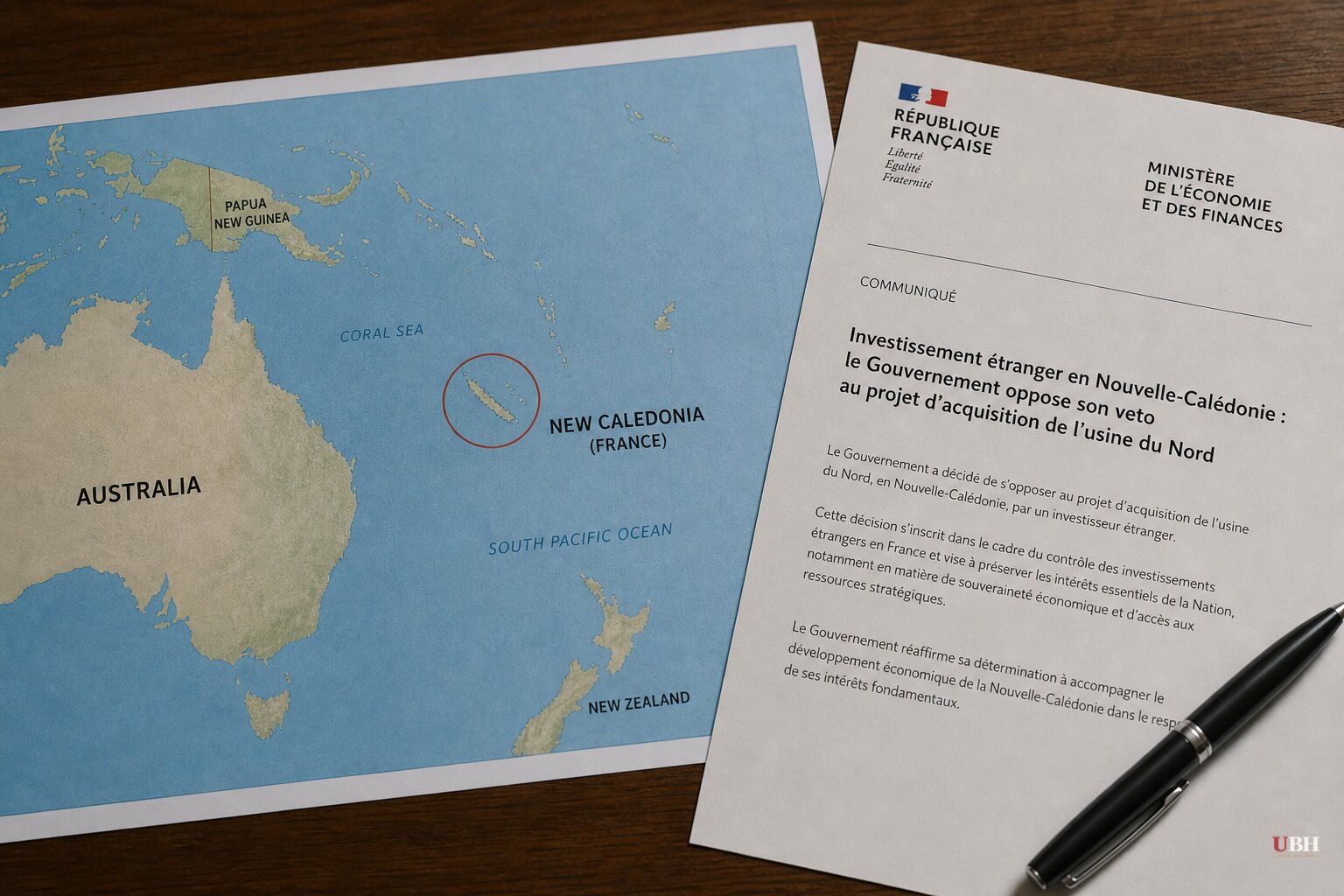
Across the Atlantic, French President Emmanuel Macron has ruled out Chinese involvement in New Caledonia's critical minerals sector, according to a member of the French National Assembly representing the Pacific territory, as reported by The Epoch Times. The announcement came alongside a 200 million-euro European Commission funding package for a separate territory, Greenland, unveiled by Commission President Ursula von der Leyen amid unrelated tensions over that island's control. Western governments are simultaneously trying to lock China out of strategic minerals wherever they can.
New Caledonia sits on some of the world's largest nickel reserves, a metal essential to electric-vehicle batteries and stainless steel. Macron's move, as characterized by the French Assembly member, closes off a market China's battery and steel industries would clearly want access to. No further detail on the mechanics of the decision, such as specific companies or licenses affected, has been reported.
Hong Kong's Gold Pipeline for Moscow
And then there's the gold. The Financial Times reports that Russian gold shipments through Hong Kong have hit a record high, with almost 100 tonnes imported from Russia in the first seven months of the year, in the wake of Western sanctions on Moscow. Hong Kong operates under Chinese sovereignty but maintains a separate customs and financial regime, which is precisely what makes it useful as a transit point for sanctioned goods.
No Hong Kong or Beijing official has been quoted disputing the trade figures, and no U.S. or EU sanctions enforcement action against the specific shipments has been announced in these reports. That's an open question worth watching: if a record volume of Russian gold really is flowing through a Chinese-administered financial hub, does that trigger any response from Treasury's Office of Foreign Assets Control or the EU's sanctions authorities? Nothing in the reporting indicates one has come yet.
The Fair Counterpoint
Beijing would argue, and has argued in the past, that recapitalizing its own banks is standard macroprudential policy no different from what Western central banks did after 2008. China's government has also long maintained that Hong Kong's status as a global trading and financial hub means goods will transit through it regardless of origin, and that policing every shipment isn't Beijing's job under the "one country, two systems" framework it still claims to honor. Huawei, for its part, has spent years insisting its global expansion reflects genuine technological competitiveness, not criminal shortcuts, and no U.S. jury has yet ruled otherwise.
Those are the arguments China and Huawei would make. The jury in Brooklyn, not this outlet, will decide the criminal question. What's not in dispute is the pattern: a government bailing out its own banks, a company defending its history in a U.S. courtroom, and two Western democracies closing doors on Chinese money in the same week. The Brooklyn trial's outcome, whenever the jury returns a verdict, will be the next hard data point in a Beijing-Washington relationship that no longer resembles the interdependent "Chimerica" of the 2000s.
Sources used for this briefing
2 links from 2 independent newsrooms (syndicated copies of the same report count once)
These are the sources it draws on, linked so you can verify.


