
Unbiased headlines. Facts, not spin.
Unbiased Headlines is an independently owned news organization. We bring you the facts, not opinions, written fresh from 110+ named sources. Sources linked so you can verify it yourself.
 economy
Notable (6/10)
economy
Notable (6/10)
Germany's Industrial Output Falls 1.1% in July, Auto Sector Cited as Main Drag
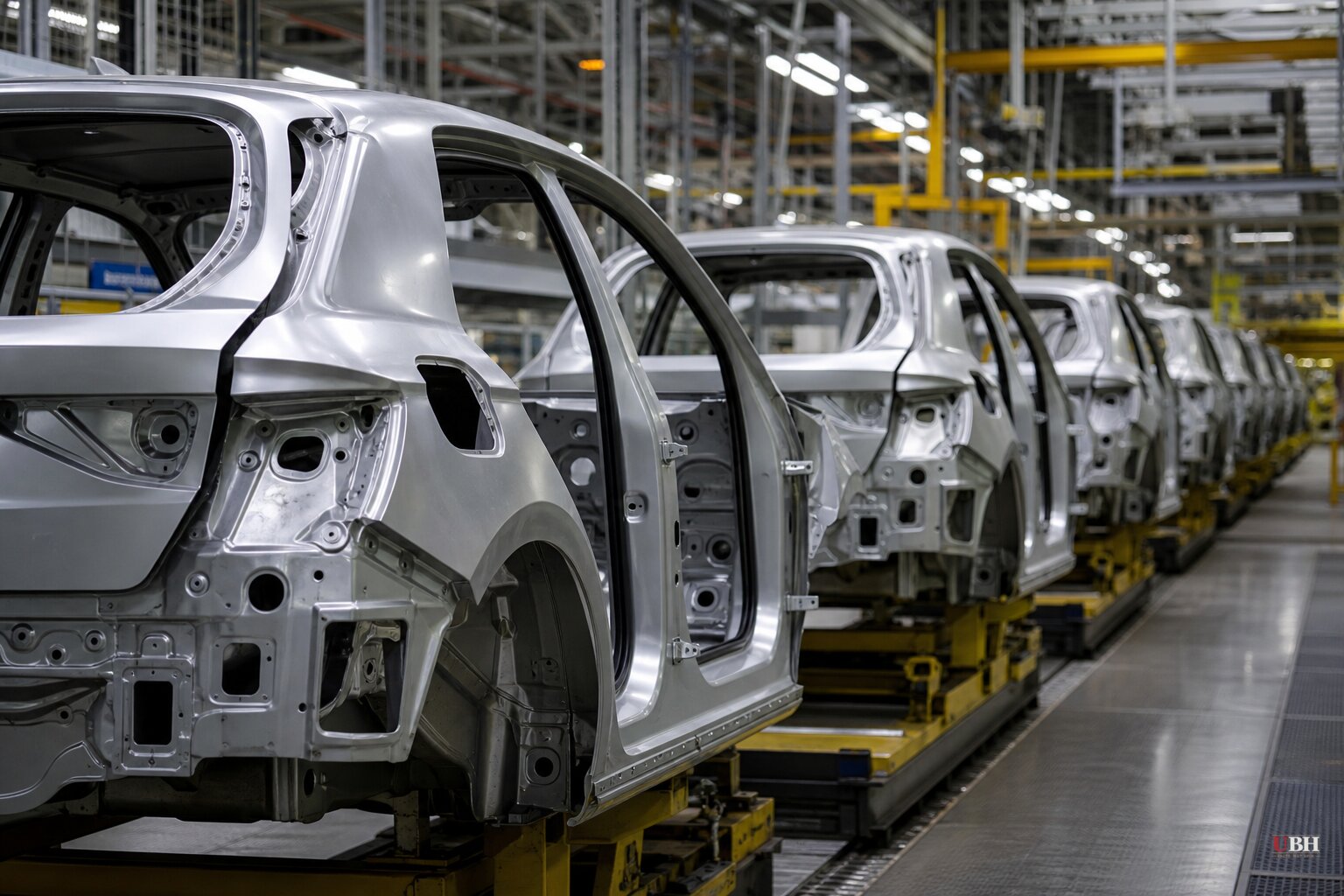
Germany's industrial engine slowed in July. Production fell 1.1% month-on-month, according to data released Monday, September 7, 2026, by the Federal Statistical Office, Destatis. Analysts polled by Reuters had expected a 0.1% increase.
The automotive industry did most of the damage. Car production dropped 9.2% in July, which Destatis and the German Association of the Automotive Industry, VDA, attributed to a multi-week production shutdown. That single sector swing was enough to drag the whole industrial index into negative territory.
The pain wasn't confined to cars. Capital goods production fell 3.4%. Consumer goods dropped 2.2%. Investment goods slipped 0.2%. Energy-intensive industries fell 1.7%. Strip out energy and construction entirely, and industrial production excluding those sectors fell 2.2% from June, according to Anadolu Agency's reporting on the Destatis release.
There was one bright spot: energy production rose 4.7%, driven by wind and solar generation. Construction output also grew 0.9% on the month. Carsten Brzeski, ING's global head of macro, noted the July numbers carry "some flavour of the economic impact of the heatwave and drought," with production down almost everywhere except renewable energy generation, which spiked.
June's numbers got worse in the rearview mirror too. Destatis revised the previously reported 0.2% monthly gain down to flat. The one piece of longer-range good news: the less volatile three-month comparison showed industrial production up 0.4% from May through July versus the prior three-month stretch. On an annual basis, though, production is down 1.6%.
Orders Are Up. Output Isn't.
July's industrial orders rose 2.5% month-on-month on a seasonally adjusted basis, Destatis reported the previous Friday. That's the kind of number that normally signals better days ahead. But Dirk Schumacher, chief economist at KfW, and Ralph Solveen, senior economist at Commerzbank, both say the order pickup hasn't translated into actual factory output, and won't for a while.
Schumacher pointed to low water levels on the Rhine, which he expects will keep curbing production through August and September. Solveen said flatly that "the German economy is likely to expand at a slower pace in the third quarter than it did in previous quarters." Alexander Krueger, chief economist at Bethmann Hal, put it even more bluntly: "While the stimulus from the fiscal package is evident, it is not leading to better capacity utilization."
That fiscal package is Germany's €500 billion ($580 billion) infrastructure fund, paired with a defense-spending exemption from the country's debt rules approved last year. It was supposed to be the jolt that got German factories running at full tilt again. Nine months into 2026, the numbers say it hasn't happened yet. Jupp Zenzen, an economic expert at the German Chamber of Commerce and Industry, DIHK, summed it up: "Industrial economic activity is crawling along." He noted only energy generation and construction are actually growing.
A Longer-Running Argument About Why German Autos Are Struggling
Separate from July's shutdown-driven drop, there's a broader debate over what's ailing German carmakers. The Epoch Times, in an August 24 commentary by Jeffery L. Degner, argued that Volkswagen's troubles trace back to European Union mandates phasing out internal combustion engines by 2035. Degner pointed to VW CEO Oliver Blume's announcement that the company plans to invest €160 billion over five years, much of it in battery cells, software and autonomous driving, and argued that regulators, not consumers, are steering that capital. Degner contrasted VW with Ford, whose shares rose 7% after acknowledging that American consumers still want big pickups and SUVs and haven't fully embraced Ford's EV lineup.
This critique raises a legitimate point: forcing an entire industry to retool around a regulatory deadline carries real cost, and if demand doesn't match the mandate, the mismatch shows up somewhere, whether in layoffs, in shuttered lines, or in market share lost to competitors who aren't bound by the same rules. Defenders of the EU's timeline counter that the transition investment is necessary regardless, since Chinese EV makers are already undercutting European automakers on price and technology, and slow-walking the shift risks ceding that ground permanently. Neither Destatis nor the VDA cited EU emissions policy as the cause of July's specific 9.2% drop in car output. That drop was attributed to a production shutdown, a distinct and narrower event.
Destatis is scheduled to release August production figures in the coming weeks. Given the Rhine water level warnings from KfW's Schumacher and Commerzbank's own forecast for a slower third quarter, there's little reason in this data to expect a rebound before Q4 at the earliest.
Sources used for this briefing
6 links from 6 independent newsrooms (syndicated copies of the same report count once)
These are the sources it draws on, linked so you can verify.


