
Unbiased headlines. Facts, not spin.
Unbiased Headlines is an independently owned news organization. We bring you the facts, not opinions, written fresh from 110+ named sources. Sources linked so you can verify it yourself.
 economy
Notable (6/10)
economy
Notable (6/10)
Thousands of 'Affordable' Apartments Sit Empty Because the Poorest Renters Still Can't Pay the Rent
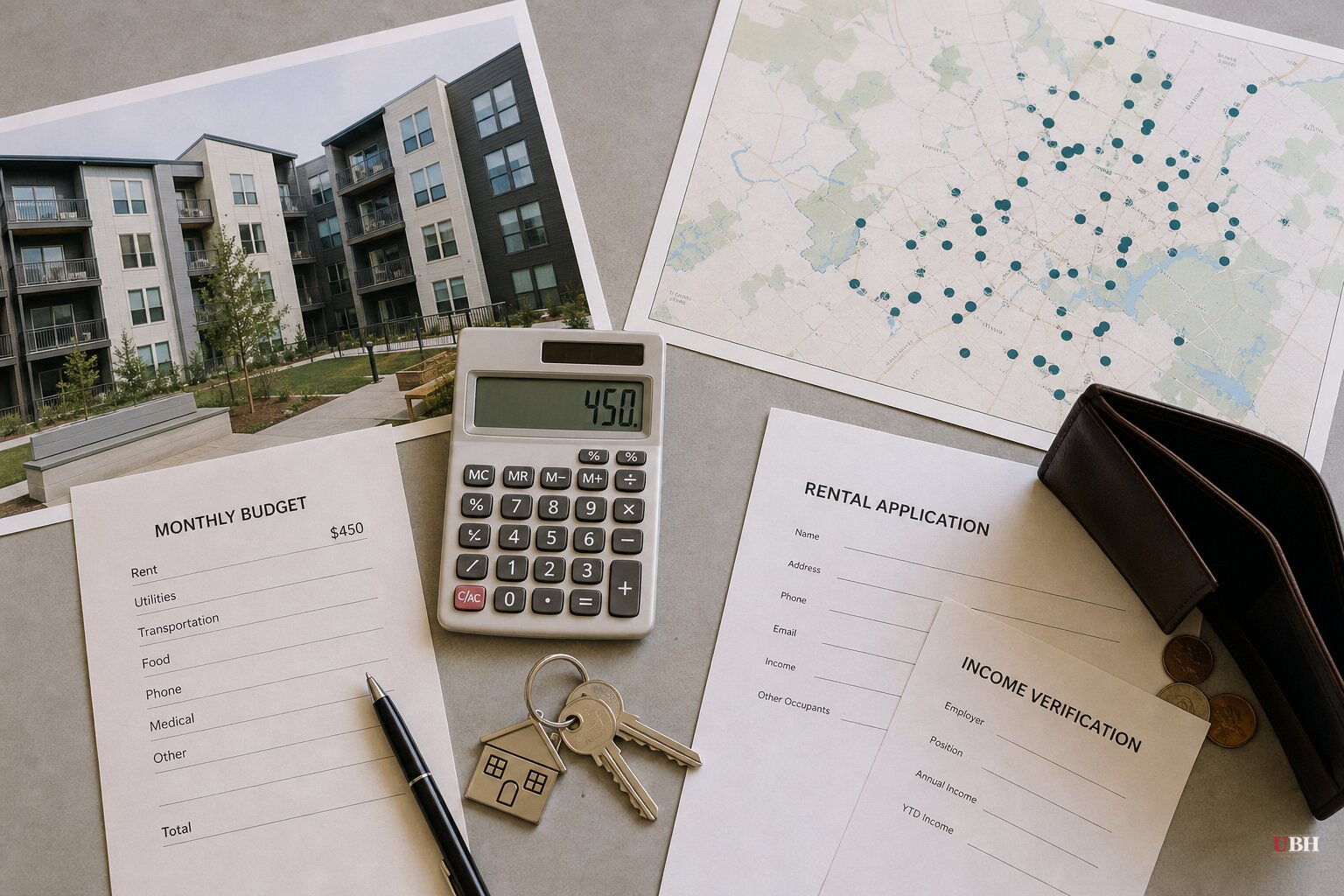
Mathew Davis lives in a homeless shelter in Austin, Texas. He'd like an apartment. He can't afford one.
Davis makes a few hundred dollars a month donating blood plasma. Even a $450-a-month tiny home with no running water and a shared bathroom is out of reach, according to the Associated Press. Meanwhile, more than 4,500 units the city of Austin classifies as affordable, nearly 16% of that stock, sit empty.
"I don't make enough money really to afford anything," Davis, 49, told the AP. "I just keep trying to swim uphill."
That contradiction, empty "affordable" units next to people who can't afford them, isn't a local fluke. It's baked into how Washington subsidizes housing.
A Program Built for the Wrong Income Bracket
The country has about 4 million affordable rental units for 11 million extremely low-income renter households, according to the National Low Income Housing Coalition's most recent annual report. Extremely low-income is defined as earning either under the federal poverty guideline, just under $16,000 for a single person, or 30% of the local median income, whichever is higher.
That group makes up roughly a quarter of all U.S. renters. It includes minimum-wage workers, seniors on fixed incomes, and people with disabilities. About three-quarters of them spend over half their income on rent and utilities, the report found, leaving almost nothing for food or transportation.
But the federal Low-Income Housing Tax Credit, the main tool for financing this housing, isn't built to serve them. Only about 12% of units financed by the credit in 2024 were set aside for extremely low-income renters, according to figures from the National Council of State Housing Agencies. The majority went to people earning 50% of area median income or more.
In Austin, that's the difference between a single person earning roughly $47,000 a year and one earning under $28,000. Those two people are not competing for the same apartment, even though both get called "low-income."
The result, according to the survey of state housing agencies cited by the AP, is a growing number of cities seeing vacancies rise as rents on these designated-affordable units creep toward market rates. Landlords built for a renter who doesn't exist in sufficient numbers at that price point, while the renters who genuinely can't pay anything get squeezed toward the shelter system.
Chris Edwards, an economist at the Cato Institute, told Congress the tax credit program is "enormously complex and bureaucratic," and that its rules "raise the cost of construction enormously." He said the complexity has "spawned" an entire industry of law and accounting firms just to administer it, and argues direct housing vouchers would reach the poorest tenants more efficiently than a tax credit routed through developers and investors.
Other experts note the two programs are designed to work together, since properties built with the tax credit are required to accept vouchers, unlike many market-rate landlords. But experts estimate only one in four eligible families ever receives a voucher, with waitlists stretching for years in some areas. Some developers say that without that additional subsidy, building units for extremely low-income tenants simply isn't financially feasible. As Carmen Romero, president and CEO of True Ground Housing Partners, put it: "The math does not lie... Our expenses don't make it really possible to create a 30% AMI unit, unless there was this extraordinary amount of subsidy that just doesn't exist."
The shortfall isn't just a design flaw in one program. It's a funding gap across the entire safety net for the poorest renters.
A Different Housing Problem, Same Week
Separately, the Trump administration has floated cutting the capital gains tax homeowners pay when they sell, according to the Daily Signal and the Epoch Times. Current law lets a single filer exclude $250,000 in gains, or $500,000 for married couples, thresholds set nearly three decades ago while home prices have roughly quadrupled in many markets.
Writer Peter St. Onge argues that traps empty-nesters in homes too big for them because selling triggers a tax bill, starving the market of family-sized homes for young buyers. A bipartisan bill, the More Homes on the Market Act, would double those exclusions and index them to inflation going forward.
St. Onge also flagged a separate concern: Rep. Scott Fitzgerald, R-Wis., sent letters in July to Compass, the country's largest real estate brokerage, and to Midwest Real Estate Data, questioning plans to take a private home-listing network national. The worry is that some homes for sale would become invisible to ordinary buyers searching public listing sites.
These are legitimate but distinct problems from what's happening to Mathew Davis. One is about middle-class families being unable to find a starter home. The other is about the poorest Americans being unable to afford housing that technically exists and sits vacant. Both point to government rules distorting who gets to buy or rent what, but they call for different fixes. Neither the capital gains proposal nor the listing-transparency fight does anything for renters earning under $28,000 a year.
The open question is whether lawmakers treat these as one housing crisis needing one fix, or recognize that a shelter resident in Austin and a family looking to buy a starter home need entirely different policy tools.
Sources used for this briefing
7 links from 7 independent newsrooms (syndicated copies of the same report count once)
These are the sources it draws on, linked so you can verify.


