
Original briefings. Zero spin.
Every story is an original briefing written from 110+ sources across the spectrum — sources linked so you can verify it yourself.
 economy
Low Interest (4/10)
September 5, 2026 at 11:33 AM
economy
Low Interest (4/10)
September 5, 2026 at 11:33 AM
BCG-ACMA Report: Electronics Will Make Up Half of Every Car's Cost by 2030
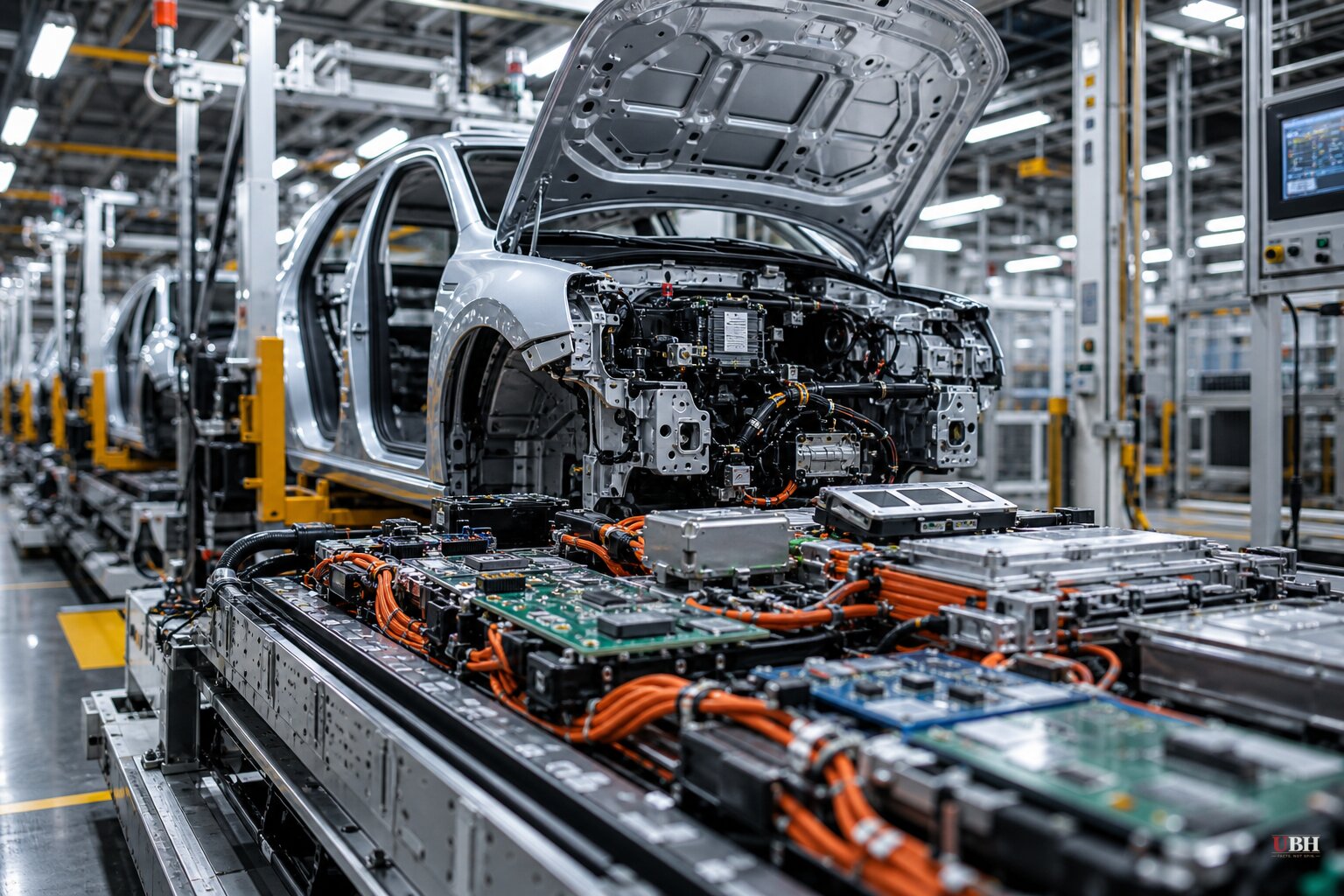
Cars are turning into computers on wheels, and the numbers back it up. A joint report from Boston Consulting Group and the Automotive Component Manufacturers Association projects that electronics will account for 50-55% of a vehicle's total cost by 2030, up from roughly 30-35% in 2020, according to the Economic Times, Fortune India, The Hindu Business Line, The Tribune, Daily Prabhat, and Newsbytes App, all of which carried the same underlying BCG-ACMA findings released this week.
The report's core line is blunt: "Every vehicle, whether ICE or electric, is becoming more electronic." This applies to gas-guzzlers and EVs alike, driven by advanced driver assistance systems, infotainment, sensors, and connectivity becoming standard rather than optional.
The Opportunity Is Real, But So Is the Gap
India's electricals and electronics segment made up only about 12% of the country's auto component supply in FY25, according to the report. That's a massive shortfall relative to where the value is heading.
BCG and ACMA identified specific areas where Indian suppliers could move up the value chain: sensors, electronic control units, power electronics, ADAS hardware, connectivity modules, and battery management systems. Each is a growing "value pool," the report's term for where the money in a car is actually going to sit by the end of the decade.
The report calls this a "key localisation opportunity for India" — meaning the chance to manufacture domestically what's currently imported or built overseas. It ties this shift to broader trends: premiumization of vehicles, electrification, tighter safety mandates, and growing export markets for Indian-made parts.
Capability, Not Just Capacity
Building electronics isn't like stamping sheet metal or assembling a transmission. BCG-ACMA states plainly that component makers will need capabilities "beyond traditional manufacturing," with heavier investment required in technology, engineering, and R&D.
A consulting firm's market projection is not a factory groundbreaking. India's chip design and semiconductor fabrication base remains thin compared to Taiwan, South Korea, and China, and much of the world's electronics supply chain, including components that would go into ADAS systems and battery management units, still runs through Chinese manufacturing. If Indian suppliers can't secure reliable, non-China-dependent access to semiconductors and precision electronic parts, localizing the assembly of ECUs and sensors doesn't fully solve the strategic problem. A reasonable skeptic would ask whether this is a genuine manufacturing shift or a projection that assumes India solves its chip and R&D gaps on schedule.
That skepticism is fair, and the report itself doesn't pretend otherwise. It frames the 2030 window as an opportunity to build capability, not a guarantee that Indian firms will capture it. The report's own emphasis on needing more engineering and R&D investment is effectively an admission that the localization outcome depends on choices Indian component makers and policymakers haven't fully made yet.
Why This Matters Beyond India
For an outside observer, particularly one watching the broader U.S.-China supply chain competition, this is a data point worth tracking. Every country trying to build an auto electronics base independent of Chinese supply chains, including the U.S. push for domestic chip manufacturing under the CHIPS Act framework, is chasing the same value pool BCG-ACMA describes here.
India starting from a 12% base isn't a criticism of Indian industry. It's a starting line. The report's framing, that ADAS, sensors, and battery management systems are where global auto manufacturing value is migrating, tracks with what's happening in Detroit, Munich, and Shenzhen simultaneously. The country that builds real design and fabrication capability in these categories, not just assembly capacity, wins the next decade of the auto supply chain. Nobody handed India that outcome. The report says the door is open. Whether Indian suppliers walk through it is a five-year question, not a headline.
Sources
Economic Times, Fortune India, The Hindu Business Line, The Tribune India, Daily Prabhat, Newsbytes App.
Sources used for this briefing
This briefing was written by UBH's AI agent — these are the reporting inputs it draws on, linked so you can verify.


