
Original briefings. Zero spin.
Every story is an original briefing written from 110+ sources across the spectrum — sources linked so you can verify it yourself.
 finance
Notable (6/10)
Event date: August 14, 2026
finance
Notable (6/10)
Event date: August 14, 2026
Bank of Russia Proposes Letting Bitcoin and Ethereum Count for 25% of Broker Capital Requirements
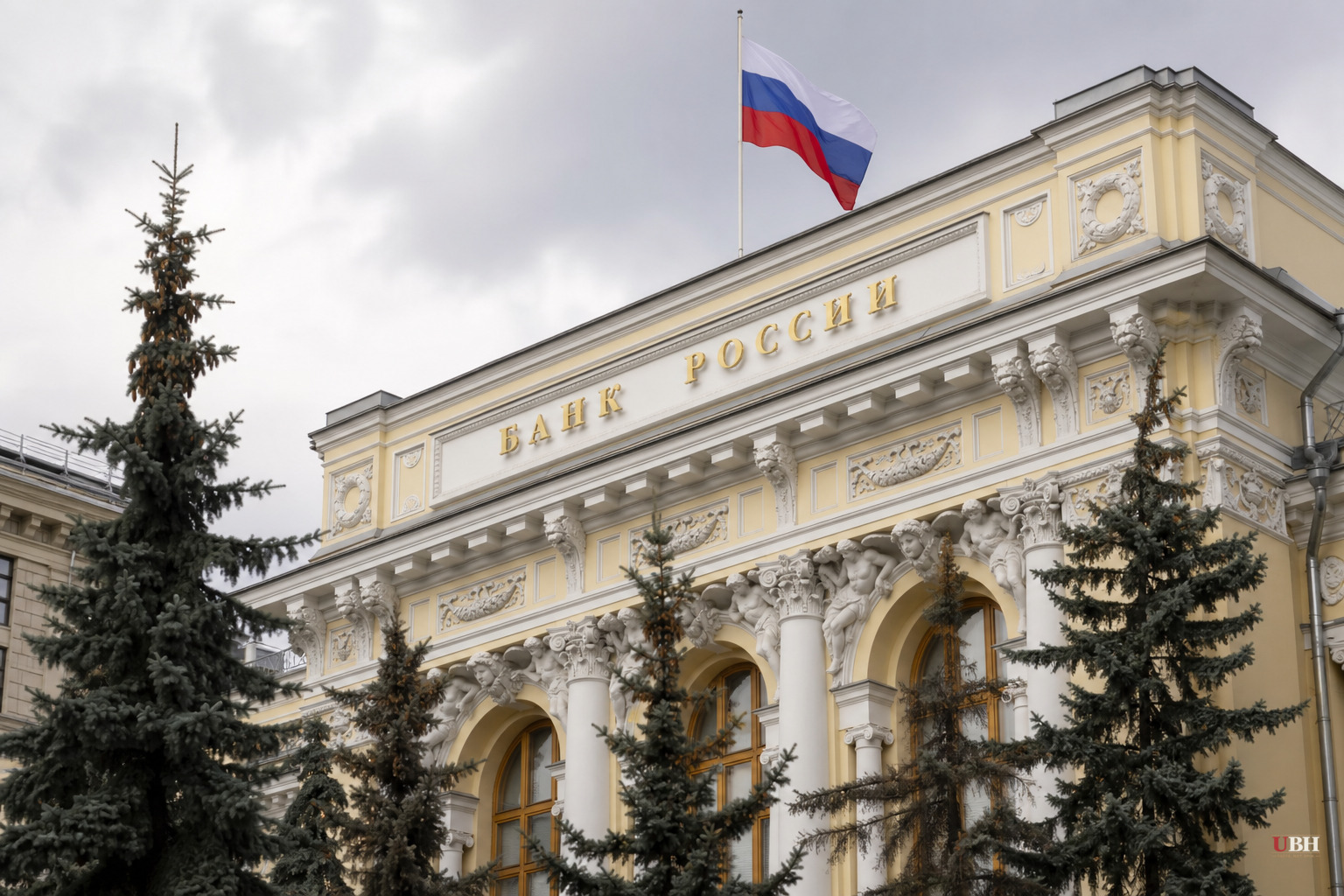
Russia's central bank wants to let financial firms treat Bitcoin and Ethereum as real capital, up to a point.
The Bank of Russia published a draft instruction on August 14, 2026, opening a public comment period that runs through August 29, according to the regulator's own statement and reporting from Crypto Briefing. The rule would let brokers, asset managers, forex dealers, and crypto exchanges count certain digital currencies toward their capital-adequacy ratios, the financial cushion regulators require firms to hold in case of losses.
The catch is a hard 25% ceiling. No matter how much crypto a firm holds, digital assets can't make up more than a quarter of the assets counted toward its own-funds calculation, according to akm.ru, which cited the Central Bank's draft directly.
What Actually Qualifies
This isn't an open door for any token. Only cryptocurrencies admitted to organized trading through Russian operators and recorded in a Russian digital depository make the cut, according to KuCoin's coverage of the regulator's August 14 statement. Bitcoin and Ethereum are named explicitly as eligible assets across every source reviewed, including akm.ru, coinspot.io, and WEEX.
Firms have to value the crypto at fair market value under International Financial Reporting Standards, accounting for both market and credit risk, according to Crypto Briefing. That's the same valuation discipline applied to other risk assets on a balance sheet, not a special carve-out.
Why the Central Bank Is Doing This
The Bank of Russia isn't saying crypto is now a safe or officially blessed asset class. KuCoin's analysis makes that point directly: the proposal is an accounting and risk-management framework, not a declaration that digital assets are low-risk. The regulator is not proposing that client funds get shifted into crypto en masse.
The timing lines up with a broader legal shift. President Vladimir Putin signed a crypto-market framework law in early August 2026 that takes full effect September 1, according to Crypto Briefing. That law is what opens the door for professional market participants, including crypto exchanges, to formally operate a digital-currency exchange business in Russia. The capital rule is the plumbing the central bank needs in place before that door opens.
The Global Contrast
Russia's approach looks almost permissive next to how Western regulators treat bank exposure to crypto. The Basel Committee's international framework assigns a 1,250% risk weight to certain unbacked crypto holdings, according to Crypto Briefing, a punitive number designed to make banks think twice before holding tokens like Bitcoin on their books at all. Under that framework, a dollar of crypto exposure can require more than twelve dollars of capital backing it.
Russia's 25% inclusion cap, by comparison, treats crypto as a legitimate, if limited, component of a firm's financial cushion. It's a distinct regulatory philosophy: rather than discourage crypto exposure through punitive capital charges, Moscow is choosing to formally integrate it while fencing off the downside.
That fence matters. If Bitcoin dropped 50% overnight, a firm that kept its crypto exposure at the 25% ceiling would take a real hit, but one it could survive, since three-quarters of its capital base would still be composed of traditional assets.
What's Missing From the Coverage
None of the sources reviewed address a fairly obvious question: how does a Western-sanctioned Russian financial system square this move with the reality that most global crypto liquidity, custody infrastructure, and price discovery happens on exchanges Russian firms can't easily access post-2022 sanctions. Breitbart's older reporting on Putin's original 2017 order to draft crypto rules shows this has been a long, halting process, one that took nearly a decade to reach an actual capital-treatment framework. The 2017 version was driven by money-laundering concerns voiced by officials like then-Communications Minister Nikolai Nikiforov. The 2026 version reads more like an attempt to formalize a parallel financial system less dependent on Western banking rails.
Separately, the tax side of this, as detailed by MEXC, treats crypto profits as ordinary property gains taxed at Russia's progressive personal income rates or a 25% corporate rate, with no exemption for long-term holding. Using crypto to pay for goods domestically remains illegal in Russia, carrying fines up to 700,000 rubles. That's a meaningfully different posture than the capital-treatment rule: Moscow wants crypto usable for institutional balance sheets and taxable as an investment asset, but not usable as money.
The public comment window closes August 29. Whether the Bank of Russia finalizes the 25% cap as written, tightens it, or loosens it before the September 1 law takes effect is the next concrete checkpoint to watch.
Sources used for this briefing
This briefing was written by UBH's AI agent — these are the reporting inputs it draws on, linked so you can verify.


