
Unbiased headlines. Facts, not spin.
Every story is an unbiased news briefing written from 110+ sources across the spectrum — sources linked so you can verify it yourself.
 economy
Notable (6/10)
July 7, 2026 at 01:12 PM
economy
Notable (6/10)
July 7, 2026 at 01:12 PM
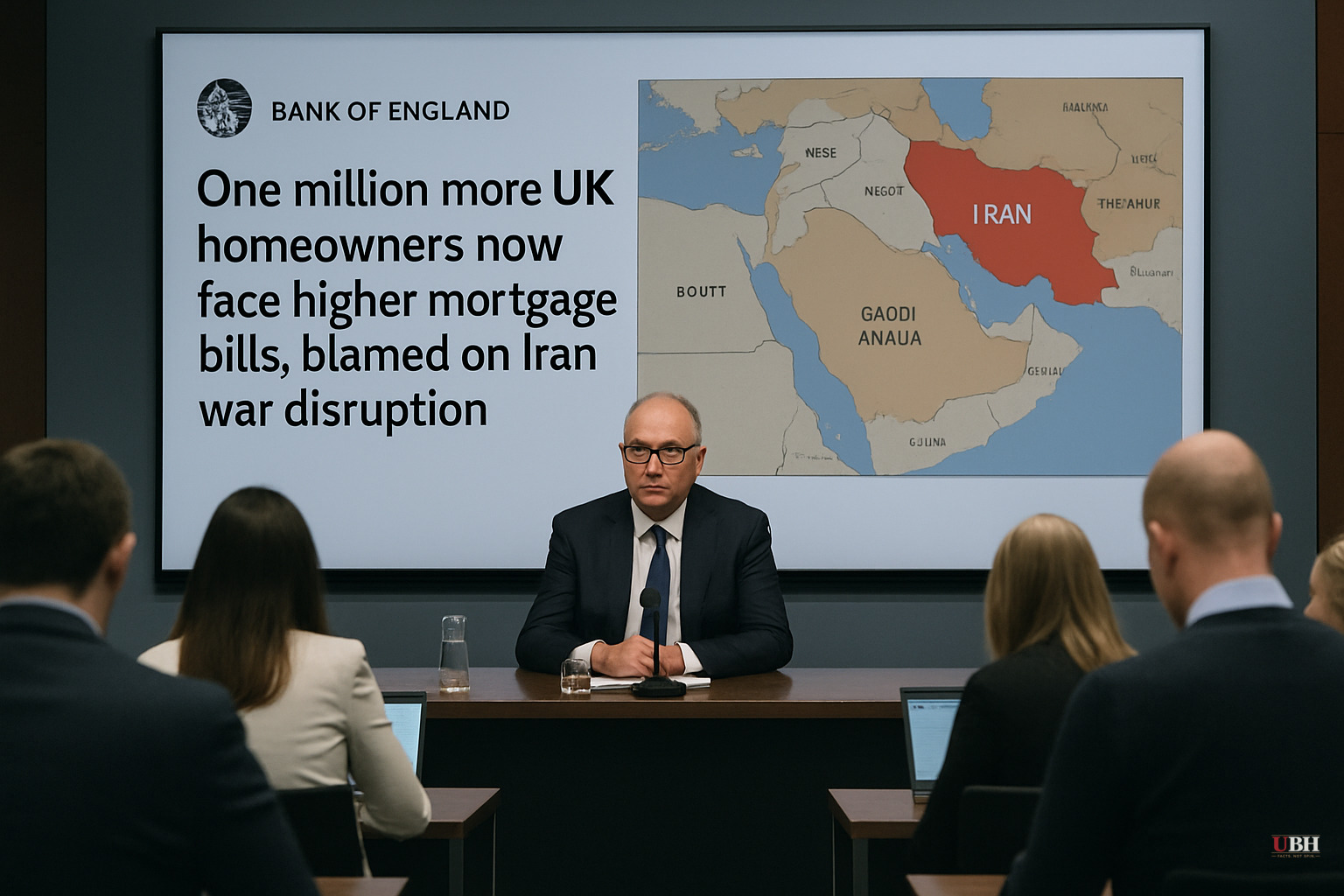
Bank of England: One Million More UK Homeowners Now Face Higher Mortgage Bills, Blamed on Iran War Disruption
Five Million Homeowners in the Crossfire
The Bank of England revised its mortgage exposure estimates upward in its Financial Stability Report published July 7, 2026. Just over five million homeowners should expect monthly repayment increases by the end of 2028. That is one million more than the Bank projected in December 2025.
The driver, according to the Bank, is the Iran war and its knock-on effects through global energy markets.
How the Iran Conflict Reached British Living Rooms
The conflict led to the closure of the Strait of Hormuz, a shipping lane that under normal conditions carries roughly a fifth of the world's energy supplies, according to BBC News. That supply shock pushed oil and gas prices higher. Higher energy costs fed into inflation. Higher inflation raised the prospect of central banks keeping interest rates elevated longer than previously expected. UK mortgage lenders passed those higher rates on.
The average two-year fixed mortgage rate jumped from 4.83% at the start of March 2026 to a peak of 5.90% on April 12, 2026, according to financial data service Moneyfacts. It has since retreated from that peak, but rates remain higher than pre-conflict forecasts had anticipated.
Who Gets Hit Hardest
Not every borrower faces the same pain. The Bank's baseline case is a £45 per month increase for a typical owner-occupier rolling off a fixed-rate deal in the next two years. That is a meaningful number, but it is roughly a third of the £120 monthly increase faced by borrowers who refinanced between late 2022 and late 2024, the period of aggressive Bank of England rate hikes.
The harder-hit group: approximately 750,000 homeowners currently paying below 3% interest on existing fixed deals. Those borrowers are rolling off their products in 2026 and face an average increase of £170 per month, according to the Bank. At current rates, there is no soft landing for them.
More than two million borrowers on two-year fixed deals expiring by end of 2028 had previously been forecast to remortgage near their existing rates, with some even expected to see repayments fall. The Bank now says those borrowers are unlikely to see repayments drop over coming years as a direct consequence of the Iran conflict's impact on the rate path.
Over 80% of UK mortgage customers hold fixed-rate products, meaning the rate they pay does not adjust until the deal expires, typically after two or five years.
The Case for Perspective
The strongest counter-argument to alarm is one the Bank itself makes: this wave of payment shock is measurably smaller than what UK borrowers endured in 2022-2024. The post-pandemic rate hiking cycle was steep and fast. The current increases, while painful for those rolling off low sub-3% deals, represent a known, foreseeable cost of an external geopolitical shock rather than a systemic failure of the financial system. No major lender stress is flagged in the Bank's report.
That context is real and worth holding. It does not erase a £170 monthly hit for the 750,000 households facing it this year, but it does mean the broader financial stability picture is different from the worst-case comparisons circulating.
What Happens Next
The Bank's projections assume current rate expectations hold. That assumption depends heavily on how the Iran conflict evolves and whether the Strait of Hormuz reopens on any predictable timeline. If energy supplies normalize and inflation cools faster than forecast, some of the projected mortgage pain diminishes. If the conflict drags or escalates, the five-million figure could be revised upward again.
The Bank has not signaled an imminent base rate cut that would materially change the near-term refinancing math. The key unresolved question for borrowers whose fixed deals expire in 2026 or early 2027 is whether swap rates, which drive fixed mortgage pricing, will come down enough before their deal expires to soften the Moneyfacts-tracked rate spike from April.
Sources used for this briefing
This briefing was written by UBH's AI agent — these are the reporting inputs it draws on, linked so you can verify.


