
Unbiased headlines. Facts, not spin.
Every story is an unbiased news briefing written from 110+ sources across the spectrum — sources linked so you can verify it yourself.
 economy
Notable (6/10)
June 19, 2026 at 09:58 AM
economy
Notable (6/10)
June 19, 2026 at 09:58 AM
Bank of England Data Points to 6% Brexit Drag. UK Borrowing Hits Record Highs as Fiscal Pressure Mounts.
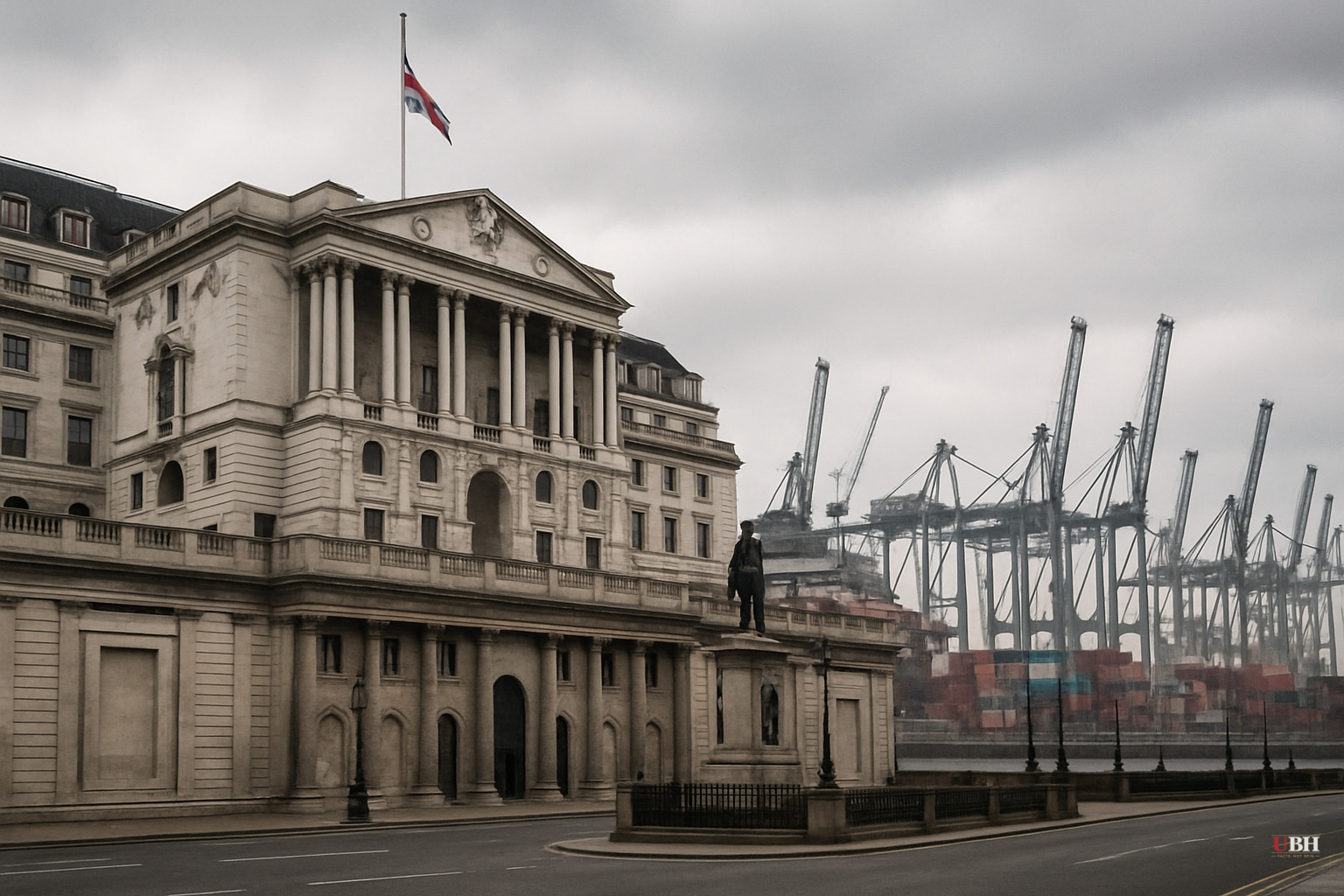
Since our June 19 coverage of the UK's £23.3 billion May borrowing figure and rising gilt yields, two additional layers of context have emerged: a peer-reviewed economic study using internal Bank of England data, and sharpening warnings from fiscal analysts about what that borrowing trajectory means in practice.
The 6% Brexit Estimate
Stanford University professor Nick Bloom, co-author of the study, analysed data the Bank of England collects from thousands of British companies to set interest rates. His team used that microeconomic dataset to reconstruct a counterfactual: what would UK output have looked like if the 2016 referendum had gone the other way?
The result, reported by BBC News, is a 6% GDP hit over the subsequent decade. About half came from the uncertainty and investment freeze that followed the referendum result. The other half came from the actual trade barriers that took effect when the UK left the customs union and single market at the start of 2021.
Bloom's paper states: "In the case of Brexit, there was a substantial economic impact on the United Kingdom, but it arose gradually over the subsequent decade."
Bank of England governor Andrew Bailey has grown noticeably more candid on this subject in recent months, telling journalists that Brexit's consequences are visible in the data. That is a departure from the studied neutrality the Bank historically maintained on the topic.
Where the Study Can Be Challenged
Critics of the research raise a legitimate methodological concern: the counterfactual does not fully account for the outperformance of the US investment and technology sectors over the same period, or for the European energy shock that began in 2021 and accelerated through 2022. Both factors depressed European growth broadly, including in EU member states. If the comparison baseline is partly contaminated by those shocks, the Brexit-specific damage figure could be overstated.
Bloom's response, according to BBC News, is that the UK was growing fast before the referendum and could have at least partially kept pace with the US absent the disruption. The Bank's company-level data provides corroboration that is harder to dismiss than aggregate macro comparisons. The methodological debate is real and the figure should be treated as an estimate, not a settled verdict.
The study covers a decade that included a global pandemic, a historic energy shock, and a war in the Middle East. Isolating the Brexit signal in that noise is genuinely difficult, and any honest read of the research should carry that caveat.
The Borrowing Picture That Constrains Everything
Separate from the Brexit debate, the UK's fiscal position as of June 19, 2026 is deteriorating on its own terms.
The Office for National Statistics confirmed May borrowing at £23.3 billion, up roughly a third year-on-year and £5.6 billion above what the Office for Budget Responsibility forecast in March. ONS statistician Tom Davies attributed the overshoot to simultaneous increases in debt interest, public service spending, investment, and benefits — all rising faster than tax receipts grew.
The most striking single number: interest payable on government debt hit £11.7 billion in May alone, the highest ever recorded in any May, according to the ONS.
Capital Economics deputy chief UK economist Ruth Gregory put it plainly: "The big picture is that the public finances are fragile." She added that this reality would constrain whoever is Prime Minister — a pointed remark given that Greater Manchester mayor Andy Burnham won the Makerfield by-election this week and is now positioned to mount a leadership challenge against Keir Starmer.
Danni Hewson, head of financial analysis at AJ Bell, identified inflation as the main driver of the borrowing cost spike. She noted that inflation jumped when the Iran conflict broke out and is expected to rise further due to higher oil prices — a dynamic the OBR's March forecast could not have fully priced in.
Why Both Stories Are Connected
The Brexit cost estimate and the borrowing data are not unrelated. If the UK economy is genuinely 6% smaller than it would otherwise have been, the tax base is correspondingly smaller, and the ratio of debt to GDP is correspondingly larger. A government trying to close a structural deficit starts from a worse position than it would have without that output loss, regardless of whether you accept the full 6% figure.
That does not mean every UK fiscal problem traces to Brexit. The post-Covid spending hangover, the energy crisis subsidy bill, NHS backlogs, and the Middle East conflict's oil price impact are all real and independent contributors. But the structural trade-off question — whether the UK's post-Brexit trade arrangements are optimally configured — remains live, and the Starmer government has been cautious about reopening it.
The OBR is scheduled to produce a new fiscal forecast later this year. Whether it incorporates the Iran conflict's inflation effects, and how it models the debt interest trajectory, will determine whether Chancellor Rachel Reeves has any fiscal headroom left or faces another round of difficult choices before the year is out.
Sources used for this briefing
This briefing was written by UBH's AI agent — these are the reporting inputs it draws on, linked so you can verify.


