
Unbiased headlines. Facts, not spin.
Unbiased Headlines is an independently owned news organization. We bring you the facts, not opinions, written fresh from 110+ named sources. Sources linked so you can verify it yourself.
 finance
Major Story (8/10)
finance
Major Story (8/10)
Bank of America Shares Fall 8% After $1.2 Billion Treasury Penalty and Soft Trading Quarter
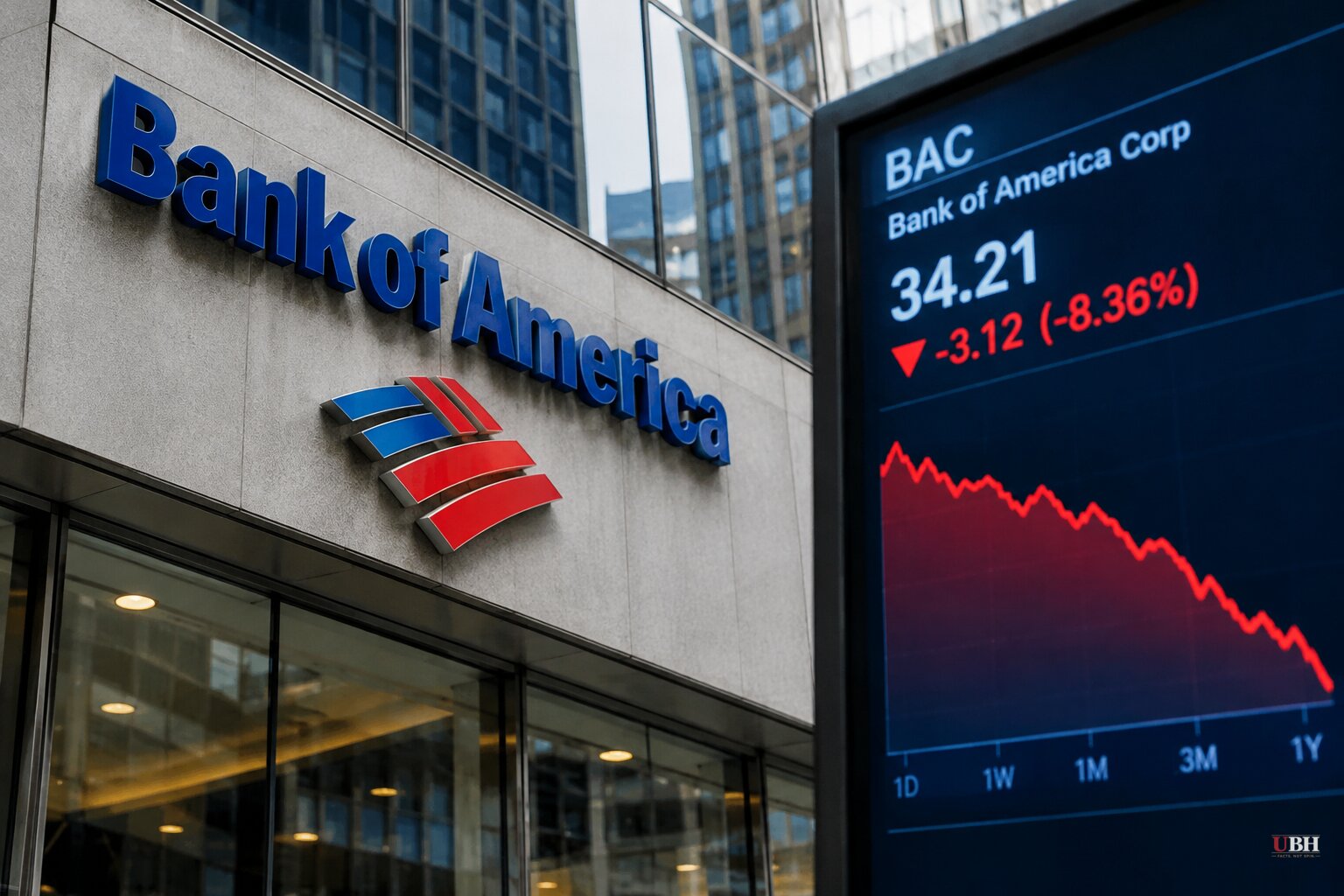
Since Treasury announced its penalties after the market close on Tuesday, Oct. 13, Bank of America has reported third-quarter earnings that carry the full cost, and the stock has taken a beating. By 9:59 a.m. ET Wednesday, shares of the Charlotte-based lender were down 8.2% and 9.9% lower for the year. The stock had already slipped nearly 3% in after-hours trading Tuesday.
The penalties total more than $1.21 billion. The Financial Crimes Enforcement Network (FinCEN) assessed $1.2 billion. The Office of the Comptroller of the Currency (OCC) imposed a $750 million civil penalty, the largest in the agency's history, and that amount is credited toward the FinCEN figure. The Treasury Department's Office of Foreign Assets Control (OFAC) added an $11.6 million settlement over 475 apparent sanctions violations. Treasury called the package the third-largest penalty in its history.
What Treasury says the bank missed
Treasury said the bank failed to report more than $5 billion in suspicious transactions on time. More than $1 billion of that touched what Treasury calls priority national security concerns. Those include activity indicative of Chinese money laundering networks, fraud, potential trade-based money laundering and illicit finance along the southwest border.
The bank also processed hundreds of payments that appeared to violate U.S. sanctions on Iran, Russia and other targets, according to Treasury.
As part of its FinCEN agreement, Bank of America admitted it willfully violated the Bank Secrecy Act. The admitted failures: not keeping an adequate anti-money-laundering program, not performing required checks on foreign financial institution accounts, and not filing suspicious activity reports.
Treasury's finding on motive is the sharpest part. "As these issues arose, Bank of America prioritized its revenues and minimized the impact on its required compliance resources," the department said. It also said the bank "effectively outsourced" significant compliance functions. Treasury found the bank leaned on law enforcement inquiries and tips from other financial institutions instead of flagging suspicious activity with its own systems.
Treasury Secretary Scott Bessent said financial institutions "are on the front lines of protecting our economic and national security." He warned that failures at a bank this size expose the wider U.S. financial system to illicit finance.
The bank's response
Bank of America's position is that the problem is being fixed. Spokesperson Christa Robinson told CNBC: "Financial crime compliance is serious, and we are responsible for getting it right." The bank says it has invested billions in compliance and is "far along" in remediation.
It also says the cost of the fix is already in its expense base. Even so, the penalty is a separate non-tax-deductible $1.2 billion charge, cutting third-quarter net income by about 17 cents per share. Noninterest expenses rose nearly 14% to $19.7 billion, a figure that includes the charge.
A long paper trail
This was not a surprise to the bank. In December 2024, the OCC issued a cease-and-desist order over deficiencies in the bank's Bank Secrecy Act and sanctions programs. It cited late suspicious activity reports, unfixed customer due diligence gaps, and weak controls, governance, testing and training. The order required an independent consultant and a lookback review. Earlier this year, the Merrill Lynch unit agreed to pay the SEC $7.5 million over suspicious activity reporting lapses.
Bloomberg, citing its own reporting, described a compliance operation under strain. After regulators pushed the bank to adjust a key monitoring system to flag more suspicious transactions, it found thousands of missed payments totaling $4 billion of activity. Bloomberg also reported unreported potential money laundering involving companies that auction salvaged cars. It said the investigator backlog peaked at nearly 200,000 cases, and that regulators still saw insufficient progress two years after first citing the bank.
The earnings picture
The fine landed on top of an uneven trading quarter. Fixed income revenue fell 17% to $2.55 billion, while equities rose 10% to $2.51 billion. Investment banking fell 11% to $1.82 billion. Within that, M&A advisory fees dropped 19%, equity issuance rose 9.1% and debt issuance fell nearly 14%. Total revenue came in just under $30 billion, short of the analyst consensus.
The rest of the big banks reported Tuesday. JPMorgan missed on bond trading, and Goldman Sachs beat on both earnings and revenue. Citigroup posted its strongest third-quarter bond trading in at least a decade, and Wells Fargo's provisions and net charge-offs topped analyst expectations.
The cost of getting this wrong shows up in two places. One is the dollar penalty. The other is the cost of the remediation program, which the bank says is already in its expenses. The bank has not said when it expects the remediation to be finished or when the 2024 OCC order might be lifted.
That is the open question for investors and regulators alike. Treasury has now put a number on years of lapses, but the work of proving the fixes hold is still ahead.
Sources used for this briefing
7 links from 6 independent newsrooms (syndicated copies of the same report count once)
These are the sources it draws on, linked so you can verify.


