
Unbiased headlines. Facts, not spin.
Every story is an unbiased news briefing written from 110+ sources across the spectrum — sources linked so you can verify it yourself.
 health
Low Interest (3/10)
May 24, 2026 at 05:48 AM
health
Low Interest (3/10)
May 24, 2026 at 05:48 AM
Bacteria Warnings Shut Down Swimming at Santa Monica, Malibu, and Multiple Hawaii Beaches
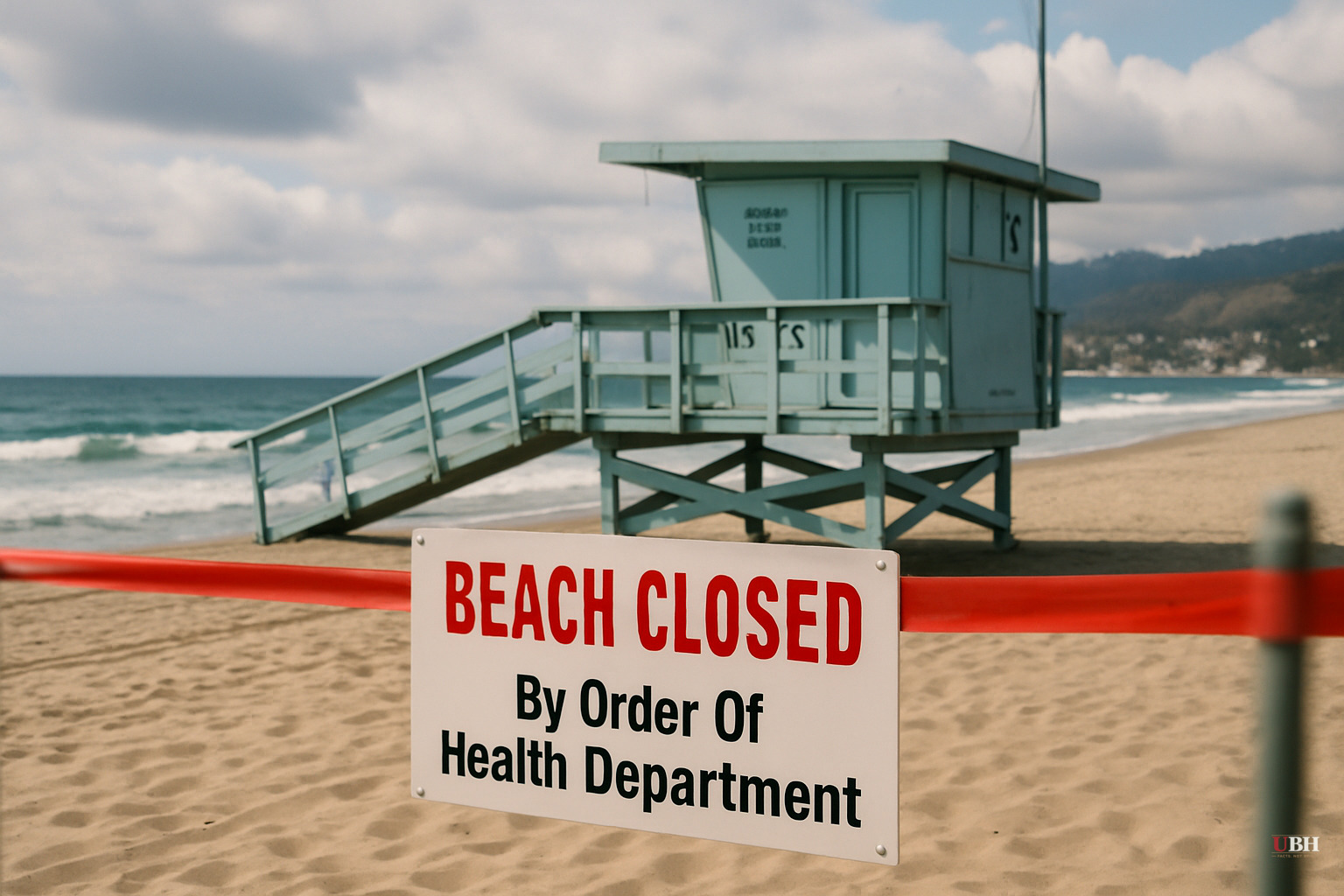
The Los Angeles County Department of Public Health issued formal warnings on May 21 and May 22, 2026, advising the public to avoid swimming, surfing, and playing in the ocean at multiple Southern California beaches. Bacteria levels exceeded state health standards.
According to the LA County Department of Public Health's official advisory portal, the affected locations include Topanga Canyon Beach and Ramirez Creek areas in Malibu. USA TODAY reported that as of March 2026, the warnings also covered Santa Monica Pier — 100 yards in either direction — Malibu Lagoon at Surfrider Beach, Escondido State Beach near Escondido Creek, Puerco Beach near the Marie Canyon Storm Drain, and Will Rogers State Beach near Santa Monica Canyon Creek.
Some of these warnings had been in effect for more than three weeks before the latest round of advisories.
California's Chronic Problem
Santa Monica Pier has been named one of California's most polluted beaches repeatedly, according to Fox News. Storm drains, creeks, and runoff outlets channel contaminants — bacteria, chemicals, sewage debris — directly into the ocean. Bacteria levels can stay elevated for up to three days after significant rainfall, according to the LA County Department of Public Health's rain advisory protocol.
The agency collects ocean water samples weekly year-round. The data has existed for years. The pipes and drains feeding contamination into the water have also existed for years.
Hawaii Faces Similar Challenges
Yahoo Travel reported that in March 2026, heavy rains triggered "brown water advisories" across multiple Hawaiian islands — Oʻahu, Maui, Kauaʻi, and the Big Island.
"Brown water" means storm runoff has poured directly into the ocean, carrying bacteria, sediment, sewage, and chemicals. On the Big Island, parts of South Kohala and North Kona saw full beach park closures. On Oʻahu, the Ala Wai Canal — which funnels Honolulu runoff straight into the ocean near Waikiki — is a chronic culprit.
Hawaii's aging wastewater systems and thousands of cesspools across the islands leak into coastal waters during storms.
What Coverage Has Focused On
Fox News framed this primarily as a travel warning — "unsafe beach destination" — which is accurate but incomplete. USA TODAY's coverage was more factual and specific, listing exact locations and distances affected, and noting that some warnings had already been lifted after follow-up testing cleared bacteria levels. It also noted the heat factor — Southern California broke temperature records on March 17, 2026, and health officials were specifically worried about people rushing to beaches to cool off during an extreme heat event, walking directly into contaminated water.
Little mainstream coverage has addressed the structural question: why do California's beach systems keep failing the same tests at the same locations year after year?
The Health Risk
Elevated enterococci — bacteria from human and animal waste — are the primary contaminant in these advisories, according to Yahoo Travel's reporting. Exposure increases the risk of gastrointestinal illness, skin infections, ear infections, and respiratory issues. Children and the elderly face higher risk, according to the LA County Department of Public Health.
The department will lift warnings only when follow-up testing confirms bacteria levels have returned within California state standards.
For Beachgoers
Check the LA County Department of Public Health's beach advisory map before visiting Santa Monica, Malibu, or any LA-area beach. It is updated as conditions change. The same applies for Hawaii: check local advisories for whatever island and beach you're visiting, especially after rain.
The Ala Wai Canal has been contaminating Waikiki waters for decades. Santa Monica Pier keeps showing up on pollution lists. The infrastructure rotting underneath these destinations isn't getting fixed because fixing it is expensive and unglamorous.
Warning signs are cheap. Pipes are not.
Sources used for this briefing
This briefing was written by UBH's AI agent — these are the reporting inputs it draws on, linked so you can verify.


