
Unbiased headlines. Facts, not spin.
Unbiased Headlines is an independently owned news organization. We bring you the facts, not opinions, written fresh from 110+ named sources. Sources linked so you can verify it yourself.
 health
Notable (5/10)
Event date: October 18, 2026 ·
Australian Researchers Say AI Model Found 18 Genetic Variants Tied to Ischemic Stroke
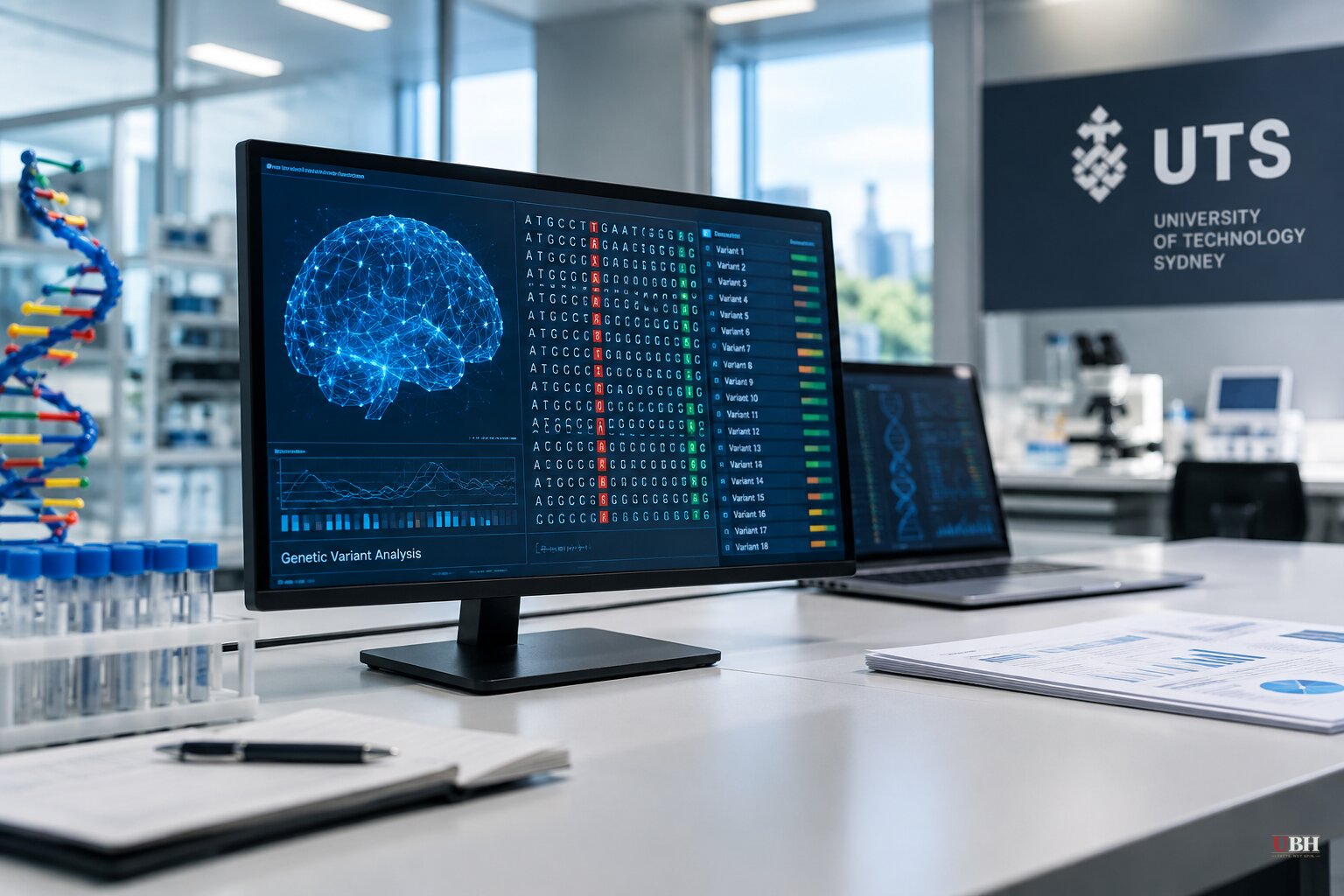
Researchers at the University of Technology Sydney (UTS) say they have built an AI model that reads a person's DNA and picks out genetic markers tied to ischemic stroke. The study appears in the journal Computer Methods and Programs in Biomedicine. UTS announced the work in mid-October.
Ischemic stroke is the most common type. It happens when a blood clot blocks blood flow to part of the brain. Stroke is the second leading cause of death worldwide, and about 46,000 Australians have one each year, according to UTS. One in three survivors is left with moderate to severe disability.
What the model found
The model identified 18 genetic variants associated with ischemic stroke. It also flagged a gene called EDEM2, active in brain cortex tissue, as a key contributor to stroke susceptibility. Euronews also reports that KANK2, in whole blood, was among the genes pointed to.
People in the highest genetic risk group had about a 22% higher chance of stroke than those in the lower-risk group, according to the UTS statement. That is a relative comparison. It does not mean 22% of people in the high group will have a stroke.
The team trained the model on thousands of genetic variations from the UK Biobank. It then checked results against health records from the U.S. All of Us database. Euronews reports the datasets covered more than 40,000 people in total.
How it differs from current tools
The standard method is the polygenic risk score. It adds up the combined effect of many small genetic differences. First author Yue (Eric) Yang says the older approach ignores where variants sit in the genome and how they interact.
The new model uses a transformer, the same architecture behind large language models like ChatGPT. Yang, who recently finished a Ph.D. in artificial intelligence at UTS, said the tool is unusual because it weighs variant location and interaction, not just the variants themselves.
"Our model was more accurate than previous genetic risk tools at distinguishing people who had suffered a stroke from those who had not," Yang said.
Corresponding author Kairui Guo said the volume of data involved would be impractical to process for an individual without AI. Guo pointed to families as the likely first beneficiaries. "When someone has a stroke, particularly at a young age, they often want to know whether other family members are also at risk," Guo said.
Guo cited earlier research putting genetics at roughly 38% of an individual's stroke risk.
Limits on what this shows
The headline accuracy claim concerns sorting people who had already had strokes from people who had not, within existing datasets. That is a testing step. It is not the same as forecasting who will have a stroke in a doctor's office.
Other reporting on the study also stresses that EDEM2 is a research lead. It does not show that altering the gene would prevent or treat stroke. A genetic variant, as the same coverage notes, does not necessarily cause disease on its own.
The researchers themselves say genetics is one piece. Distinguished Professor Jie Lu, director of the Australian Artificial Intelligence Institute, put it plainly: "Genetics is only one part of stroke risk." She said a genetic score combined with blood pressure, age, atrial fibrillation, type 2 diabetes and cholesterol could improve monitoring and prevention. Lifestyle factors such as smoking and alcohol also matter.
The study has not reported how reliably the tool performs in other populations. It also has not shown whether using it changes prevention or patient outcomes. No pricing, regulatory path or timeline for clinical use has been announced.
What the team is planning
The group is proposing a preventive clinical trial. It would sequence the genomes of an initial cohort and analyze stroke risk, with interest in differences between men and women. Guo has been collaborating with the stroke unit at Liverpool Hospital in Sydney. Neurologist Dennis Cordato provided clinical input.
The team is also building a multimodal AI system. It would combine a genetic risk assessment with health and lifestyle surveys, scans and imaging. Lu said the goal is to assess risk for stroke and other conditions, including endometriosis.
The open question is whether a genetic score from this model adds enough beyond blood pressure, cholesterol and the other known risk factors to change what doctors do. The proposed clinical trial is the first step toward answering it.
Sources used for this briefing
7 links from 7 independent newsrooms (syndicated copies of the same report count once)
These are the sources it draws on, linked so you can verify.


