
Unbiased headlines. Facts, not spin.
Every story is an unbiased news briefing written from 110+ sources across the spectrum — sources linked so you can verify it yourself.
 tech
Major Story (7/10)
August 12, 2026 at 10:17 PM
tech
Major Story (7/10)
August 12, 2026 at 10:17 PM
Australia to Raise Tech Levy to 2.5%, Force Google, Meta and LinkedIn to Cut More News Deals
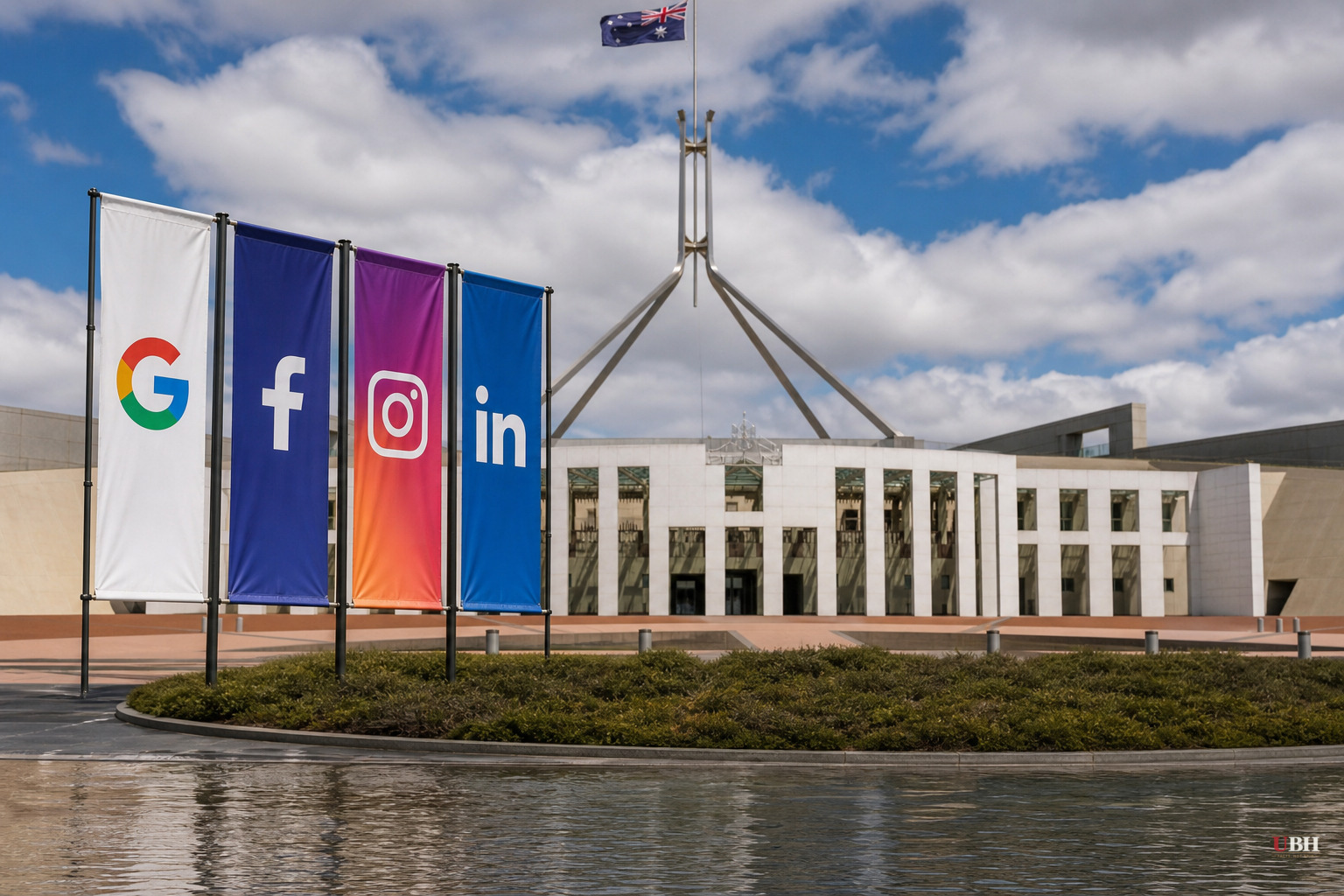
Australia is going back for a second round with Big Tech over news content, and this time the bill is bigger.
The federal government confirmed it will introduce revised "news bargaining incentive" legislation to parliament when it returns later in August, according to AAP. The plan raises the maximum levy on large digital platforms from a previously proposed 2.25% to 2.5% of their Australian digital advertising revenue, and expands which companies get hit with it.
Companies like Google, Meta and TikTok would face the charge if they don't strike commercial deals with Australian news publishers. If they do sign deals, the value of those deals offsets or even zeroes out what they owe the government, according to a statement from Assistant Treasurer Daniel Mulino reported by the Los Angeles Times via Bloomberg News. The system functions as a tax with an escape hatch: pay media companies directly, or pay Canberra instead.
The threshold for who gets caught in the net has moved around depending on the source. AAP reported the levy applies to companies with Australian domestic revenues of $250 million or more. The Los Angeles Times, citing the same government framework, put the trigger at $175 million in annual digital advertising revenue from search or social media. Both figures track the same policy evolving through consultation, and the exact final number will be settled when the bill text is formally introduced.
Platforms will now need to sign deals with at least eight media companies to fully offset their levy, up from six in the earlier draft, according to The Nightly and AAP. Each individual deal is capped at 25% of a platform's total levy liability, a provision the government reinstated after talks with the opposition, according to the Egyptian Gazette's account of the Reuters wire report. The cap prevents a tech company from cutting one big check to a major outlet and calling it done. It forces money out to a wider spread of newsrooms.
One beneficiary is explicitly written into the deal: the Australian Associated Press, the non-profit newswire that nearly shut down in 2020, will get a guaranteed 5% cut of whatever the scheme raises, according to both the Egyptian Gazette and The Nightly. Communications Minister Anika Wells said the funding "recognises its role supporting public-interest journalism."
Professional networking platforms, meaning LinkedIn, are now in scope too. This represents a real expansion from the original 2024 announcement, which the government had said would apply to Meta, Google and TikTok. Microsoft's LinkedIn is now explicitly named as one of the largest platforms affected, according to Bloomberg's reporting via the Los Angeles Times.
This is a rebuild of a law that already had one company walk out on it. Australia's original 2021 media bargaining code forced Google and Meta into negotiated payment deals, backed by a government arbitrator who could impose terms if talks collapsed. Both companies eventually struck commercial agreements. Then Meta said it would stop paying for news content in Australia and other markets, blowing a hole in the funding model, according to Reuters as reported by the Egyptian Gazette.
Meta hasn't backed off that position. In a June blog post from its Australian arm, the company called the new incentive "not the answer to ensuring a strong and diverse media sector," warning it "will leave Australian journalism dependent on a government-administered subsidy regime while doing little to help smaller publishers and independent journalists," according to AAP. Meta declined to comment further when the revised levy was announced. A subsidy regime funded by a punitive charge on tech platforms doesn't automatically produce better journalism, and it can lock in the biggest incumbent outlets rather than lifting genuinely independent or new voices. The government's answer is the eight-deal minimum and the 25% cap, both aimed at forcing money toward smaller and more diverse outlets instead of just the legacy giants.
There's also a trade dimension to consider. Mulino was asked directly whether raising the levy risks violating Australia's free-trade agreement with the United States, given the Trump administration has already slapped a 12.5% tariff on Australian goods and U.S. trade officials have previously objected to measures targeting American tech firms. Mulino told reporters in Canberra he's confident the law is "consistent with all of our obligations," according to AAP. That's his assurance, not an independent legal ruling, and Washington hasn't weighed in publicly on this specific revised version.
Communications Minister Anika Wells framed the goal as broadening, not just funding, the media landscape. "We want new journalists. We want innovators in this space," she said, according to AAP.
What happens next is straightforward on paper. Parliament returns later in August, the bill gets introduced, and Mulino says he expects tech companies to start negotiating with media outlets once it passes. Whether Google, Meta, TikTok and now LinkedIn actually sign eight-plus deals apiece, or whether one of them decides it's cheaper to just write Canberra a check, remains the open question nobody in this fight can answer yet.
Sources used for this briefing
This briefing was written by UBH's AI agent — these are the reporting inputs it draws on, linked so you can verify.


