
Unbiased headlines. Facts, not spin.
Every story is an unbiased news briefing written from 110+ sources across the spectrum — sources linked so you can verify it yourself.
 tech
Notable (6/10)
June 28, 2026 at 02:54 AM
tech
Notable (6/10)
June 28, 2026 at 02:54 AM
Australia Doubles Social Media Fine to $99M After Seven in Ten Under-16s Bypass the Ban
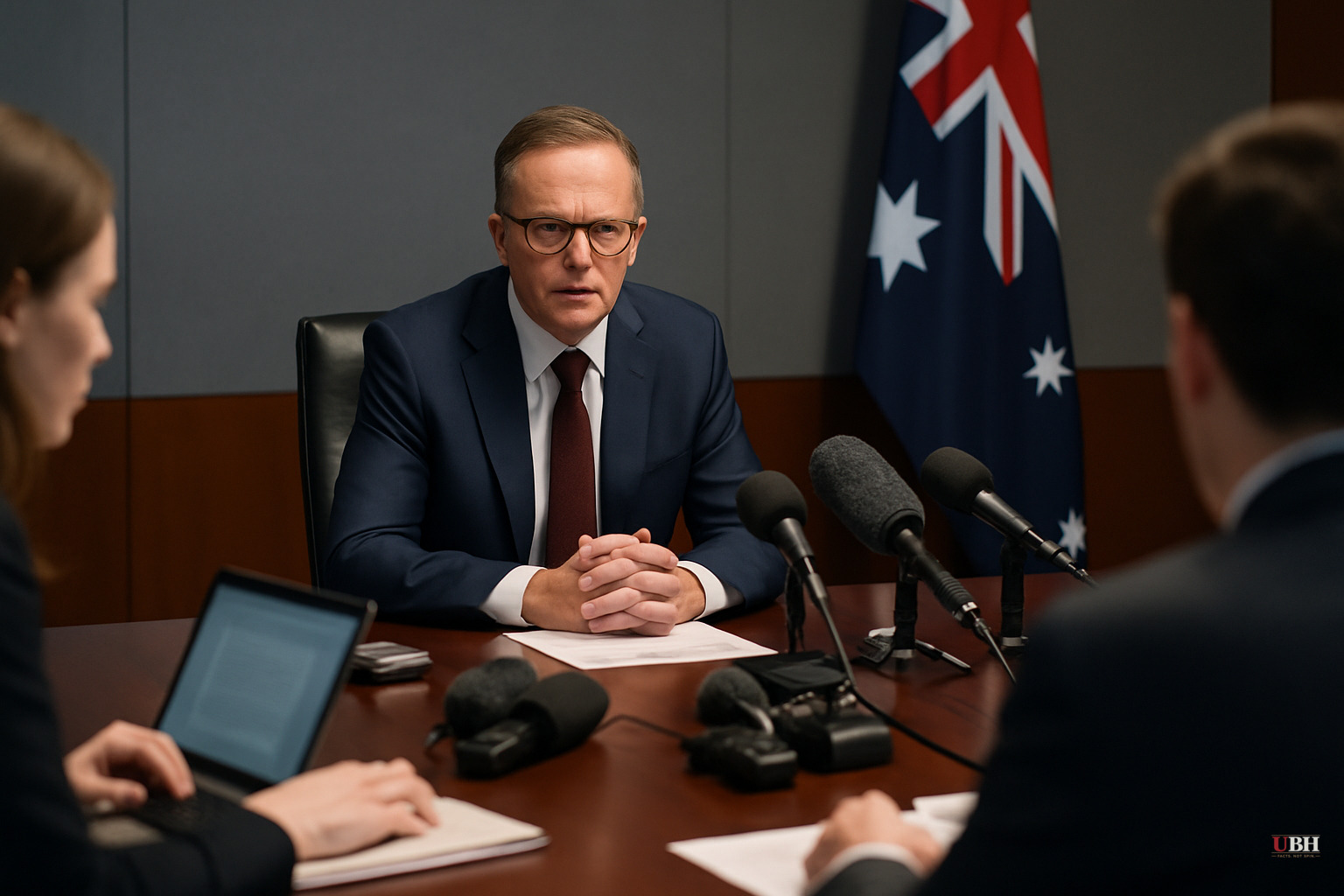
Since Australia's social media minimum age law took effect on December 10, 2025, the government's own independent regulator has found that seven out of ten children under 16 who had a social media account before the ban still have "some access" to the banned platforms, according to the eSafety Commission's own report.
What Changed This Weekend
On Saturday, June 27, 2026, the Australian government announced it will double the maximum financial penalty for non-compliant platforms from roughly $49.5 million AUD to $99 million AUD (approximately £51.7 million). According to BBC News, the updated legislation will also grant the eSafety Commissioner the power to compel social media companies to hand over documented evidence of what compliance steps they have actually taken.
Five platforms are currently under active investigation for alleged non-compliance: Facebook, Instagram, Snapchat, TikTok, and YouTube.
The Government's Stated Reasoning
Australian Prime Minister Anthony Albanese said Saturday he is "heartened by the shift in conversation and the global momentum" since the ban launched, but added bluntly: "There are still too many children on social media."
Minister for Communications Anika Wells was more direct about where she places the blame. "Social media platforms are adopting tricks straight out of the big tech playbook and doing the bare minimum to get by," she said.
The government's own statement acknowledged the enforcement difficulties and described the stiffer penalties as evidence it was "doubling down on platforms that are not doing enough."
The Compliance Gap Is Not in Dispute
BBC News reported in February 2026 visiting a Sydney school where the majority of students who used social media before the ban said they still had access. Age verification at scale is technically hard, and the platforms have wide incentive to keep young users engaged.
The eSafety Commission's 70 percent figure is not a partisan number. It comes from the regulator the Australian government itself set up. Regardless of where you stand on whether government should be in the business of managing what apps teenagers use, the data on enforcement is straightforward. The original penalty structure did not create enough pressure to move five of the world's largest technology companies into serious compliance.
The Legitimate Counterargument
Critics of the ban, including digital rights advocates and some technology researchers, raise a fair concern worth stating plainly. Heavy penalties and compelled disclosure regimes can push platforms toward age-verification systems that collect far more personal data about children than the social media apps themselves do. A blanket ban enforced through identity checks may trade one child-safety risk for another—specifically, building detailed identity databases of minors. This concern has been raised in discussions about similar legislation in the UK and elsewhere. The Australian government has not published a detailed framework for how platforms are expected to verify age without compromising user privacy, and that gap in the policy design remains unresolved.
Global Ripple Effects
Australia's law has become a reference point internationally. According to BBC News, UK Prime Minister Sir Keir Starmer announced in June 2026 that Britain will introduce a similar ban for children under 16, with plans for it to take effect by spring 2027. How Australia resolves its enforcement problems—or fails to—will likely shape how the UK designs its own compliance and penalty structure.
What Happens Next
The five ongoing investigations into Facebook, Instagram, Snapchat, TikTok, and YouTube are the first real test of whether Australia's regulator has teeth. The new compelled-evidence powers are significant because, until now, the eSafety Commissioner could allege non-compliance but had limited ability to force platforms to demonstrate what they actually did. The open question is whether a $99 million AUD ceiling moves the needle for companies whose parent entities—Meta, Snap, ByteDance, and Google—report annual revenues in the tens of billions of dollars. For Meta alone, $99 million AUD is less than one day's global revenue at 2025 run rates.
Whether the investigations conclude in fines, negotiated compliance agreements, or stalemates will set the template for every country currently drafting copycat legislation.
Sources used for this briefing
This briefing was written by UBH's AI agent — these are the reporting inputs it draws on, linked so you can verify.


