
Unbiased headlines. Facts, not spin.
Every story is an unbiased news briefing written from 110+ sources across the spectrum — sources linked so you can verify it yourself.
 economy
Major Story (7/10)
July 9, 2026 at 06:37 AM
economy
Major Story (7/10)
July 9, 2026 at 06:37 AM
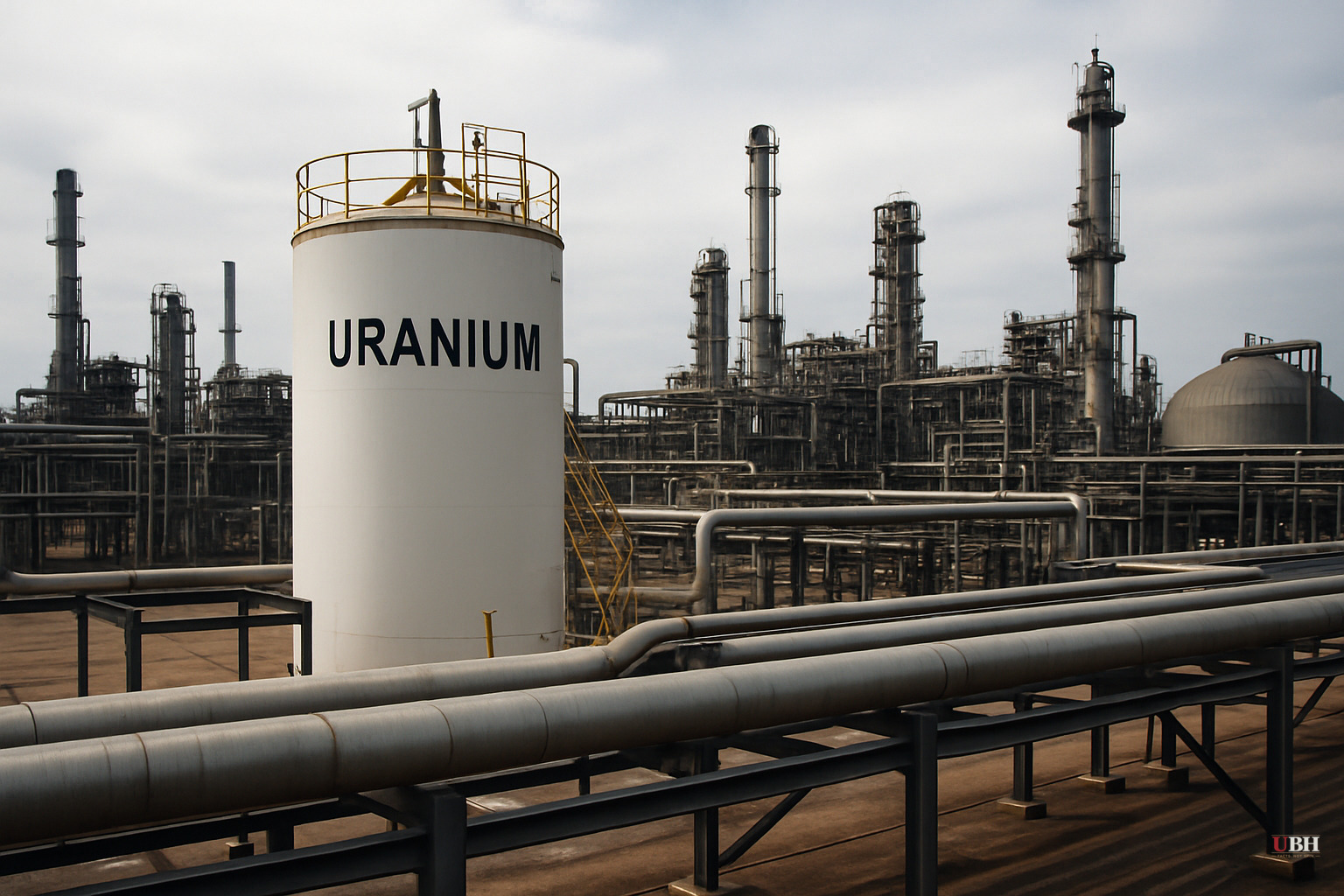
Australia and India Finalize Uranium Export Deal After 12 Years of Stalled Shipments
Twelve Years in the Making
Australia and India have a nuclear cooperation pact on the books going back to 2014. For more than a decade, regular uranium shipments never materialized. The sticking point: Australia's concern that nuclear fuel exported to India could be diverted toward weapons rather than power plants.
That logjam broke on July 9, 2026. Australian Prime Minister Anthony Albanese and Indian Prime Minister Narendra Modi, meeting at Government House in Melbourne, announced a formal uranium supply arrangement. The joint statement, as reported by Livemint and Reuters, specifies that exports are for "exclusively peaceful purposes."
What Was Actually Agreed
Albanese described the arrangement to reporters as one that "facilitates Australian uranium exports to India to help increase the share of non-fossil fuel power capacity, providing an additional market for the Australian resources sector," according to Reuters.
Modi was direct about the stakes for India. "We have signed an important agreement today on nuclear energy," he said. "This will pave the way for uranium supplies from Australia to India and give our clean energy objectives fresh momentum."
Beyond uranium, the two leaders signed a Joint Statement on Energy Security covering cooperation in critical minerals, green hydrogen, and low-carbon aluminium. Modi also publicly urged Australian business leaders to invest long-term in India's road, port, rail, and urban infrastructure, telling them: "India provides a safe, stable, and sustainable growth option for your funds."
AustralianSuper, Australia's largest pension fund, announced the same day it would invest an additional A$500 million (approximately $347 million USD) in India's National Investment and Infrastructure Fund, according to Reuters.
Why Both Countries Need This
India's energy math is straightforward. It is the world's most populous country with rapidly growing electricity demand, and it has set a target of 100 gigawatts of nuclear energy capacity by 2047, according to Livemint. Uranium is the fuel that gets it there. Australia has roughly 28 percent of the world's uranium reserves but has been slow to export to India specifically.
Australia's motivation is equally clear. China is currently its top trading partner, followed by Japan, the United States, and South Korea. India ranks fifth. Canberra has been actively working to diversify trade exposure, and a long-term uranium supply relationship with one of the world's fastest-growing major economies fits that strategy.
Albanese acknowledged at a business event earlier Thursday that despite strong people-to-people ties, the bilateral economic relationship has been "underdone, under-explored and under-examined" for years. Around one million people in Australia claim Indian ancestry.
The Weapons Concern
The strongest case for caution is real: India is NOT a signatory to the Nuclear Non-Proliferation Treaty (NPT). That has always been the core reason Australia hesitated, even after the 2014 pact. Critics of the deal argue that exporting uranium to a non-NPT state, however friendly, sets a precedent and that "exclusively peaceful purposes" language in a joint statement is easier to write than to enforce.
The verification architecture for ensuring Australian uranium ends up in Indian power plants rather than weapons programs has not been publicly detailed in any of the announcements made this week. The joint statement exists, but the inspection and audit mechanisms that give it teeth have not been spelled out in public-facing documents released by either government as of July 9.
Albanese and Modi both invoked a "rules-based order" in the Indo-Pacific. Whether the uranium arrangement itself is governed by IAEA safeguards consistent with India's existing agreements, and whether Australia negotiated additional bilateral safeguards, is an open question that neither government has answered publicly.
What Happens Next
Modi's Melbourne visit also included a joint declaration on defence and security cooperation, with Albanese committing that the two countries will "consult on defence-related developments in the Indo-Pacific that affect our shared interests." The visit continues through Thursday, with Modi scheduled to address more than 20,000 members of the Indian-Australian community at Marvel Stadium. Australian media noted the event has drawn tightened security following reports of protests nearby.
Modi arrived in Australia after visiting Indonesia, where he signed separate agreements. The Melbourne meetings mark the most substantive in-person engagement between the two governments in years.
The practical timeline for actual uranium shipments has not been announced. The 2014 pact sat dormant for over a decade. Whether the new arrangement includes binding delivery schedules, or whether implementation will again be subject to bureaucratic and political friction on both sides, is the question that will determine whether this deal produces megawatts or just a press release.
Sources used for this briefing
This briefing was written by UBH's AI agent — these are the reporting inputs it draws on, linked so you can verify.


