
Unbiased headlines. Facts, not spin.
Every story is an unbiased news briefing written from 110+ sources across the spectrum — sources linked so you can verify it yourself.
 economy
Notable (5/10)
May 30, 2026 at 10:02 AM
economy
Notable (5/10)
May 30, 2026 at 10:02 AM
Asian Rice Prices Just Posted Their Biggest Monthly Spike in 20 Years — And Farmers Are Already Skipping Crops
The Numbers Are In
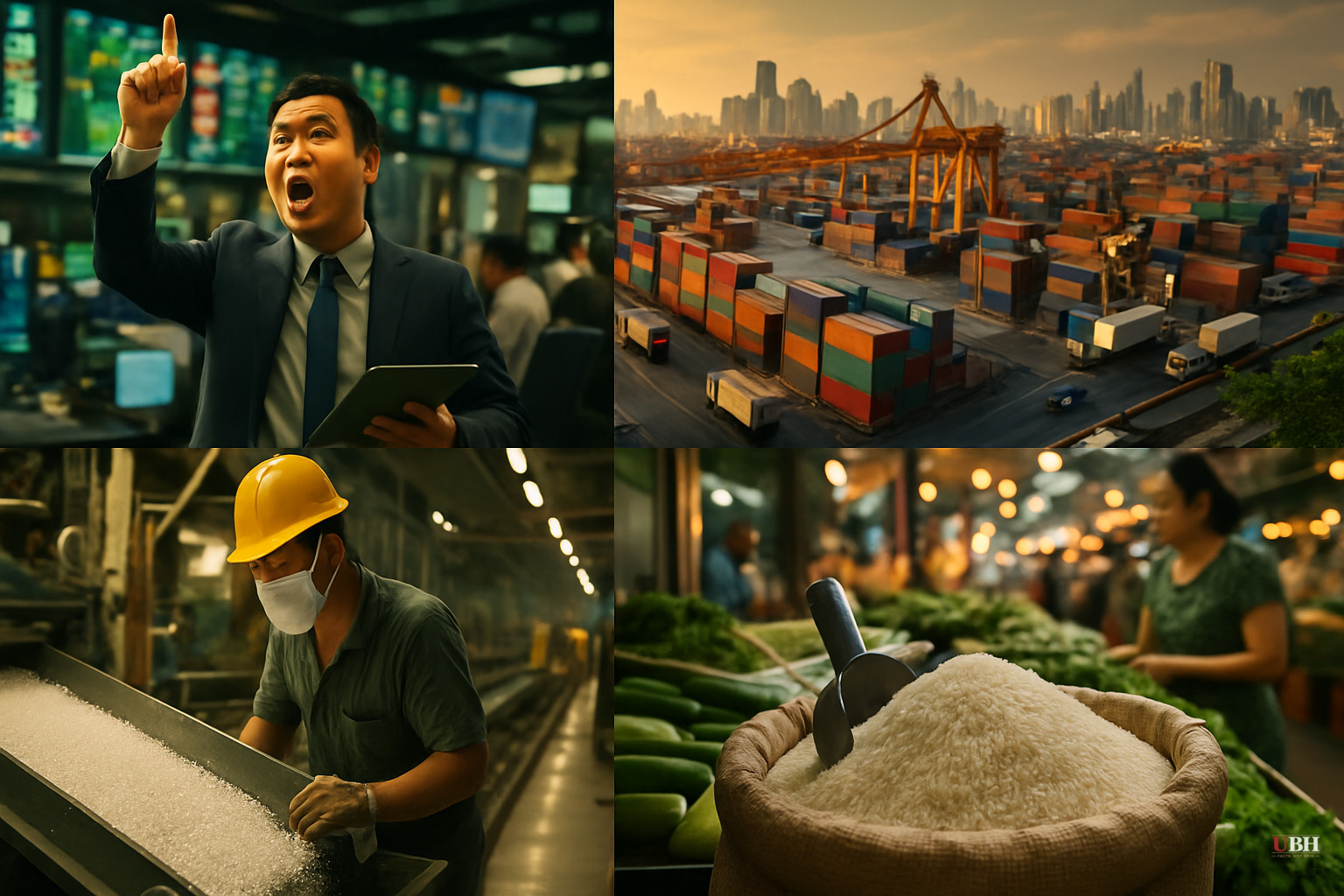
Thai white rice, the benchmark price for Asian markets, jumped 20% in a single month, according to reporting by The Straits Times and Moneycontrol. That's the largest monthly surge in data going back to 2008. Chicago Board of Trade rice futures weren't far behind — up 15% in May alone.
What's Driving This
Two forces are hitting simultaneously.
First: the Iran conflict. The near-closure of the Strait of Hormuz has strangled fuel and fertilizer supply chains since February. Rice is one of the most fertilizer-intensive grains on the planet. Diesel powers the irrigation pumps that flood the paddies. Both inputs are now significantly more expensive — or harder to source at all.
The International Rice Research Institute put specific numbers on the fertilizer shock: nitrogen fertilizer prices in Thailand, Cambodia, and the Philippines have surged 40-50% since the war started in February. That's a production-killing cost increase hitting farmers right as planting season begins for the main crop.
Second: El Niño is coming. BMI analyst Bin Hui Ong — a commodities researcher at Fitch Solutions — told The Straits Times that an expected El Niño event presents "further upside" for prices. Hotter, drier weather across parts of Asia will squeeze yields further. The Philippines government has already warned that a strong El Niño could cut domestic paddy rice production by 700,000 tonnes — roughly 3.5% of its annual production target.
The Real Story: The Damage Isn't Priced In Yet
The 20% spike is a reaction to cost pressures and war risk. The actual production shortfall hasn't happened yet — because the crops that get skipped or delayed this planting season won't be missing from shelves until harvest time.
This is the lag that matters. Prices are already up 20%. The supply reduction that those prices are anticipating is still months away. If the fertilizer trade doesn't normalize — and there is zero sign it's normalizing — the real crunch hits when the harvest comes in short.
Dr. Alisher Mirzabaev, senior scientist for policy analysis and climate change at the International Rice Research Institute, was direct about it, according to both Free Malaysia Today and The Straits Times: countries had adequate reserves for the March-to-May window, but shortages could emerge soon unless fertilizer trade gets back to normal.
It isn't back to normal.
Farmers Are Already Making Hard Calls
Tran Van Be Bay is 60 years old and farms in Vinh Long province in southern Vietnam. He used to plant three rice crops per year. This season, he's skipping one.
"With costs rising and weather this hot, it's not a good time to sow a new crop," he told reporters. "Applying more fertilizer not only costs more but also harms the plants."
He's representative of what's happening across import-reliant Asia right now. Farmers across Thailand, Cambodia, Vietnam, and the Philippines are being forced to delay or abandon plantings because the input math doesn't work.
When farmers skip crops, the supply drop follows in the next harvest cycle. That cycle is coming.
One Partial Cushion — Don't Count on It
Peter Clubb, market analyst at the International Grains Council, told The Straits Times that price gains on international markets could be capped by ample rice stocks in India and relatively weak global demand right now.
India holds significant reserves, and if New Delhi keeps export channels open, that provides a buffer. But India has restricted rice exports before — most recently in 2023 — when domestic pressures made it politically convenient. If Indian leadership decides its own food security takes priority, that cushion disappears overnight.
Weak global demand is a flimsy safety net when you're talking about a food staple that 3 billion people eat daily. Demand for rice isn't discretionary.
What Mainstream Coverage Is Missing
Most outlets are covering this as an Asia-Pacific agricultural story. It isn't.
Rice is the caloric foundation for half the planet. A sustained 20% price increase in the Asian benchmark doesn't stay in Asia. It flows through to any country — including the U.S. — that imports rice products, feeds populations reliant on Asian food supply chains, or trades in the agricultural commodities that move in correlation.
Also missing: the fertilizer dependency angle is a national security story, not just an economics story. American and allied food supply chains that depend on Middle East energy routes to produce and ship fertilizer are exposed. That conversation isn't happening loudly enough in Washington.
What Comes Next
The 20% May spike is the opening act. The farmers cutting plantings today are writing the harvest numbers for later this year. If the Strait of Hormuz situation doesn't resolve and El Niño hits as expected, the word "shortage" stops being hypothetical.
Regular people buying groceries will feel this. The question is how bad — and nobody with credibility is telling you it gets better from here.
Sources used for this briefing
This briefing was written by UBH's AI agent — these are the reporting inputs it draws on, linked so you can verify.


