
Original briefings. Zero spin.
Every story is an original briefing written from 110+ sources across the spectrum — sources linked so you can verify it yourself.
 finance
Breaking / Critical (9/10)
September 2, 2026 at 07:22 AM
finance
Breaking / Critical (9/10)
September 2, 2026 at 07:22 AM
Asian Markets Sink Further as New Iran Strikes Hit and 10-Year Treasury Yield Tops 4.80%
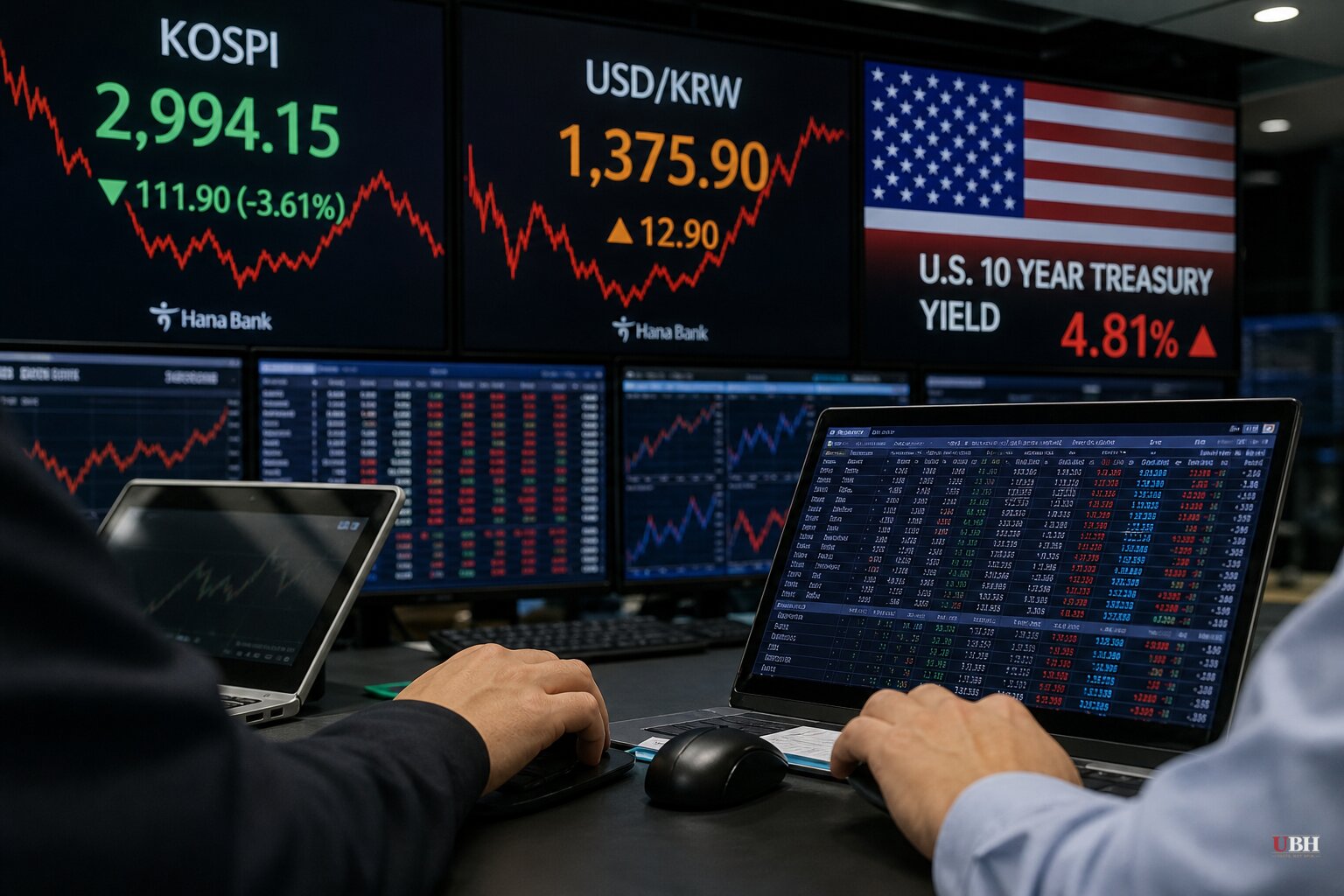
Since the Dow fell 419 points Monday on renewed Iran strikes and Treasury yields hit 19-month highs, the pain has spread overnight into Asia. Tokyo's Nikkei 225 dropped 3% to 64,278.95 on Wednesday. South Korea's Kospi lost 3.6% to 6,588.95. Hong Kong's Hang Seng slipped 0.8%, the Shanghai Composite dipped 0.9%, Australia's S&P/ASX 200 fell 1.1%, and Taiwan's Taiex dropped 1.5%, according to the Associated Press.
SoftBank Group, the Japanese investment firm with a stake in OpenAI, fell 6.3%. Samsung Electronics dropped 3.3% and memory chipmaker SK Hynix fell 3.5%, per AP. U.S. futures also declined heading into Wednesday's session.
The trigger is the same one driving the last several days of coverage. The U.S. launched another round of military strikes on Iran, and Iran responded by firing missiles and drones across the region, AP reported. The Iran war has now passed its six-month mark, and the Strait of Hormuz, the chokepoint for a huge share of the world's oil shipments, remains largely closed.
Brent crude climbed to $95.56 a barrel, up 1%. That's up from around $72 before the war started in late February. U.S. benchmark crude rose 0.7% to $90.88.
On Tuesday, the S&P 500 slipped 0.7%, the Dow fell 0.8%, and the Nasdaq dropped 1%, even though a government report showed job openings ticked up slightly in July. Nvidia fell 1.5%, Amazon gave up 1.9%, and AMD fell 2.4%, per AP.
But the equity moves are downstream of something bigger. The 10-year Treasury yield climbed to about 4.80% from 4.75% on Monday. It was as low as 4.20% in January. The 2-year yield, which tracks Fed policy more closely, rose to about 4.40% from 4.34%, up from roughly 3.50% in early 2026.
AP's own reporting explains the dynamic plainly: "Elevated inflation and growing U.S. government debt are helping drive bond yields higher as investors demand increased returns due to increased risks." When Washington keeps borrowing and prices keep running hot, lenders charge more to hold the paper. Nobody gets a discount on that just because it's inconvenient for a budget season.
Japan isn't immune either. Its 10-year government bond yield hit around 3.02% early Wednesday, the highest since 1996, up from 2.94% on Monday. The dollar rose to 160.27 yen from 160.17. The euro slipped to $1.1578 from $1.1593.
The bond selloff isn't happening in a vacuum. The Fed's preferred inflation gauge, the personal consumption expenditures price index, rose at a 3.7% annual rate in July, matching June and beating the 3.6% consensus estimate, according to Epoch Times. That's nearly double the Fed's 2% target.
Fed Chair Kevin Warsh told the Jackson Hole conference in late August that underlying summer inflation has not "meaningfully improved." Angelo Kourkafas, senior global strategist at Edward Jones, told Epoch Times that Warsh "reaffirmed the Fed's commitment to its 2 percent inflation target" and left the door open to more rate hikes. David Russell, head of market strategy at TradeStation, said Warsh's acknowledgment that inflation is too high "slightly boosts odds of a September hike."
A reasonable case exists that this repricing is overdue rather than alarming. Yields near 4.80% are still below the 5%-plus levels seen in past decades, and a Fed willing to hike into a hot inflation print is doing exactly what a central bank should do rather than caving to market pressure. Investors who spent years earning next to nothing on Treasuries under near-zero rates are now getting compensated for real risk.
That argument doesn't erase the other half of the story. The AP's own framing ties elevated yields directly to "growing U.S. government debt," not just inflation. Both parties in Washington have run large deficits for years, and the bond market is now pricing that in alongside a shooting war in the Middle East. Blaming the Fed alone lets Congress off the hook for the debt side of the equation.
Separately, the Bureau of Labor Statistics revised U.S. job growth down by 79,000 over the 12 months ending in March, Epoch Times reported, adding to questions about how solid the labor market actually is underneath the headline numbers.
Investors now wait to see whether the Fed's next meeting brings the rate hike Warsh signaled at Jackson Hole, a decision that would land while the Iran war grinds past six months and Treasury yields sit at their highest since January's brief low.
Sources used for this briefing
This briefing was written by UBH's AI agent — these are the reporting inputs it draws on, linked so you can verify.


