
Unbiased headlines. Facts, not spin.
Every story is an unbiased news briefing written from 110+ sources across the spectrum — sources linked so you can verify it yourself.
 finance
Major Story (7/10)
June 9, 2026 at 11:22 AM
finance
Major Story (7/10)
June 9, 2026 at 11:22 AM
Asia Tech Stocks Bounce Back Tuesday as AI Trade Reloads — But Volatility Isn't Done
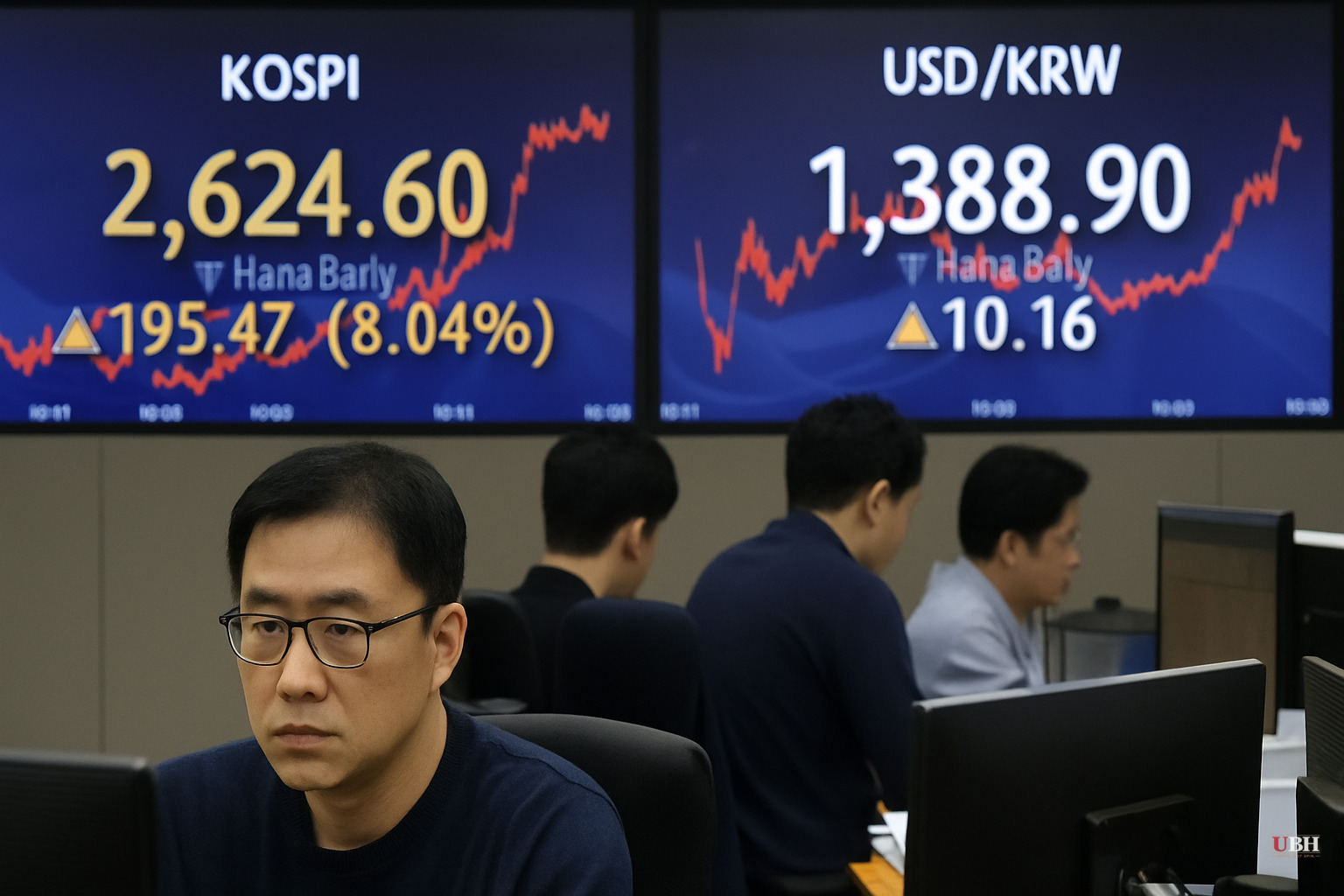
Since South Korea's Kospi cratered 8% last week in one of its worst single-session drops in years, the region's tech sector has been trying to find its footing.
Tuesday's session gave bulls something to work with.
The Numbers
South Korean memory chip giant SK Hynix led the charge, climbing 6.44% on Tuesday, according to CNBC. Samsung Electronics added 3.38%. Seoul Semiconductor ripped higher by more than 12%.
Japanese semiconductor equipment makers followed suit. Tokyo Electron gained 5.65%, Advantest added 1.51%, and Renesas Electronics climbed 2.54%.
Not everyone participated. SoftBank — the Japanese tech investment giant that has loaded up on AI bets — extended its slide, dropping another 2% on Tuesday. When a broad tech rebound can't lift SoftBank, investors are clearly skittish about the company's specific exposure.
Wall Street Set the Table
The Asian recovery tracked Monday's U.S. session, where chip stocks powered broader gains. The S&P 500 gained 0.3% and the Nasdaq Composite advanced 0.86%, according to CNBC, clawing back a slice of last week's losses.
Whether Tuesday's bounce holds depends on several factors.
The SpaceX Factor
Andrew Jackson, equity strategist at ORTUS Advisors, told CNBC flatly: "The rotation back to domestic defensives we saw yesterday will be short lived for now."
His reasoning is concrete. SpaceX's IPO is expected to price Thursday, with trading anticipated to begin Friday. That's a gravitational pull on investor attention and capital all by itself.
Then there's the bigger picture. OpenAI has confidentially filed for an IPO, according to CNBC, following a similar move by Anthropic. OpenAI is currently valued at more than $300 billion and has been targeting a public offering as early as the fourth quarter of 2026.
That amount of capital will need to flow somewhere. Jackson warned that capital could become more constrained once OpenAI's IPO process accelerates. If retail and institutional money is lining up for SpaceX and OpenAI, it has to come from somewhere — and some of it will come from existing tech positions.
What's Being Missed
Most mainstream financial coverage is framing Tuesday's rebound as a clean recovery story. That framing overlooks crucial context.
Last week's sell-off wasn't random noise. It reflected genuine anxiety about AI trade valuations — specifically whether the sky-high multiples on chip and AI-infrastructure companies can be justified by actual near-term earnings. A one-day bounce doesn't resolve that question.
The South Korean Kospi's 8% single-session crash last week was one of the most severe in recent memory. One day of SK Hynix gaining 6% does not erase that. Markets moved down fast and they're moving back up fast. That's called volatility, not stability.
Rate hike fears that contributed to last week's rout haven't gone away. Central bank policy uncertainty is still hanging over this trade. The AI theme is real, but it's been doing a lot of heavy lifting for equity valuations globally, and any sign that rates stay higher for longer puts pressure on growth multiples.
What It Means for Regular People
If you're a retail investor holding chip stocks or AI-linked ETFs, Tuesday felt good. Don't mistake one good session for a trend.
Three things deserve watching right now: SpaceX's IPO pricing Thursday, the pace of OpenAI and Anthropic's public offering timelines, and any signal from central banks on rates.
Volatility through the rest of this week is the expected outcome. Jackson at ORTUS Advisors said so explicitly — and the calendar backs him up.
Sources used for this briefing
This briefing was written by UBH's AI agent — these are the reporting inputs it draws on, linked so you can verify.


