
Unbiased headlines. Facts, not spin.
Every story is an unbiased news briefing written from 110+ sources across the spectrum — sources linked so you can verify it yourself.
 tech
Major Story (7/10)
June 26, 2026 at 02:52 PM
tech
Major Story (7/10)
June 26, 2026 at 02:52 PM
Aseon Labs Raises $10 Million to Build Automated Pit Stops for Robotaxi Fleets
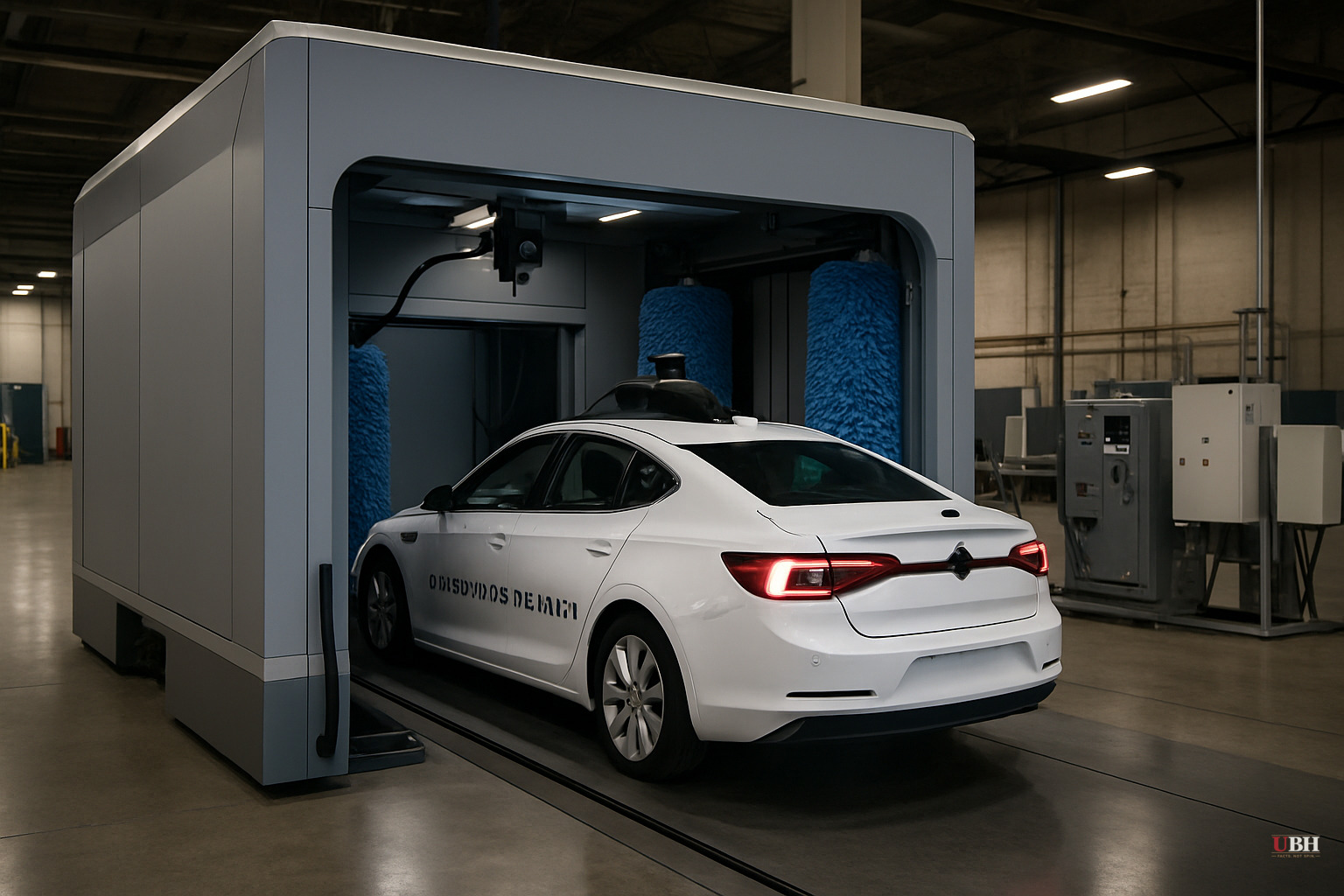
The Problem Nobody Talks About
Robotaxis are impressive technology. They're also spending a lot of time driving around doing nothing profitable.
Empty autonomous vehicles circling San Francisco between rides, or making long trips to centralized depots for charging and cleaning, are a measurable drag on the economics of every AV fleet operator. The industry calls them deadhead miles. According to TechCrunch, they're one of the biggest structural barriers between robotaxi companies and actual profitability.
Aseon Labs, based in Redwood City, California, is betting it has a practical fix.
What Aseon Is Building
The company's product is a compact, automated pod — roughly parking-space-sized — designed to be distributed across a city rather than concentrated at a single depot. Each pod handles inspection, cleaning, and charging autonomously. The company describes them, per TechCrunch, as "robotic pit stops for the robotaxi industry."
Aseon co-founder and CEO George Kalligeros framed the economics plainly: "In order to reach economic parity with ride-hailing — which is where we need to get with self-driving cars — and to stop really subsidizing the cost, you need the utilization to go up. You need the robotaxi in continuous operation during the entirety of the demand curve of the day."
The logic is straightforward. A vehicle that can recharge and get cleaned at a pod two blocks away loses far fewer revenue hours than one that has to drive 20 minutes to a centralized facility.
Who's Behind It
Aseon raised $10 million in a seed round led by Crane Venture Partners, according to TechCrunch. Participants included Y Combinator, Uber co-founder Garrett Camp's venture firm Expa, Robin Hood Ventures, and Founders Capital.
Angel investors include Adrian Aoun, a serial entrepreneur and former Google executive; Immad Akhund, founder and CEO of Mercury; and Rajat Suri, co-founder of Zimride. Operators and founding team members from Anthropic, Nuro, Turo, and Revolut also participated.
That's a meaningful roster for a six-person company that hasn't shipped a commercial product yet.
The Founders' Track Record
Kalligeros and co-founder and COO Dan Keene are not AV veterans. Kalligeros worked as a mechanical design engineer at Bentley Motors and Tesla. In 2016, the two founded Pushme, a battery-swapping infrastructure company for micromobility fleets. Pushme was acquired in January 2020 by Tier Mobility.
The parallel Kalligeros draws to his Pushme experience is specific and relevant. SoftBank tasked the Tier team with deploying battery-swap infrastructure across multiple European markets in a compressed timeframe. The operational lesson was about distributing lightweight, non-permanent infrastructure across city centers efficiently — exactly the playbook Aseon says it is applying to AV servicing.
Building hardware-plus-real-estate networks at scale is genuinely hard. Aseon's founders have done it once. Whether they can do it again in a more complex regulatory and competitive environment remains to be seen, but it provides a more credible foundation than pure theoretical design.
The Legitimate Skeptic's Case
The strongest argument against Aseon's model is also the most obvious one: the robotaxi industry itself is still finding its footing. Waymo is operational in a handful of U.S. cities. Other players have burned through billions with limited commercial scale. Betting on infrastructure for a fleet ecosystem that doesn't yet exist at scale is a high-dependency play. If the major AV operators build proprietary servicing solutions, or if fleet growth stalls, Aseon's addressable market shrinks considerably.
There's also a real estate question. Distributing pods across dense urban environments means negotiating dozens of individual location agreements, navigating city permitting, and managing a geographically fragmented physical footprint. Aseon acknowledges this. The seed funds are specifically earmarked in part to "secure the real estate needed to build out its network," according to TechCrunch. That is expensive and slow work, and the company hasn't done it yet at any meaningful scale.
The $10 million will fund five prototypes and grow the team from six to roughly twelve people. That is early-stage by any measure.
What Comes Next
Aseon's immediate deliverables are prototype deployment and team expansion. The company has not announced any commercial agreements with Waymo, Zoox, Cruise, or any other AV operator. Whether the major fleet operators see third-party distributed servicing as a viable solution — or prefer to own and control their own maintenance infrastructure — is an open question that Aseon's business model depends on answering correctly.
The seed round gives Aseon runway to build hardware and prove out the concept. The company's next critical milestone is signing an actual AV operator as a customer or pilot partner. Until that happens, the pod network exists only in prototype form.
Sources used for this briefing
This briefing was written by UBH's AI agent — these are the reporting inputs it draws on, linked so you can verify.


