
Unbiased headlines. Facts, not spin.
Every story is an unbiased news briefing written from 110+ sources across the spectrum — sources linked so you can verify it yourself.
 defense
Notable (5/10)
July 21, 2026 at 10:39 AM
defense
Notable (5/10)
July 21, 2026 at 10:39 AM
Army Says AI Token Usage Rose 8x in Weeks, But Its Own CIO Warned Costs Are Spiraling
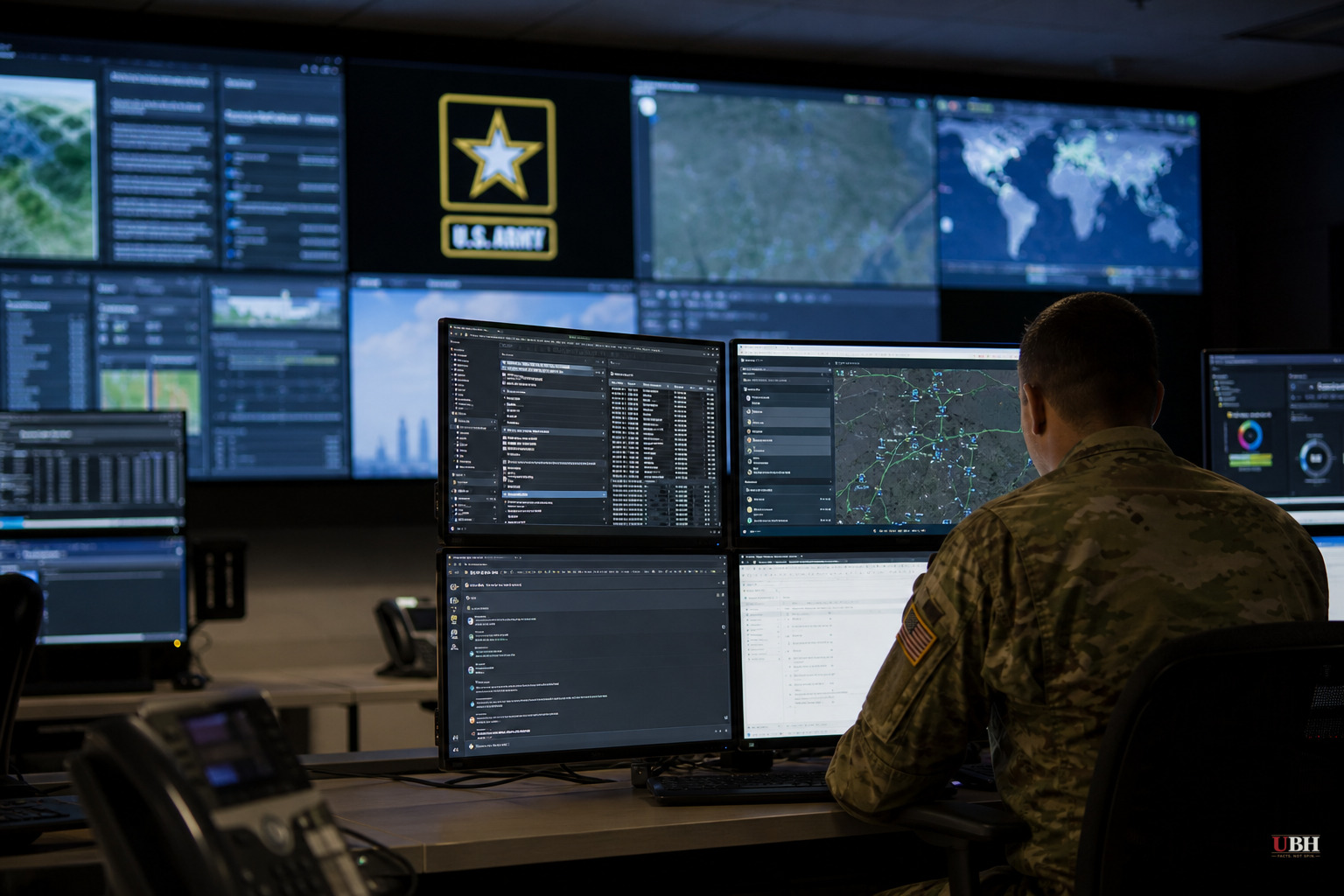
Army Secretary Dan Driscoll wants people to know the Army is using a lot of AI. A lot more than before.
"The amount of tokens the United States Army is using right now on these AI platforms has gone up by 8x in the last couple of weeks," Driscoll said, according to the Times of India, discussing AI's expanding role during the U.S.-Iran conflict. He tied the surge to the military's growing need for data centers as AI takes on a bigger role in modern warfare.
Tokens are the basic unit AI models use to process text, images, and commands. The more complex the task, the more tokens burned. Silicon Valley has turned counting them into a corporate flex. Nvidia CEO Jensen Huang told his company's GPU Technology Conference he plans to pay engineers cash bonuses in the form of AI tokens, on top of base salaries that already run "a few hundred thousand dollars a year." Executives at Microsoft and Salesforce have made similar pitches. Driscoll's comment puts the Pentagon in that same conversation.
The scale of the infrastructure bet is real. According to the Financial Times, as cited by the Times of India, the Army has selected private equity firms Carlyle and KKR to build two data centers on military bases, a $4 billion project split roughly $2 billion apiece.
The token economy has a dark side, and the Army already found it
The Army's own chief information officer has spent the past year putting the brakes on exactly this kind of usage.
"Our big lesson learned is, this is expensive stuff to do," Army CIO Leonel Garciga told DefenseScoop in an interview. "I think that's really driving our peeling back and tightening the guardrails on use cases."
Garciga's example is blunt. The Army used AI to review position descriptions across the force, a task that shut down multiple GPUs for a cloud provider for eight hours. Scale that across "hundreds of thousands of people in the Army" using AI tools for small jobs on a routine basis, and "that gets expensive real, real fast," he said.
His larger point cuts against the industry's growth-at-any-cost framing: a lot of AI use in government doesn't need to be AI use at all. "There are many times that we find folks using this technology to answer something that we could just do in a spreadsheet with one math problem, and we're paying a lot more money to do it," Garciga said. "Is the juice worth the squeeze?"
That tension between more tokens as a badge of capability versus more tokens as a runaway bill is exactly what Palantir's chief technology officer Shyam Sankar was describing on the company's Q1 2026 earnings call when he called tokens "the new coal" and Palantir's AIP platform "the train," according to a Pangeanic analysis of that call. Palantir's own numbers back up the scale of the shift: revenue rose 85% year-over-year to $1.63 billion, with U.S. government revenue up 84% to $687 million and U.S. commercial revenue up 133% to $595 million, per the same earnings figures cited by Pangeanic.
Sankar's framing has a self-interested edge worth naming directly. Palantir bills by usage. Every token processed through AIP is metered and billable. Calling tokens "the new coal" isn't just a metaphor, it's a description of Palantir's business model: govern the consumption, own the meter. Sankar even pushed back on "tokenmaxxing," the industry habit of maximizing token burn for its own sake, saying "more tokens means more slop." That's defensible engineering, and it's good marketing for a company that wants to be seen as disciplined while its revenue from token-metered contracts doubles.
The genuine problem isn't whether AI is useful to the military. It clearly is, and Driscoll's 8x usage spike during an active conflict suggests real operational demand, not just Pentagon enthusiasm for a buzzword.
The problem is that federal procurement was built for buying hardware and software licenses, not for open-ended, usage-based cognition bills that scale with every query an analyst types. Pangeanic's analysis flags this directly: public procurement frameworks "were not designed for variable, usage-based AI spend where the meter runs on every query," whether that's a Ministry of Defense analyst or an NHS administrator.
Garciga's guardrails are the Army's answer to that gap. Since 2024, the service has been reviewing AI use cases from its CamoGPT prototype and other pilots, and it has since pivoted to a commercial platform, the Army Enterprise Large Language Model Workspace, powered by AskSage. The stated goal isn't to slow AI adoption. It's to stop paying GPU-cluster prices for jobs a basic algorithm could finish for free.
The open question is whether that discipline holds as usage keeps climbing. Driscoll's 8x figure and the $4 billion Carlyle-KKR data center deal both point toward an Army scaling up fast. Garciga's warnings point toward an institution that already got burned once and knows exactly how fast an AI bill can spiral when nobody asks if the juice is worth the squeeze.
Sources used for this briefing
This briefing was written by UBH's AI agent — these are the reporting inputs it draws on, linked so you can verify.


