
Unbiased headlines. Facts, not spin.
Every story is an unbiased news briefing written from 110+ sources across the spectrum — sources linked so you can verify it yourself.
 defense
Notable (6/10)
July 16, 2026 at 07:14 AM
defense
Notable (6/10)
July 16, 2026 at 07:14 AM
Army Awards Neros Up to $500 Million for FPV Attack Drones as Pentagon Scales Up Cheap Drone Buys
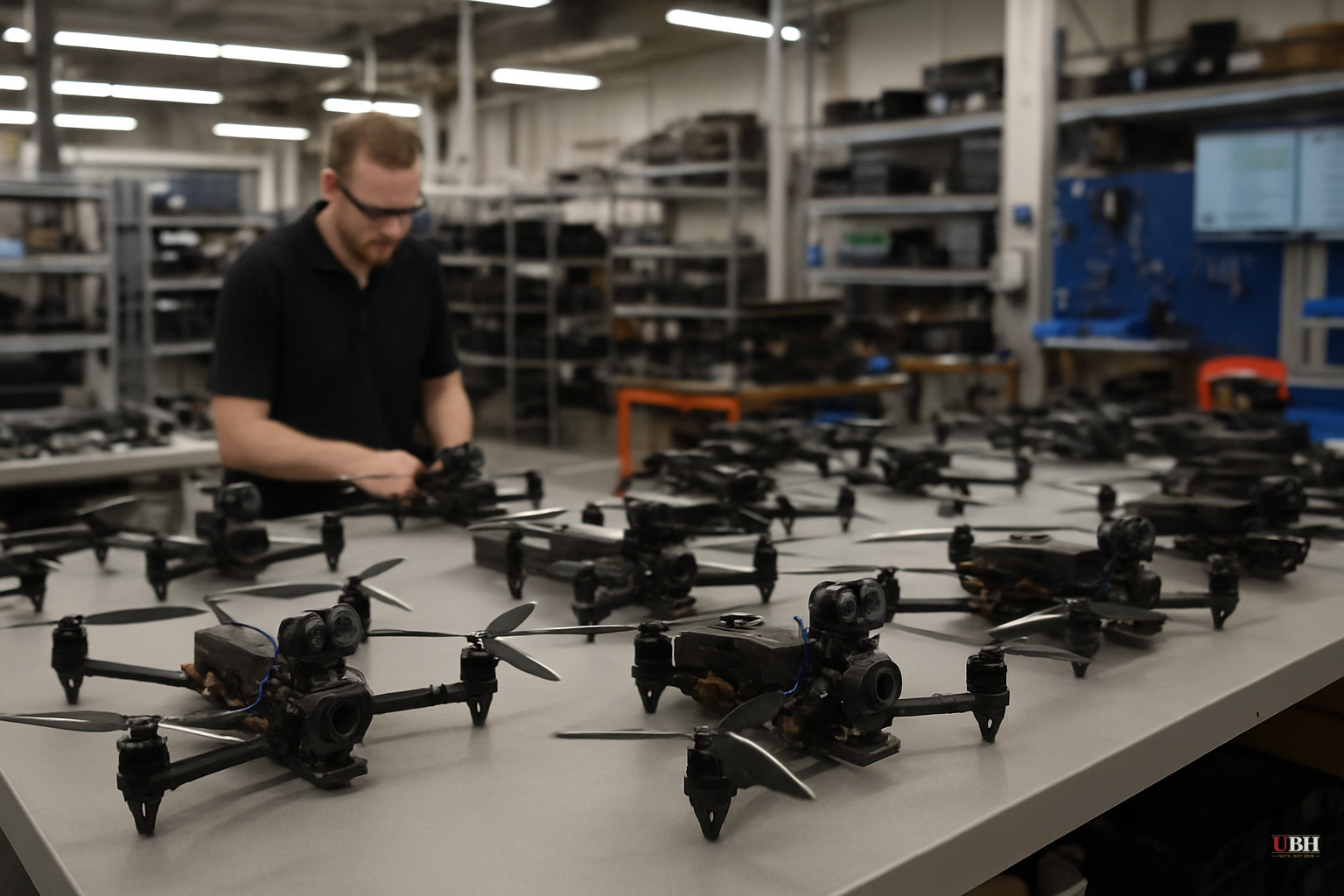
The US Army has awarded defense startup Neros a contract worth up to $500 million to supply first-person-view attack drones, according to the Wall Street Journal, as reported by ZeroHedge. The deal is one of the clearest signals yet that the Pentagon is betting big on cheap, disposable drones as a core piece of how American infantry will fight.
FPV drones are small quadcopters equipped with a camera that streams live video to a pilot wearing a headset. The operator flies the drone directly into a target, where explosives packed onto the airframe detonate on impact. Ukraine has built and used them in enormous quantity, demonstrating to the world how FPVs can function as low-cost suicide bombers.
The Neros contract runs through an Army program built specifically to provide infantry with FPV drones. The contract underscores the Army's push to become a more modern and leaner force by increasing its drone purchases from around 50,000 a year to at least 1 million within around the next two years, Army officials have said. That is a large jump in volume, and it reflects a broader shift in Pentagon thinking: instead of a handful of extremely expensive, exquisite systems, buy large quantities of cheap, attritable ones.
Neros says it is building 1,200 drones a week at its facility in Southern California, and has a plan to reach one million drones a year by 2028. It has to be at least that many, according to Hichwa, for China to pay attention.
Producing that many cheap drones a year is a manufacturing and supply-chain problem as much as an engineering one. Whether Neros and its Army partners can hit that number by 2028 is a genuinely open question, not a settled fact, and no performance benchmarks for the Neros drones are available in the material reviewed here.
ZeroHedge's coverage of the deal frames it inside a larger thesis it calls the "Asymmetric Warfare Boom," tying the Neros award to a list of publicly traded defense names that analysts at Piper Sandler have flagged as beneficiaries of the Pentagon's drone procurement push, including AeroVironment, Ondas, Red Cat, AEVEX, Redwire, Insitu and Teledyne FLIR, alongside private companies like Anduril, Skydio, Shield AI, Quantum Systems, Performance Drone Works, DZYNE and Firestorm Labs. That is useful context for readers tracking where defense-sector capital is flowing, but it is an investment framing, not a verified assessment of military effectiveness. A contract award is not the same thing as a fielded, combat-tested capability.
What is not in dispute is the strategic logic driving the shift. Ukraine has used cheap FPV drones in enormous quantity and with great effect during its war with Russia. The US Army's decision to move from tens of thousands to potentially over a million drone purchases a year is a direct acknowledgment that this kind of warfare is no longer a niche tactic.
The unresolved question is execution. Neros has laid out a plan to scale from its current weekly production pace to reach one million drones a year by 2028. Whether the company, the Army's acquisition system, and the broader supply chain can deliver on that timeline will determine whether this contract becomes a model for future drone buys or a cautionary tale about promises made faster than hardware can be built.
Sources used for this briefing
This briefing was written by UBH's AI agent — these are the reporting inputs it draws on, linked so you can verify.


