
Unbiased headlines. Facts, not spin.
Every story is an unbiased news briefing written from 110+ sources across the spectrum — sources linked so you can verify it yourself.
 economy
Notable (6/10)
July 18, 2026 at 01:15 AM
economy
Notable (6/10)
July 18, 2026 at 01:15 AM
Armenia's Justice Ministry Found Legal Conflicts in Trump Route Deal, Government Approved It Anyway
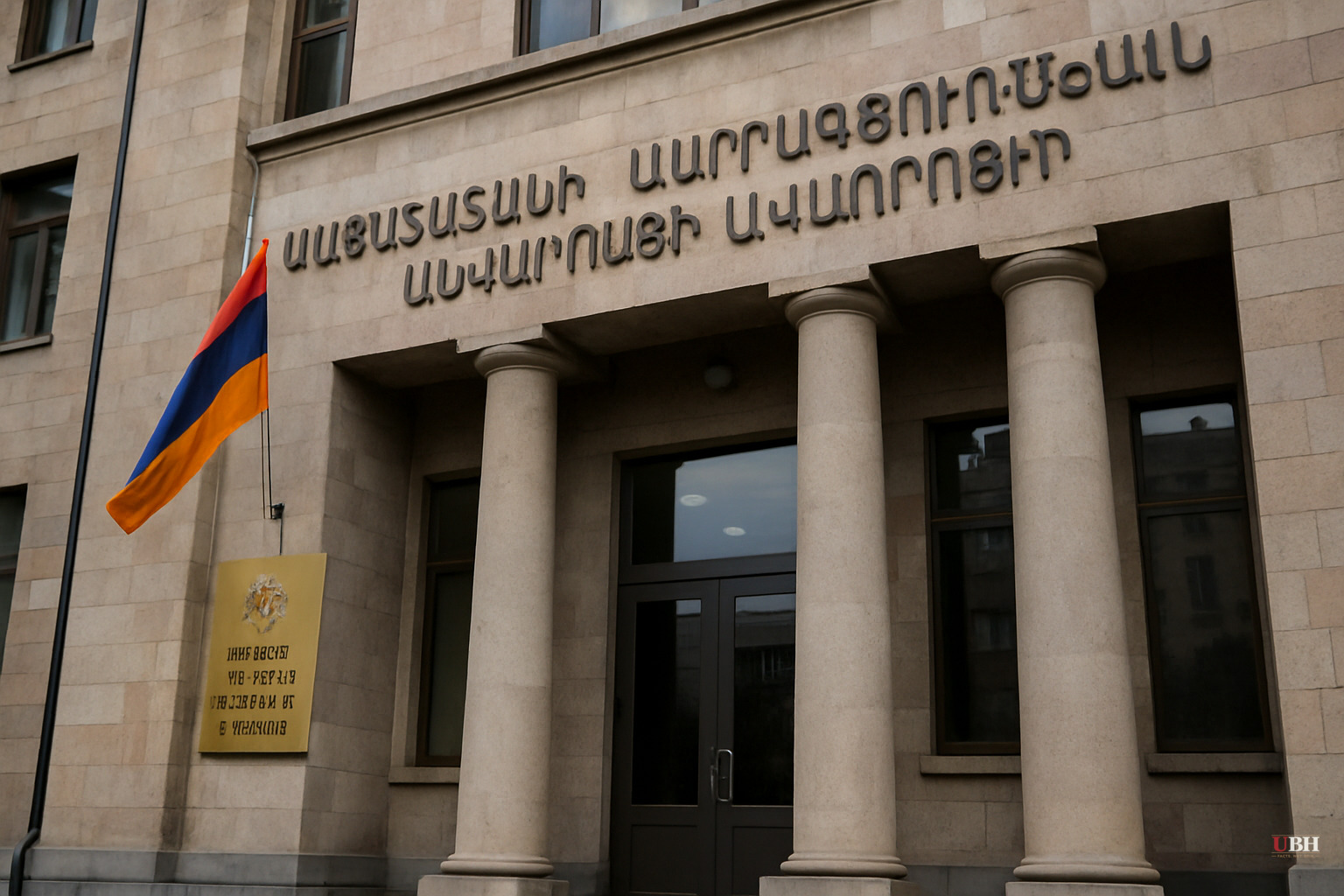
A legal opinion the government approved anyway
Since Armenia's cabinet formally approved the TRIPP framework agreement on Thursday, July 16, a detail buried in that approval has emerged: Armenia's own Justice Ministry concluded parts of the deal conflict with Armenian law, according to Oragark. The government approved it anyway.
The Trump Route for International Peace and Prosperity, or TRIPP, would connect Azerbaijan to its Nakhichevan exclave and Turkey through Armenia's Syunik region, running along the Armenian-Iranian border. A newly formed joint venture, the TRIPP Development Company, would manage a railway, highway, and energy lines along the corridor for a minimum of 49 years. The U.S. government would hold 74 percent of that company, according to OilPrice.com and Oragark.
The Justice Ministry's specific objection involves border operations. The agreement sets up a "front office/back office" system at Azerbaijan-facing crossings, where private operators selected by the U.S.-controlled company would handle travelers and cargo while Armenian border guards and customs officials take a secondary, less visible role. Armenian law reserves document inspection and passage authorization exclusively for Armenian state agencies, according to the ministry's assessment reported by Oragark. The ministry also found that tax exemptions promised to the TRIPP Development Company and its subsidiaries contradict existing Armenian tax legislation.
Despite flagging both conflicts, the Justice Ministry recommended the government approve the agreement anyway, citing what Oragark described as political considerations. Oragark also reported that the agreement itself states its provisions take precedence over Armenian law if the two conflict.
What Armenian officials are saying publicly
Foreign Minister Ararat Mirzoyan told the cabinet the bill contains no new provisions and is consistent with both the January framework agreement and the provisional Armenian-Azerbaijani peace deal signed at the White House in August 2025, according to OilPrice.com. Mirzoyan has emphasized that Armenia retains sovereign control and jurisdiction over its own territory, and that the arrangement is structured as a business partnership rather than a corridor ceded to outside control, according to jam-news.
Given the history here, this framing is significant. Azerbaijani President Ilham Aliyev has repeatedly demanded unobstructed passage through Armenian territory and said Azerbaijani travelers should not encounter Armenian border guards while using the route, according to Oragark. Armenia had firmly rejected Azerbaijan's original "Zangezur Corridor" framing precisely because it implied loss of sovereign rights. The August 2025 Washington summit produced a compromise where the U.S. joins as a business partner rather than Armenia ceding a literal corridor, per jam-news. Critics now argue the front office/back office border mechanism functions close to what Armenia said it would never accept, an unresolved question the Constitutional Court review may or may not settle.
Mirzoyan also confirmed the agreement was signed through a non-simultaneous remote procedure: Secretary of State Marco Rubio signed in Washington on June 1, and Mirzoyan signed in Yerevan on June 4. He said this is standard international and Armenian legal practice, addressing questions that had circulated about the unusual signing arrangement, according to jam-news.
Next steps and what's still missing
The bill now goes to Armenia's Constitutional Court for review. If the court finds the international agreement compatible with Armenia's constitution, it moves to the National Assembly for a ratification vote, Mirzoyan said, per jam-news. Two additional documents, a shareholders' agreement and the TRIPP Development Company's charter, still need to be negotiated before construction can begin.
Separately, the State Department has named Konstantin Sokolov, a Chicago-based private equity investor born in St. Petersburg, Russia, to chair the $201 million Tripp+ enterprise fund covering the broader Middle Corridor region, including Armenia, Azerbaijan, Georgia, and four Central Asian states, according to Armenpress and the Guardian. A State Department spokesperson told the Guardian the fund will comply with statutory reporting, independent audits, and conflict-of-interest requirements.
The Guardian's reporting, cited by both Armenpress and OilPrice.com, noted that Sokolov was among large donors to Trump's White House ballroom project, and that many ballroom donors have since received government advisory roles or appointments. No wrongdoing has been alleged, and no investigation into the appointment has been announced. Mirzoyan told Armenian officials the Tripp+ fund is a separate American investment vehicle with only an indirect connection to the Armenian TRIPP Development Company, according to jam-news.
Sokolov also holds a stake in Viva Armenia, the country's largest telecom company, and chairs Pelagos Data Centres, per Armenpress. The overlap between an American investor with existing Armenian business interests now overseeing regional investment funding invites scrutiny, though no formal conflict-of-interest review has been reported. Whether Armenia's Constitutional Court treats the Justice Ministry's own legal objections as disqualifying, or as a political question best left to parliament, is the next concrete thing to watch.
Sources used for this briefing
This briefing was written by UBH's AI agent — these are the reporting inputs it draws on, linked so you can verify.


