
Unbiased headlines. Facts, not spin.
Every story is an unbiased news briefing written from 110+ sources across the spectrum — sources linked so you can verify it yourself.
 economy
Notable (5/10)
July 16, 2026 at 11:28 PM
economy
Notable (5/10)
July 16, 2026 at 11:28 PM
Armenia's June Election Reshapes Trade Routes Russia and Iran Wanted to Control
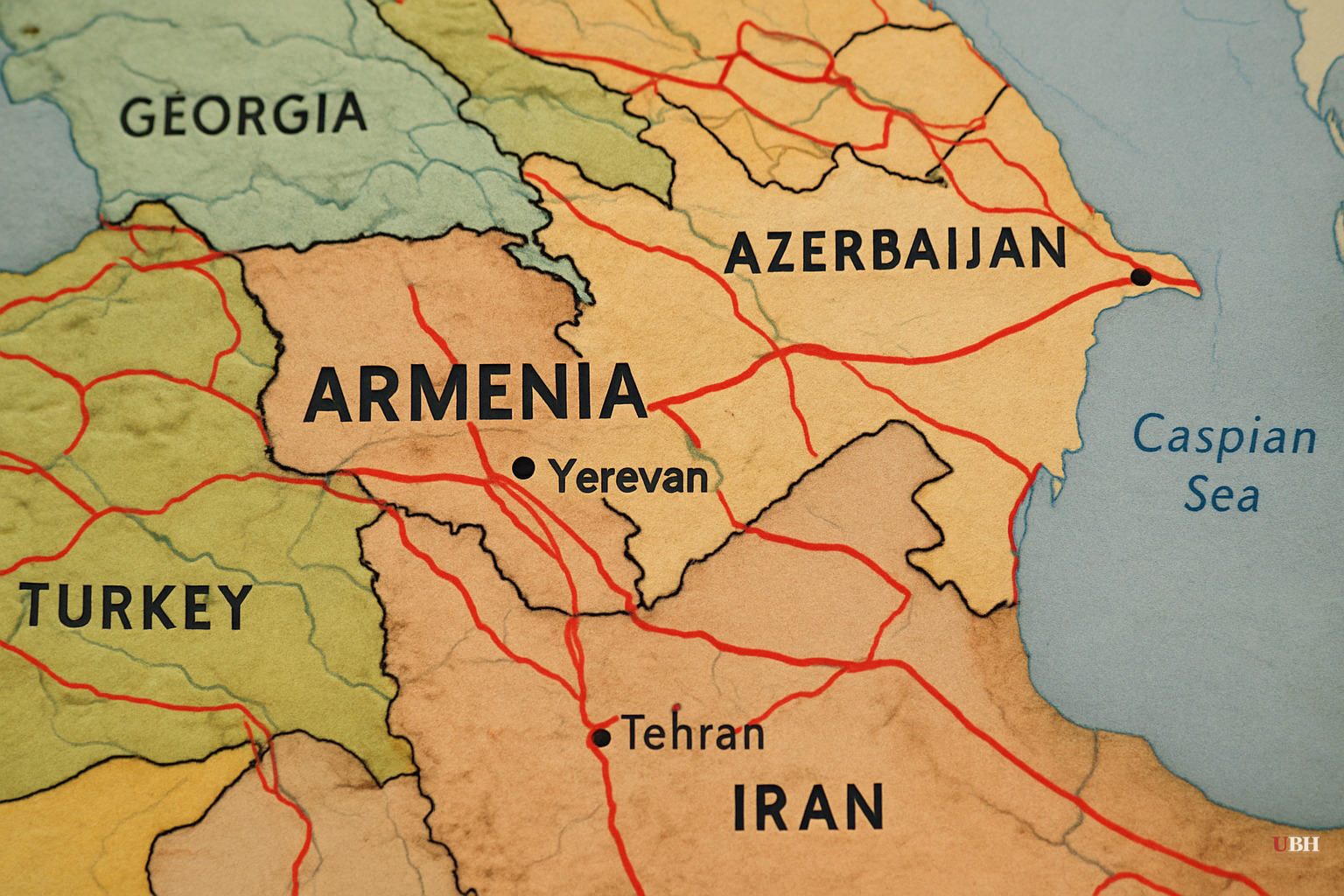
An election in Yerevan, felt in Beijing
Armenia held parliamentary elections in June 2026. Prime Minister Nikol Pashinyan's side won decisively, according to OilPrice.com, beating back Kremlin-aligned opposition figures who had hoped to install friendlier leadership in Yerevan.
That result looks like a domestic political story. It isn't. It's a geoeconomic one, with consequences stretching from Moscow to Tehran to Beijing.
Why Russia and Iran both lose here
Russia has spent years trying to keep Armenia inside its orbit. Armenia hosts a Russian military base and has historically leaned on Moscow for security guarantees against Azerbaijan. The Kremlin wanted a government in Yerevan it could count on. It didn't get one.
Iran's stake is different but real. Tehran has long backed Armenia because of shared friction with Azerbaijan, a secular, majority-Shia country whose governance model is a direct rebuke of Iran's own authoritarian Islamist system, according to OilPrice.com. Iran and Russia also share a defense and security partnership built around resisting Western and Turkish influence in the region, the kind of influence Armenian voters just endorsed at the ballot box.
Both patrons are weaker than they've been in decades. Russia is bogged down in its war in Ukraine, under sanctions, and stretched thin militarily. Iran is dealing with its own ongoing confrontation with the United States and Israel. Neither has the bandwidth it once had to project power into the South Caucasus.
That's the vacuum. Vacuums get filled by whoever shows up with money and infrastructure.
China's Middle Corridor bet
China has been building an alternative to Russian rail lines since 2022, according to OilPrice.com: the so-called Middle Corridor, a trans-Caspian route running from China through Central Asia, across the Caspian Sea, through the South Caucasus, and into Turkey en route to Europe. Beijing treats it as a hedge for its Belt and Road Initiative, a way to keep goods flowing westward without depending on a sanctioned Russia.
Georgia and Azerbaijan have been the backbone of that plan for years. Armenia used to be an afterthought in these calculations. That's changing, partly because Georgia has been drifting toward Russia instead of away from it. OilPrice.com notes that a Chinese company recently pulled out of a deep-water port project at Anaklia, on Georgia's Black Sea coast, a sign Beijing is hedging its bets on Tbilisi.
If Armenia and Azerbaijan can lock in a durable peace, anchored by what's being called the Trump Route for International Peace and Prosperity, new transit corridors through Armenian territory would open up. That would stabilize the broader Middle Corridor that Chinese logistics firms have been counting on for four years.
Washington sets the terms, and Beijing isn't thrilled
A stabilized Armenia-Azerbaijan corridor built around a peace framework named for and pushed by the U.S. administration means the rules of that corridor get written substantially in Washington, not Beijing. China benefits from the stability. Chinese planners are unlikely to be happy about it happening on American terms, according to OilPrice.com's analysis. Expect Beijing to keep quietly pouring money into Central Asian and Caucasian infrastructure of its own, trying to preserve leverage over a corridor it doesn't want to watch slip entirely into Washington's sphere of influence.
The strongest case for skepticism
A fair skeptic would point out that trade corridors get "reshaped" on paper all the time and rarely deliver overnight. Armenia-Azerbaijan hostility runs deep, rooted in decades of conflict over Nagorno-Karabakh, and a peace framework named after a U.S. president doesn't erase that history or guarantee Baku and Yerevan will actually open borders and rail links on schedule. Infrastructure takes years and billions of dollars. Political will in Yerevan can change with the next election cycle too.
That's a legitimate caution. It doesn't change the fact that Russia and Iran are both structurally weaker in the South Caucasus than at any point in decades, a point OilPrice.com's analysis rests on and one that follows directly from Russia's war losses in Ukraine and Iran's ongoing standoff with the U.S. and Israel. Weakness in Moscow and Tehran is the precondition for anyone else, Washington or Beijing, to fill the space.
What happens next
The open question is whether the Armenia-Azerbaijan peace framework actually produces functioning transit infrastructure, or whether it stays a diplomatic aspiration while China quietly builds workarounds through Central Asia regardless. Watch for whether Georgia's tilt toward Moscow deepens, which would push more Chinese logistics investment toward Armenia by default, and whether any Russian or Iranian countermove materializes as both powers try to claw back influence they can currently ill afford to spend resources on.
Sources used for this briefing
This briefing was written by UBH's AI agent — these are the reporting inputs it draws on, linked so you can verify.


