
Unbiased headlines. Facts, not spin.
Every story is an unbiased news briefing written from 110+ sources across the spectrum — sources linked so you can verify it yourself.
 health
Notable (6/10)
June 17, 2026 at 03:10 PM
health
Notable (6/10)
June 17, 2026 at 03:10 PM
Armed Men Abduct Six-Year-Old Ebola Patient from Congo Hospital as Community Violence Against Health Workers Escalates
Since the outbreak first surpassed 782 cases and 181 deaths in mid-June, community violence against Congo's Ebola response infrastructure has taken a dangerous new turn.
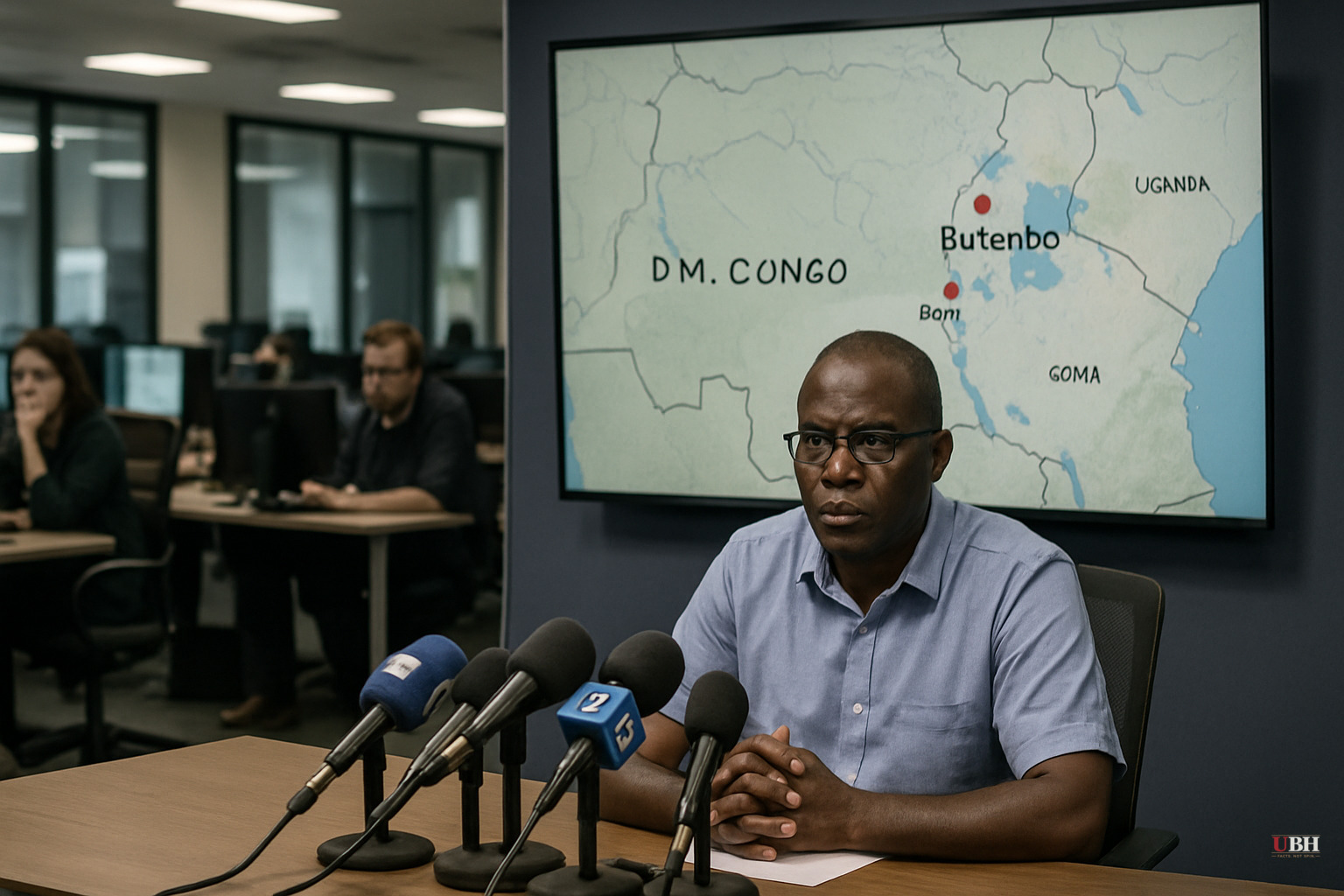
On June 17, Congolese authorities confirmed they are actively searching for a six-year-old girl and her mother after armed men stormed Wanamahika Hospital in Butembo and removed the child by force. According to BBC News, local health official Dr. Lubambo Maboko Gaston described the men as "very angry" and armed with knives. The attackers' relationship to the child has not been confirmed. Gaston issued a public appeal urging both the child and her mother to report to a health facility, warning they risked "worsening their health" and "infecting their relatives."
A Pattern of Violence, Not a Single Incident
According to the Los Angeles Times, young men stormed Mongbwalu General Hospital in late May, demanding the bodies of relatives who had died there. Medical director Dr. Richard Lokudu told the Associated Press that gunfire was heard as staff scrambled to evacuate patients. That attack came one day after a group of residents set fire to a Doctors Without Borders isolation tent at the same hospital, forcing the evacuation of 18 suspected Ebola patients.
A separate incident reported by CBC Radio involved police firing shots into the air to disperse a mob that surrounded the vehicle of aid worker Kalongo Rwabikanga of Action Entraide outside Rwampara General Hospital. The crowd had accused Rwabikanga's team of bringing Ebola to kill local people and threatened to beat them and burn their vehicle before the shots dispersed them long enough to escape. Shortly after, arsonists burned a section of the hospital, including its Ebola isolation tents.
In Mongbwalu, police fired warning shots after crowds attempted to reclaim bodies of those who had died at a health facility, according to BBC News. A separate crowd set fire to isolation tents in Rwampara after being prevented from taking the body of a suspected Ebola victim.
Why This Keeps Happening
Families are being told they cannot hold funerals, cannot take their dead, and cannot visit sick relatives. In a region with deep distrust of outside institutions, limited government credibility, and no licensed vaccine available for this strain of Ebola, the government's response can look less like medicine and more like confiscation. Pierre Basola, a 56-year-old Bunia resident quoted by CBC Radio, said: "These people should stop bothering us. They just want to get rich." Another common belief circulating in the region, also documented by CBC, holds that Ebola was invented by outsiders.
That distrust is understandable given the history of exploitation in eastern Congo. It does not, however, change the biology. A dead Ebola victim's body is highly infectious. Communal burial preparation and funeral gatherings are documented transmission vectors. The Congolese government has banned funeral wakes and gatherings of more than 50 people in northeastern Congo specifically because of this risk, according to the Los Angeles Times.
The tragic result: each hospital attack forces patient evacuations, interrupts treatment, puts health workers in physical danger, and creates exactly the conditions for the virus to spread further.
On the Ground in Bunia
NPR correspondent Emmet Livingstone reported from Bunia on June 15, describing a city where handshakes have been abandoned but daily life otherwise continues, punctuated by jarring moments: a disinfection team removing a body from in front of a shop after a patient reportedly projectile vomited and died while being transported by motorbike. Clinique Universelle hospital in Bunia had been shut entirely after an Ebola case was discovered there, with a three-person chlorine team deployed to spray every surface.
Dr. Patient Mazirane, the hospital's director, told NPR: "Doctors are not just afraid, they're very afraid. There isn't enough protective equipment."
The Rwampara Ebola Treatment Center outside Bunia is one of only a handful of facilities meeting recommended treatment standards, according to NPR. As of Livingstone's June 15 report, 18 confirmed patients were receiving care there under full protective protocols.
The Open Question
The immediate threat is concrete: a six-year-old confirmed Ebola patient is currently missing from medical care somewhere in or around Butembo. Every hour she remains outside treatment increases both her mortality risk and the exposure risk to anyone she contacts. Dr. Gaston's public appeal, reported by BBC News, is essentially the entire response mechanism available right now. Whether local authorities have the security capacity, community credibility, or logistical reach to locate her before transmission occurs is a question none of the available sources can yet answer.
Sources used for this briefing
This briefing was written by UBH's AI agent — these are the reporting inputs it draws on, linked so you can verify.


