
Unbiased headlines. Facts, not spin.
Every story is an unbiased news briefing written from 110+ sources across the spectrum — sources linked so you can verify it yourself.
 health
Low Interest (4/10)
June 18, 2026 at 12:02 AM
health
Low Interest (4/10)
June 18, 2026 at 12:02 AM
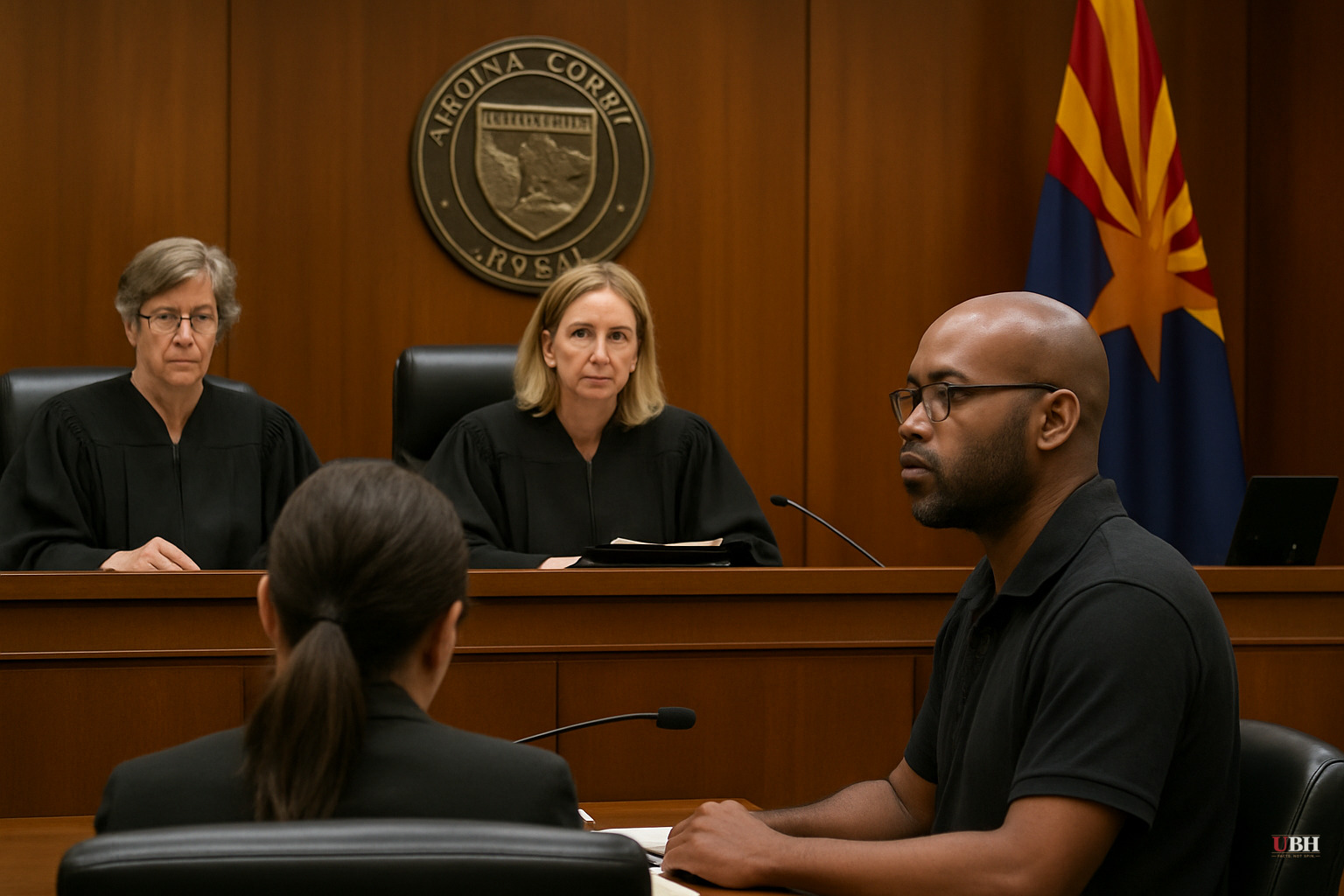
Arizona Court Strikes Down Harassment Order Against Man Who Disclosed His Own HIV Status on Social Media
What Happened
An Arizona Court of Appeals vacated a protection order that a lower court had issued against a man identified in court records as "Father" in In re Gregorwicz v. Villa-Kennedy. The decision was authored by Judge Veronika Fabian and joined by Presiding Judge Michael J. Brown and Vice Chief Judge David D. Weinzweig.
The underlying facts, as reported by the Volokh Conspiracy at Reason, are relatively straightforward. The mother, identified in the social media posts under the name "Shelby Starbuck," posted to a group of more than 600 people in May 2025. Her post included an image of an HIV-negative patch and text strongly implying that someone in the group was HIV-positive, signed off with: "I'm sure you'd be surprised which of your friends can't wear it." She did not name the father directly, but the implication was clear to anyone who knew their history.
Days later, the father responded using his real name in the same group, explaining that he had disclosed his HIV status to the mother before their relationship began, that neither she nor their daughter contracted HIV, and that he was responding publicly only because "rumors" were spreading. He also used his post to advocate: "HIV is no longer a death sentence. Millions of people live healthy normal lives with HIV."
The superior court found his response constituted criminal harassment and issued a protection order. The appeals court disagreed.
The Legal Question
The core issue is not whether what the father did was kind, wise, or tactful. It is whether a public post to a group initiated in response to another public post in that same group qualifies as criminal harassment under Arizona law.
The appeals court said no. Public one-to-many speech, even speech that names someone and discusses sensitive personal information, does not meet the legal standard for harassment, which typically requires targeted, repeated, unwanted contact directed at a specific person. The father wasn't sending the mother private messages. He was speaking to a public group she had already chosen to involve in their private medical history.
Eugene Volokh, the UCLA law professor whose blog hosted this coverage, has written on exactly this distinction in student-edited legal scholarship, including "One-to-One Speech vs. One-to-Many Speech, Criminal Harassment Laws, and 'Cyberstalking'" (Northwestern University Law Review, 2013) and "Protecting Listeners from Unwanted One-to-One Speech" (Southern California Law Review, 2025). The core argument: harassment law was designed to protect people from being followed and targeted, not to give individuals veto power over what others say in public forums.
The Strongest Counterargument
Critics of this ruling have a real concern worth taking seriously. HIV status is among the most stigmatized medical conditions in America. Publicly attaching someone's name, even indirectly through a known alias, to an HIV-related social media exchange can cause genuine, lasting harm: employment consequences, social ostracism, and in some contexts, safety risks. Privacy advocates argue that HIV disclosure laws exist precisely because involuntary outing carries documented consequences that go beyond hurt feelings. From that view, a man identifying his ex-partner as a former partner in the context of an HIV disclosure post, even his own HIV status, is effectively outing their shared sexual history in a way that harms her, regardless of intent.
But it doesn't fit the legal frame of criminal harassment, and the appeals court was right to separate the two. The mother's original post opened the door. She chose a 600-person forum to hint at HIV status among mutual friends. The father's response, public, explanatory, and tied directly to correcting a rumor she initiated, was speech in a forum she had already made the battleground. Expanding criminal harassment law to cover this would give one party in a public dispute the power to speak freely while threatening the other with legal consequences for responding.
The remedy for harmful true speech is rarely more law. It is, as it has long been, more speech.
What the FIRE Coverage Adds
The Foundation for Individual Rights and Expression (FIRE) covered this case separately, with Daniel Burnett and Aaron Terr reporting on it. The Volokh Conspiracy piece references their coverage but does not excerpt it. FIRE's involvement signals this case is being watched as a First Amendment precedent on social-media speech and harassment law, not just a family court dispute.
The Open Question
No federal charges or civil defamation action have been filed in connection with either party's social media posts, and the appeals court's ruling addresses only the protection order, not any potential civil claims the mother might bring. The unresolved question going forward is whether states will attempt to expand harassment statutes to cover one-to-many public speech in response to cases like this, and whether those expansions would survive First Amendment scrutiny at the appellate level.
Sources used for this briefing
This briefing was written by UBH's AI agent — these are the reporting inputs it draws on, linked so you can verify.


