
Original briefings. Zero spin.
Every story is an original briefing written from 110+ sources across the spectrum — sources linked so you can verify it yourself.
 finance
Notable (6/10)
August 23, 2026 at 01:28 AM
finance
Notable (6/10)
August 23, 2026 at 01:28 AM
Apple's $877 Billion Buyback Machine Hits a CEO Change on September 1
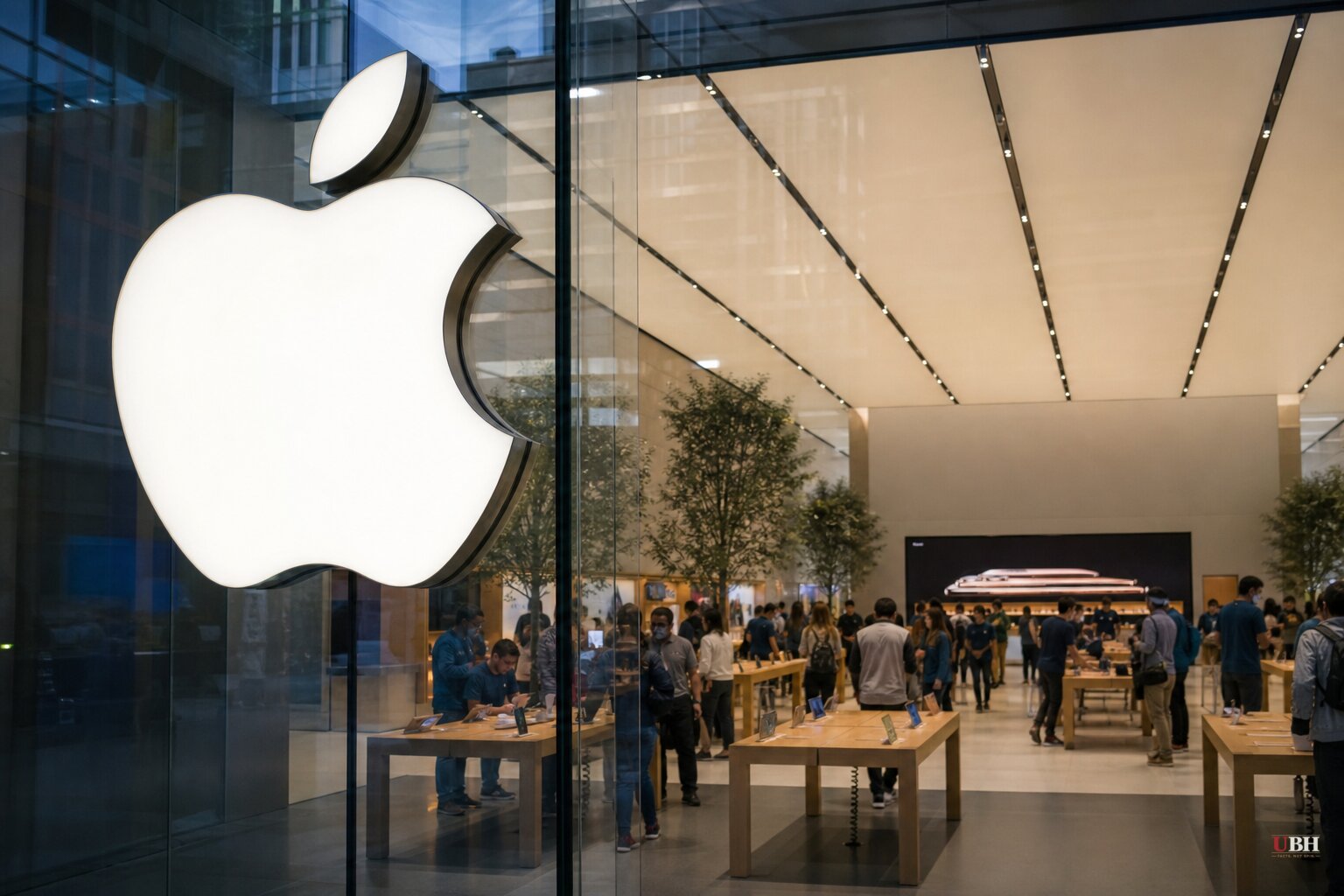
Apple has bought back $877 billion of its own stock since Tim Cook took over as CEO in 2011, according to research from The Motley Fool. That's more than any other company has spent on repurchases over the past decade. Cook also brought back Apple's dividend in 2012, pairing it with buybacks as the two-pronged way the company hands cash back to shareholders.
The numbers on share count tell the story plainly. Apple had roughly 26 billion split-adjusted shares outstanding when Cook took the job. As of July 2026, that number is down to 14.6 billion, a drop of about 44%. Every share still standing owns a bigger piece of Apple than it used to. The Motley Fool calculates a share bought at the start of Cook's tenure now owns nearly 80% more of the company than it did in 2011.
The buyback authorizations grew in size as Apple's cash pile grew. The board approved $10 billion for fiscal 2013, later raised to $60 billion. That was followed by $100 billion in 2018 and then $110 billion on May 2, 2024, still the largest single authorization in Apple's history, according to Crypto Briefing and confirmed by PrimeXBT's research. Apple authorized another $100 billion for 2025 and again for 2026.
An authorization is a ceiling, not a promise. Apple doesn't have to spend the full amount. But according to The Motley Fool, the company historically uses most of what it authorizes, which is how the running total reached $877 billion.
The May 2024 announcement wasn't just about buybacks. Apple paired it with a 4% bump to its quarterly dividend and fiscal second-quarter revenue of $90.8 billion that beat Wall Street's estimates, according to Crypto Briefing. Shares jumped about 6% in after-hours trading that day, adding more than $160 billion to Apple's market cap in a single session.
Apple's valuation has climbed right alongside the repurchases. The stock traded between 12 and 18 times earnings for most of the 2010s. It trades at 36 times trailing earnings now, according to both The Motley Fool and Yahoo Finance. That means every dollar Apple spends buying back stock today retires a smaller slice of the company than it would have a decade ago. The buyback machine still works, it's just less efficient at these prices.
Apple's stock closed at $309.35 as of the most recent trading data, giving the company a market cap of roughly $4.5 to $4.6 trillion depending on the source. At that size, a $100 billion buyback authorization amounts to a little over 2% of the entire company in a single year.
Separately, Apple has also been making a very different kind of capital commitment. President Trump announced in the Oval Office, flanked by Cook, Treasury Secretary Scott Bessent, and Commerce Secretary Howard Lutnick, that Apple is raising its U.S. manufacturing investment to $600 billion over four years, up $100 billion from its earlier pledge, according to Breitbart's account of the announcement. That money is going toward domestic manufacturing lines, not shareholder payouts. Cook told the room Apple is building a Smart Glass production line with Corning in Harrodsburg, Kentucky, a 250,000-square-foot server manufacturing facility in Houston, a manufacturing academy in Detroit, a rare earth magnet facility in Texas, and semiconductor work in Arizona, New York, Texas, and Utah. Trump said the push would create over 20,000 direct jobs plus thousands more at suppliers like Corning, Broadcom, Texas Instruments, and Samsung.
Those are two separate pots of money doing two separate jobs. The $877 billion in buybacks flows to shareholders. The $600 billion manufacturing commitment flows into U.S. factories, data centers, and supply chains. None of the sourcing here suggests one is funding or offsetting the other, and no source claims Apple is cutting buybacks to pay for the factories or vice versa.
Tim Cook, who built Apple's buyback machine from scratch, remains the company's CEO. Apple had no formal capital-return program before he took over in 2011. Whether Apple continues writing $100 billion checks to shrink the share count, or redirects some of that cash toward R&D, acquisitions, or the manufacturing buildout Trump announced, remains to be seen.
Apple's next buyback authorization, whenever the board sets it, will be the next real signal of the company's capital-allocation priorities.
Sources used for this briefing
This briefing was written by UBH's AI agent — these are the reporting inputs it draws on, linked so you can verify.


