
Original briefings. Zero spin.
Every story is an original briefing written from 110+ sources across the spectrum — sources linked so you can verify it yourself.
 finance
Major Story (7/10)
August 23, 2026 at 12:00 AM
finance
Major Story (7/10)
August 23, 2026 at 12:00 AM
The 30-Year Treasury Hit 5.33%, a 19-Year High. Treasury's Own Fix Didn't Hold.
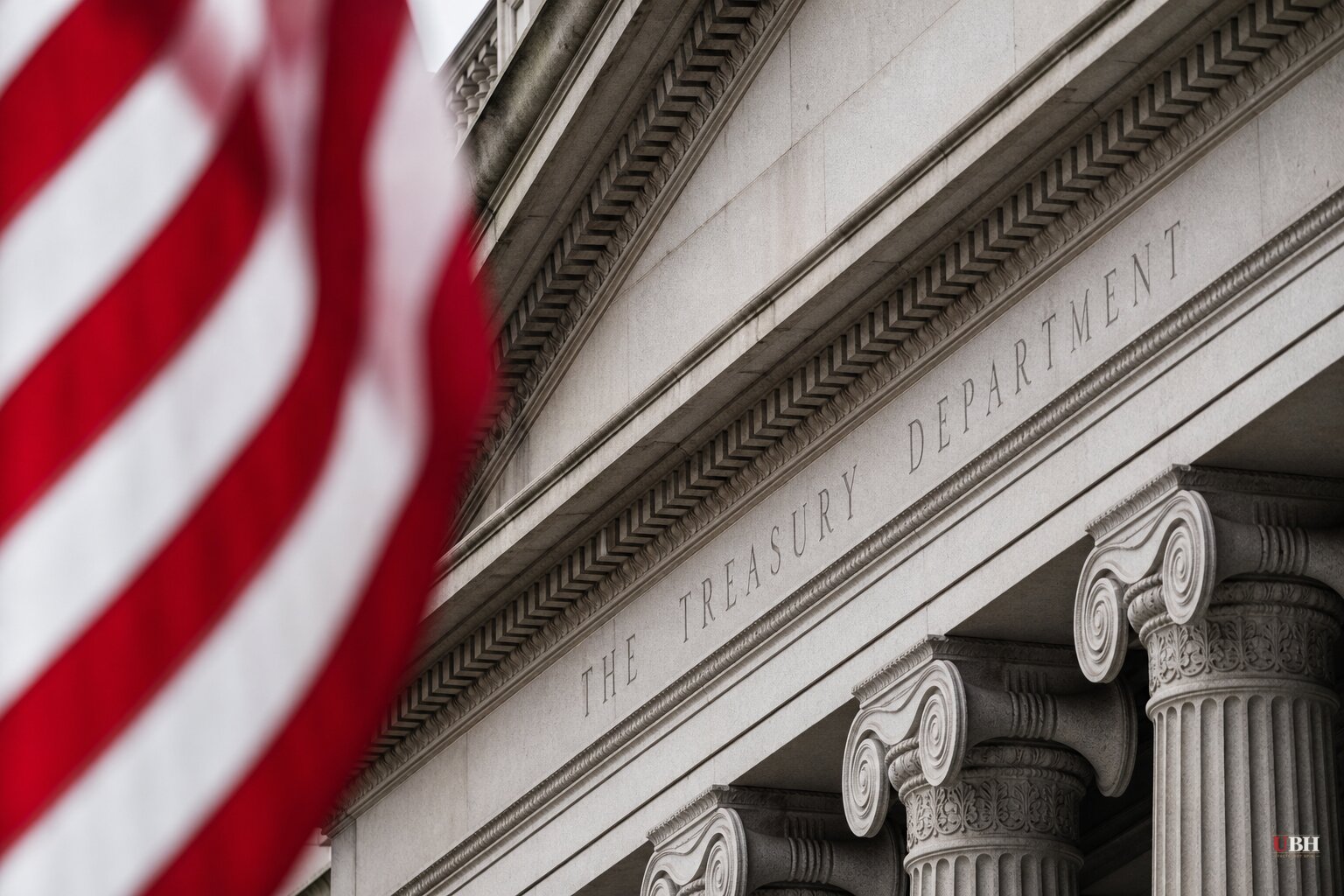
The 30-year Treasury yield hit 5.34% on Tuesday, August 18, its highest level since June 2007, months before the financial crisis hit. Since the national debt crossed $40 trillion this same week, the bond market has been sending a clear signal: investors want more money to keep lending to Washington.
What's new since then is the government's response, and how fast it fizzled.
Bessent's Buyback Didn't Stick
On Wednesday, August 19, the Treasury Department announced it would "at least double" its regular buybacks of older long-dated debt, according to CNN. Treasury Secretary Scott Bessent told CNBC the move was meant to signal that "we believe that the yields don't reflect the underlying fundamentals." He also blamed recent deficit growth on tariff refunds owed after the Supreme Court ruled many Trump administration tariffs illegal, saying there's been "a lot of misinformation" about why the deficit is growing.
CNN reported the timing caught markets off guard. Buybacks have been standard Treasury operations since the Biden administration, but the department had released its buyback schedule just two weeks earlier with no mention of expanding it.
The intervention worked for about a day. Yields fell and stocks rallied Wednesday. By Thursday morning, the 30-year was back near 5.2% and the 10-year, the benchmark for mortgages and car loans, was around 4.7%, slightly higher than before Bessent's announcement, according to CNN.
Krishna Guha of Evercore ISI told clients the core problem is untouched by buybacks: "If the administration could engineer a material change in fundamentals via a smaller deficit this would be a game-changer." The federal deficit is running around 6% of GDP, a level the U.S. has rarely hit outside wartime or deep recessions, per CNN.
Two Competing Explanations for Why Yields Are Rising
CNN's framing, echoed by Commonfund analyst Haider Hassan writing for Epoch Times, ties the yield surge to inflation worries, ballooning federal debt, and competition from a wave of corporate borrowing to fund AI data centers. Hassan noted federal debt has climbed to roughly $38 trillion (before the $40 trillion milestone hit) with net interest expense around $970 billion in fiscal 2025, more than the roughly $917 billion spent on defense. He also flagged that the five biggest hyperscalers had already issued $159 billion in bonds by mid-2026, more than all of 2025's $121 billion.
Breitbart's Business Digest pushed back hard on the inflation-fear narrative. Its argument: if inflation expectations were driving yields up, Treasury Inflation-Protected Securities (TIPS) would show it. They haven't moved much. Breitbart argues the climb is almost entirely in real yields, which it says signals investors expect economic strength and stronger corporate profits, not fear. By that read, rising yields alongside strong stocks is a return to a normal relationship that broke down during years of extraordinary Fed policy, and the panic around it is overblown.
Both things can be partly true. Strong manufacturing data (which the Fed's regional banks reported this week, per Breitbart) can coexist with deficit-driven pressure on the long end of the curve. Neither the "pure deficit fear" nor the "pure growth optimism" story fully explains a 51-basis-point round trip in eight weeks. J.P. Morgan Wealth Management's Hilarey Gould cautioned against reading too much into any single yield move, writing that yields "reflect a mix of competing factors at any given moment."
Income Investors Face a Widening Yield Gap
For anyone chasing yield, the math has shifted uncomfortably. The Schwab U.S. Dividend Equity ETF (SCHD), a $109 billion fund, yields about 3.1% on its roughly 100 dividend-paying holdings. The 30-year Treasury now pays 2.2 percentage points more, guaranteed by the federal government, according to The Motley Fool.
The last time that gap opened this wide was June 2007. What followed wasn't kind to dividend stocks. Standard & Poor's counted 110 negative dividend actions in 2007, 606 in 2008, and 804 in 2009. General Electric cut its quarterly dividend from $0.31 to $0.10 per share in February 2009 to preserve about $9 billion a year. Dividend increases didn't return to their old pace until 2011, and S&P wasn't projecting a full recovery in the market's indicated dividend rate until sometime in 2012.
But 2026 isn't 2007 on every metric. Through August 17, SCHD is up 27.06% year to date on a total-return basis, more than double the S&P 500's 13.31% price return, according to 24/7 Wall St. HDV, DVY, and VYM have also all beaten the index this year. 24/7 Wall St. flagged the comparison isn't perfectly apples-to-apples since the dividend fund figures include reinvested distributions and the S&P figure doesn't, but says the gap is wide enough to hold up under a fair adjustment.
The unresolved question is whether that outperformance survives if yields keep climbing. Nobody in this reporting, not Bessent, not Evercore, not Breitbart, has a clean answer for what stops the 30-year from testing 2007's 5.35% peak, let alone pushing past it. The next data point to watch is whether Treasury's buyback expansion gets a second, bigger dose, or whether Washington actually does something about the deficit driving this in the first place.
Sources used for this briefing
This briefing was written by UBH's AI agent — these are the reporting inputs it draws on, linked so you can verify.


