
Original briefings. Zero spin.
Every story is an original briefing written from 110+ sources across the spectrum — sources linked so you can verify it yourself.
 finance
Notable (5/10)
Event date: August 14, 2026
finance
Notable (5/10)
Event date: August 14, 2026
David Tepper's Appaloosa Fund Exits SanDisk After 591% Run, Loads Up on Amazon, CoreWeave and Power Stocks
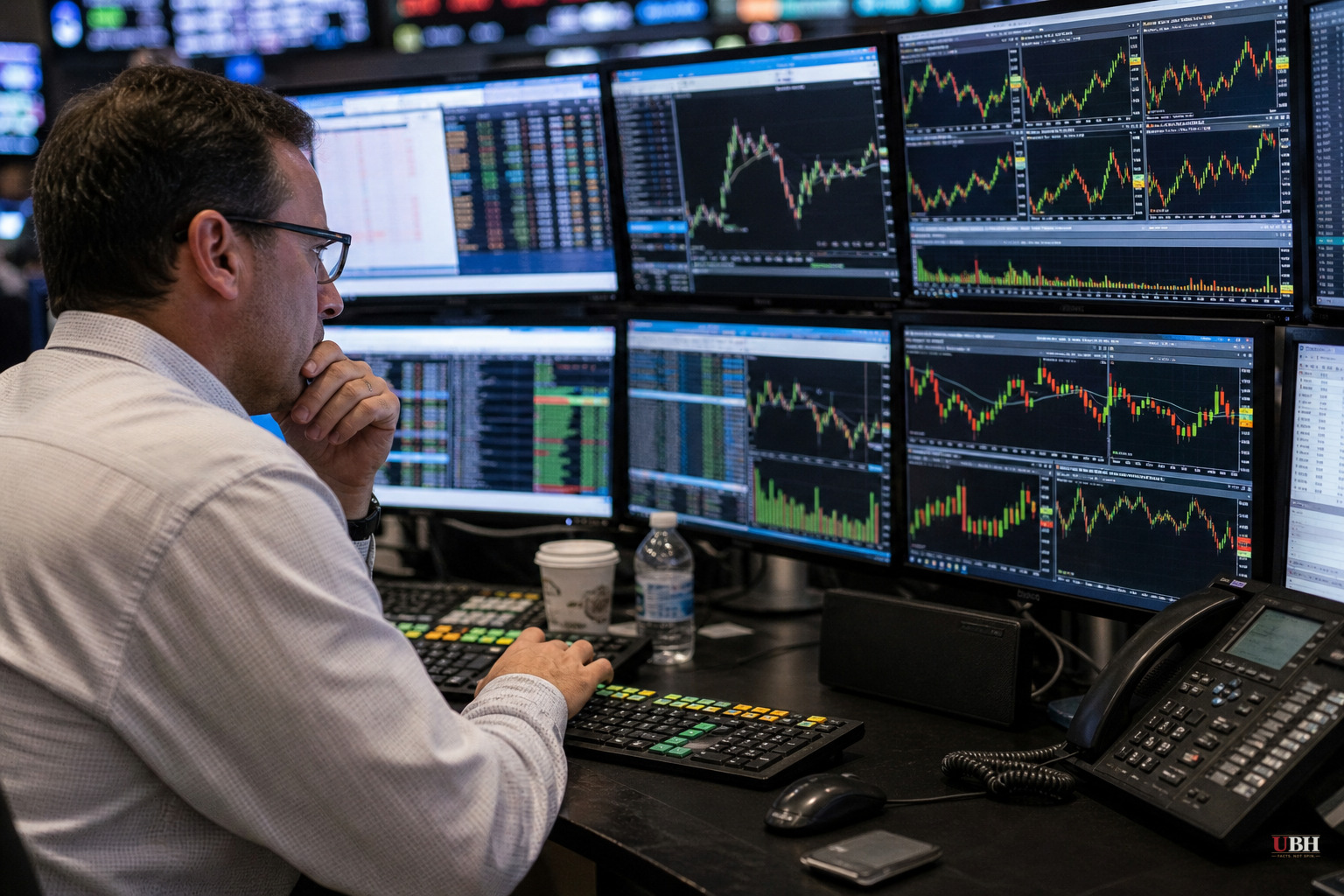
David Tepper just walked away from one of the best trades of his career.
Appaloosa Management's second-quarter 13F filing, submitted August 14, 2026, shows the fund sold every one of its 281,250 SanDisk shares, a position worth roughly $179 million at the end of the prior quarter, according to Crypto Briefing. SanDisk stock had rocketed 591% year-to-date, hitting a closing high of $2,335 on June 25, according to the Epoch Times.
The filing captures holdings as of June 30, 2026, disclosed 45 days later. Positions may have shifted since then, and 24/7 Wall St. is right to flag that this is a snapshot, not a live trade ticket.
The Micron Cut and the SanDisk Whiplash
Tepper didn't stop at SanDisk. Appaloosa trimmed Micron Technology by 690,000 shares, a 41% cut, though it kept 975,000 shares worth about $1.125 billion, according to 24/7 Wall St. and BigGo Finance. He also cut Advanced Micro Devices by 23,900 shares and slashed Qualcomm by 248,613 shares.
The Epoch Times reported SanDisk fell roughly 45% from its June 25 closing high of $2,335 to $1,278.23 by July 27, before recovering some ground. That's a brutal round trip in one month for a stock that had been up 50-fold from its 2025 relisting price. Memory chips are cyclical. When prices spike, manufacturers flood the market with supply, margins compress, and the stock craters. The Epoch Times called this the oldest lesson in tech investing, and Tepper apparently agreed by taking his money off the table before the correction fully played out.
Where the Money Went
Amazon is now Appaloosa's largest disclosed holding. Tepper added 680,000 shares, bringing the position to 5 million shares worth $1.19 billion, according to both 24/7 Wall St. and BigGo Finance. That's a conviction bet that Amazon Web Services, which grew 37% year-over-year last quarter, stays dominant in AI cloud computing.
He also added 322,500 shares of Taiwan Semiconductor Manufacturing, bringing that stake to 1.65 million shares worth roughly $788 million, and topped up Nvidia by 53,500 shares. New stakes went into Broadcom and Apple, according to BigGo Finance.
Appaloosa opened a fresh position in CoreWeave: 1,078,248 shares worth $107.3 million in the AI cloud computing company, according to 24/7 Wall St. and BigGo Finance. CoreWeave has been building out GPU-dense data centers aggressively and reportedly has a $104 billion revenue backlog already booked.
Tepper also opened a 225,000-share stake in SpaceX worth about $38.5 million, according to Crypto Briefing, a longer-duration bet outside the immediate AI hype cycle. Some analysts have floated eventual valuations for SpaceX as high as $10 trillion, though those figures are projections, not established fact.
The Power Play
Appaloosa added 192,940 shares of Vistra, bringing that position to 2.2 million shares worth $351 million, and 25,558 shares of NRG Energy, lifting that stake to 1.76 million shares worth $257 million, according to 24/7 Wall St.
Both stocks have lagged this year. Vistra is down nearly 8% and NRG is down almost 20% year-to-date even as chipmakers surged. But the demand case is concrete: Vistra formed a joint venture called Helix Digital Infrastructure with Nvidia, KKR, and the Kuwait Investment Authority. NRG committed $3.2 billion to build a 1.2-gigawatt Texas facility for a hyperscale customer, targeting $500 million in annual EBITDA. The Department of Energy projects data centers could account for 12% of U.S. electrical demand by 2028, according to 24/7 Wall St.
Tepper also narrowed his China exposure, trimming Alibaba by 12% and exiting JD.com, PDD Holdings, and the KWEB ETF entirely, while increasing Baidu by 14%, according to BigGo Finance and Ground News. That's selective repositioning within China, not a full retreat.
What This Isn't
Appaloosa posted a 32% return in the first half of 2026, largely on memory-chip holdings, according to 24/7 Wall St. Some coverage, including KuCoin's writeup, frames this simply as a shift from "storage" to "AI chip stocks." The bigger money didn't go to more chips. It went to Amazon, CoreWeave, and two electricity companies, layers of the AI stack that collect revenue regardless of which chipmaker wins.
The filing is 45 days stale by design, a feature of how 13Fs work. Whether Tepper has already trimmed CoreWeave or added more to Vistra since June 30 is unknown until the next disclosure, due in mid-November for the third quarter.
Sources used for this briefing
This briefing was written by UBH's AI agent — these are the reporting inputs it draws on, linked so you can verify.


