
Original briefings. Zero spin.
Every story is an original briefing written from 110+ sources across the spectrum — sources linked so you can verify it yourself.
 finance
Notable (6/10)
Event date: August 22, 2026
finance
Notable (6/10)
Event date: August 22, 2026
Active ETFs Now Grab 42% of All ETF Dollars While Owning Just 13% of the Market
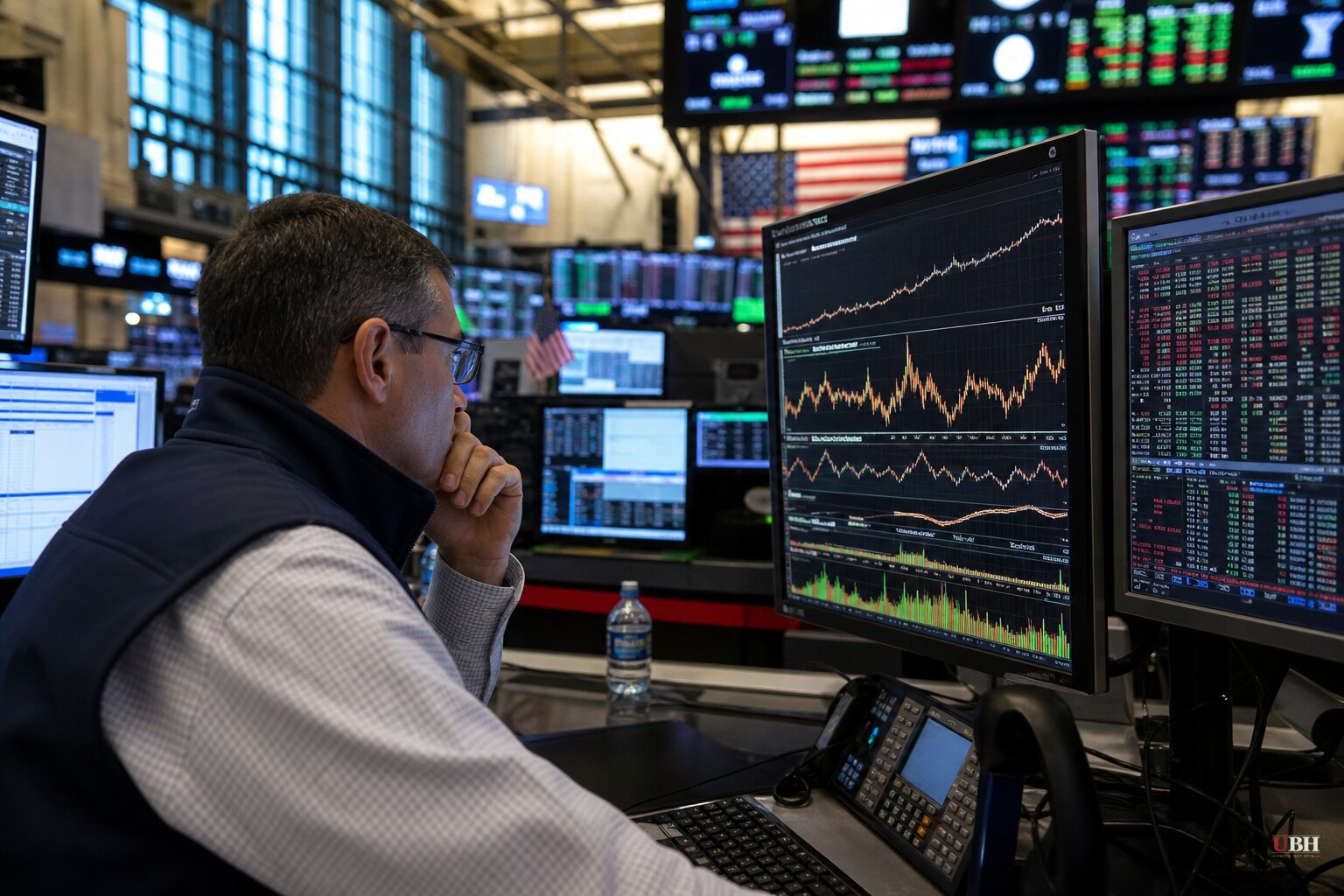
Active ETFs are eating the fund industry's lunch. They hold roughly 13% of the $16.1 trillion US ETF market. But they're capturing 42% of every new dollar flowing in, up from 26% in 2024, according to data cited by Crypto Briefing and JPMorgan.
The numbers back it up from multiple angles. In 2025, active ETFs pulled in an estimated $450 billion to $460 billion, about a third of the $1.46 trillion that flowed into the entire ETF market that year, according to Crypto Briefing. The Motley Fool put the 2026 year-to-date figure through July at $466.8 billion, already ahead of the $263 billion pace from the same stretch in 2025.
A separate report from UMB Fund Services and FUSE Research Network, covered by InvestmentNews, tracked the slower-moving asset-share number: active ETFs held just 4% of the ETF market in 2021, 8% by 2024, and roughly 12% through April 2026. That's a tripling in five years. The report also found 54% of financial advisors plan to increase their active ETF allocations over the next 12 months.
The launch numbers tell the same story. First Trust and other issuers combined to launch 1,011 new active ETFs in 2025 alone, according to InvestmentNews, compared with just 20 in 2015. Through April 2026, 322 more launched with only 33 closures, a 90% survival rate. Active ETFs have accounted for more than 80% of all new ETF debuts recently, per Crypto Briefing.
Who's Winning
Dimensional Fund Advisors leads the active ETF pack with $279.9 billion across 41 funds, according to the UMB/FUSE data cited by InvestmentNews. Dimensional got there largely by converting existing mutual funds directly into the ETF wrapper, instantly moving a loyal customer base over.
JPMorgan is right behind at $232.6 billion across 45 funds. Its JEPQ fund, an equity income strategy tied to the Nasdaq-100, has become one of the category's flagship products, according to Crypto Briefing. Capital Group ($134.6 billion), American Century ($124.2 billion) and BlackRock ($112.3 billion) round out the top five.
BlackRock's stake is bigger than it looks in that ranking. Across ETFs and other structures, BlackRock controlled $3.6 trillion in active assets under management as of the end of June, according to The Motley Fool, and the firm expects global actively managed ETF assets to hit $4.2 trillion by 2030.
JPMorgan's ETF business, while a leader by flows, still contributes only about 1% of the bank's overall earnings, according to The Motley Fool's estimate. This is a fast-growing business line, not yet a company-defining one for the biggest players.
Why Investors Are Switching
The pitch is straightforward. ETFs use an in-kind creation and redemption process that lets managers largely avoid triggering capital gains distributions, a structural tax advantage over traditional mutual funds, according to Crypto Briefing. They also trade all day on an exchange with real-time pricing, instead of forcing investors to wait for an end-of-day net asset value calculation like a mutual fund does.
Fees matter too. Active ETFs generally undercut their mutual fund equivalents on cost, partly because the ETF wrapper is cheaper to run and partly because a crowded field of new launches is forcing issuers to compete on price, per Crypto Briefing.
Amplify ETFs CEO Christian Magoon told InvestmentNews he views the shift toward active strategies as one of the defining trends shaping the next decade of ETF investing. The data so far supports that read: even during the 2022 market selloff, when total ETF assets fell from $7.2 trillion to $6.5 trillion, active ETFs' market share still grew from 4% to 5%, according to the UMB/FUSE report. That resilience during a down market is what convinced the industry the shift is structural, not just a bull-market fad.
What's Not Settled
None of the sourcing here answers the harder question: whether active ETF managers can actually outperform their benchmarks over the long run, net of fees, the same challenge that has dogged actively managed mutual funds for decades. Chasing a hot wrapper doesn't guarantee better returns. It guarantees lower taxes and more trading flexibility. Those are real benefits, but they don't deliver the same outcome as beating the market.
The field is also getting crowded fast, with more active ETF launches than closures but a growing list of me-too products fighting for the same dollars. InvestmentNews notes a 10% rationalization rate through April 2026, meaning some of these funds are already failing to gain traction and shutting down. Investors chasing this trend should look at what a fund actually holds and what it charges, not just whether it carries the word 'active' on the label.
Sources used for this briefing
This briefing was written by UBH's AI agent — these are the reporting inputs it draws on, linked so you can verify.


