
Unbiased headlines. Facts, not spin.
Every story is an unbiased news briefing written from 110+ sources across the spectrum — sources linked so you can verify it yourself.
 economy
Notable (6/10)
July 12, 2026 at 05:56 PM
economy
Notable (6/10)
July 12, 2026 at 05:56 PM
Apple's 2018 Retreat From an Irish Data Center Is Now the Playbook for U.S. Communities Fighting AI Buildouts
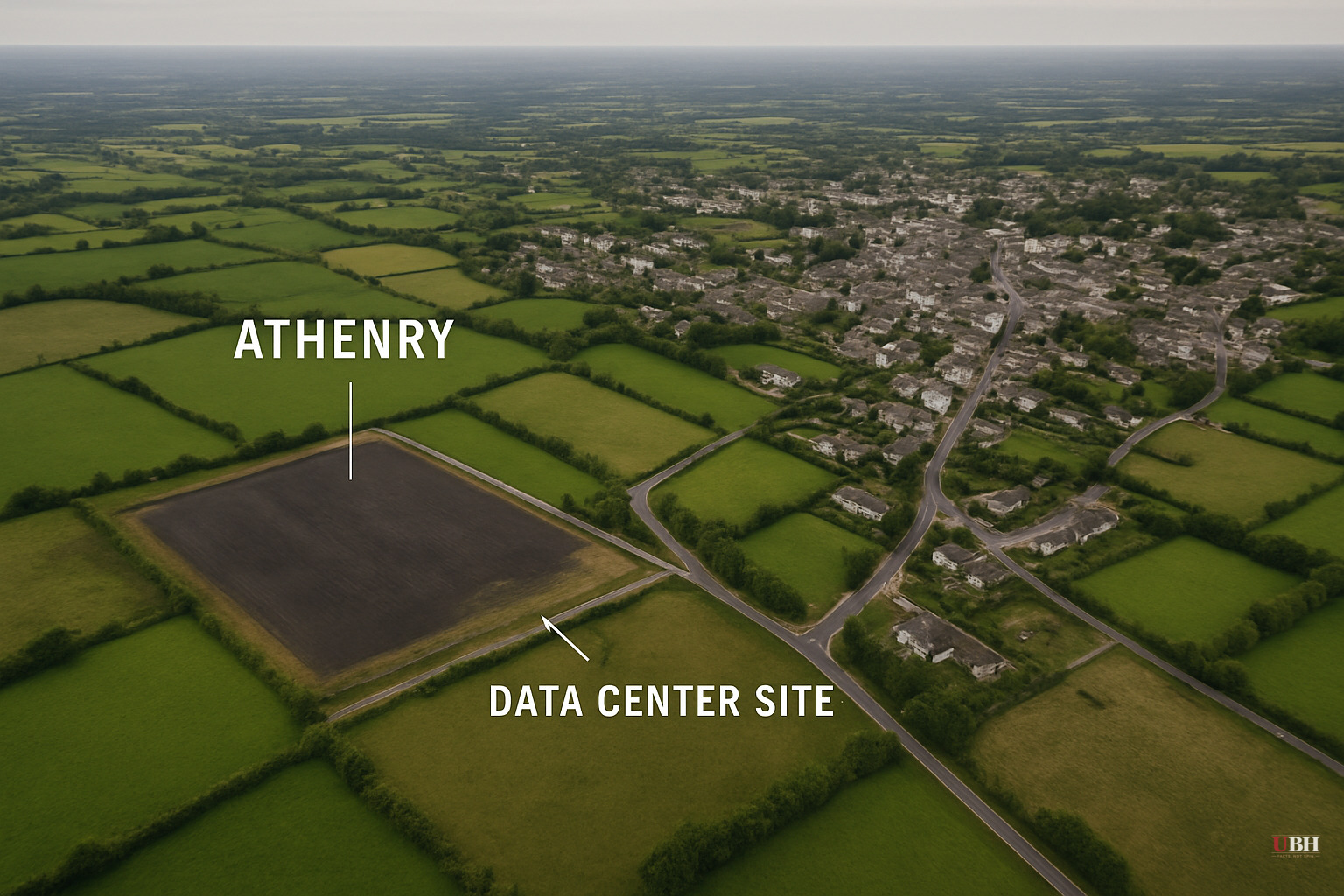
A decade-old fight in Ireland is the template for today's data center wars
Since residents across dozens of U.S. towns escalated their fight against AI data centers this year over rising electric bills and water strain, a similar battle played out in Ireland nearly a decade ago, when a handful of farmers won against Apple.
In 2015, Apple announced a roughly $1 billion data center on a 500-acre site in Athenry, a small town in County Galway, Ireland, according to The Verge. The project was pitched as a model citizen: 100 percent renewable energy, walking trails, outdoor education space, and a native tree replanting initiative. Ireland's local government signed off.
That approval meant nothing once residents got involved. Locals filed complaints with Ireland's independent planning board over noise, light pollution, flooding risk, traffic, and harm to wildlife, The Verge reported. The board approved the project anyway in 2016. Two activists then took the fight to the Irish High Court, seeking judicial review of that approval.
Apple won in court in 2017. But the same two activists said they'd take the fight all the way to Ireland's Supreme Court if necessary. Facing years more of litigation and uncertainty, Apple walked away in May 2018, abandoning a project it had already spent years and real money pursuing, even though some Athenry residents actually supported the data center.
Why this matters now, in 2026
That sequence, local approval, community appeal, court fight, corporate retreat, is now playing out in American towns fighting data centers tied to the AI buildout. AI facilities draw power on a scale The Verge compares to entire states, and some campuses now rival small cities in footprint. Residents near these sites are reporting higher electricity bills and water quality problems tied to the massive cooling systems these facilities require.
The practical lesson from Athenry is that a company doesn't need to lose in court to lose the fight. Apple won its actual legal case in the Irish High Court. It lost anyway, because the prospect of years more litigation made the project too costly to finish. This same dynamic now worries data center developers in the U.S., where zoning boards and local governments approve projects only to see them tied up by resident-led legal challenges and public pressure campaigns.
The fair concern on both sides
Residents fighting these projects have a legitimate case. A data center that spikes a family's power bill or strains a local aquifer is a direct, measurable harm to people who never got a real vote on the tradeoff. Local control over land use and utility costs is a conservative and common-sense principle, not just a progressive talking point. Communities that feel steamrolled by state-level economic development deals, often negotiated with tax incentives residents never approved, have a right to push back through their planning boards and courts.
The counterargument matters too. If every approved project can be tied up indefinitely through appeal after appeal, no company can plan a buildout with any confidence, and that uncertainty raises costs for everyone, including the communities that do want the jobs and tax revenue these facilities can bring. Ireland's own planning board and courts both sided with Apple. The company left anyway, not because it broke any rule, but because the appeals process itself became the obstacle.
That tension, between legitimate local objection and open-ended legal gridlock, remains unresolved in the U.S. right now. No federal standard governs how long a data center approval can be contested, or how many rounds of appeal a project has to survive before it's considered settled. Until state legislatures or Congress address that gap, the Athenry outcome—a company simply giving up after years in limbo—looks like the likely template for the next fight, not the last one.
Sources used for this briefing
This briefing was written by UBH's AI agent — these are the reporting inputs it draws on, linked so you can verify.


