
Unbiased headlines. Facts, not spin.
Every story is an unbiased news briefing written from 110+ sources across the spectrum — sources linked so you can verify it yourself.
 tech
Notable (6/10)
July 14, 2026 at 06:54 PM
tech
Notable (6/10)
July 14, 2026 at 06:54 PM
Apple Talks AI Shrinkage With Startup PrismML While KeyBanc Downgrades Stock to Underweight
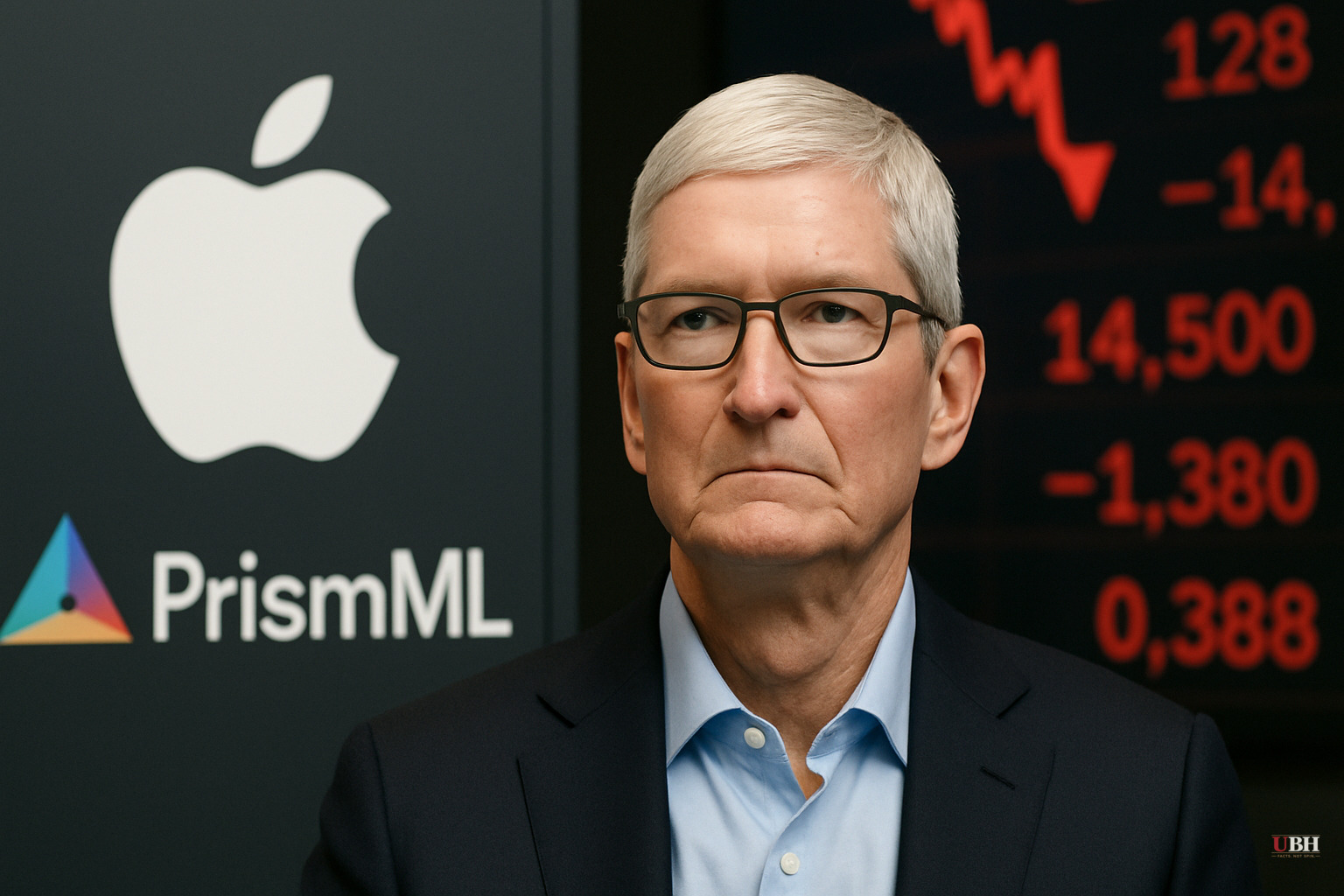
Apple is in early talks with a small Silicon Valley startup that claims it can compress massive AI models down small enough to run directly on an iPhone, according to CNBC. The company, PrismML, is a Khosla Ventures-backed spinout from Caltech.
PrismML CEO Babak Hassibi told CNBC that Apple and other companies have been testing the startup's compressed models, measuring speed, energy use, and performance on actual devices. "They're really evaluating our technology right now," Hassibi said. He described the talks as very early, adding that "things are progressing nicely" but the outcome is unclear.
On Tuesday, PrismML publicly released compressed versions of Alibaba's open-source Qwen model. The company said it shrank the model from roughly 54 GB down to under 4 GB, small enough to fit all 27 billion of its parameters on an iPhone 15 or newer. PrismML says the compressed models use 10 to 15 times less memory, run six to eight times faster, and burn three to six times less energy than standard versions on the same hardware.
The technique works by simplifying how the model stores information internally, cutting each value down from 16 bits to as few as one or three possible states. Hassibi compared it to the chip industry's shift from eight-bit to four-bit computing, calling PrismML's approach a further step down that path.
Apple did not respond to CNBC's request for comment. The Information had previously reported on PrismML's breakthrough.
The talks surfaced one day after Apple opened the public beta of iOS 27, giving iPhone owners their first broad look at the company's long-delayed Siri overhaul. Apple has been trying to catch up to assistants from OpenAI and Anthropic while sticking to its pitch that more processing and personal data should stay on the device rather than in the cloud.
The most capable AI models need more memory and processing power than a phone can reasonably provide. Apple can offload complex requests to cloud servers, but that adds delay, costs money, and works against the privacy pitch Apple has built its brand on. Running more AI locally would fix all three problems at once and let features work without an internet connection.
Carolina Milanesi, president and principal analyst at Creative Strategies, told CNBC that smaller models could let Apple push more demanding features onto the phone itself, including computational photography, video generation, and health tools that handle sensitive personal data. "The more you can do on device, the better it is," she said, specifically pointing to health and medication data users want kept private.
The Stock Story Is Not So Rosy
While Apple explores ways to make its phones smarter, Wall Street is getting colder on the stock. KeyBanc Capital Markets analysts Brandon Nispel and John Vinh downgraded Apple to "Underweight" from "Sector Weight," setting a 12-month price target of $250, according to ZeroHedge. That target implies roughly a 21% drop from Monday's close, which would put the stock in bear-market territory. Apple shares fell 1% in premarket trading following the downgrade.
Nispel's note points to a widening gap between Apple's valuation and its actual growth outlook. At close to 35 times forward earnings, KeyBanc argues there's little room for error. The firm's spending data showed indexed spending down 2% month-over-month, well below the three-year average gain of 9%, marking another month of below-trend growth.
The core worry is memory chip prices. Soaring costs for memory are pushing up prices on iPhones, Macs, and iPads, according to KeyBanc, raising the risk of demand destruction and a weaker upgrade cycle. Apple CEO Tim Cook told the Wall Street Journal in June that price increases were "unavoidable" given the memory chip crunch.
TechInsights research cited by ZeroHedge estimated the gross margin on the $1,099 iPhone 17 Pro at 47%. To hold that same margin on the next iPhone given rising component costs, Apple would reportedly need to charge around $1,371, though the company's preference for round pricing makes a $1,299 starting price more likely, which would still mean an eroded margin near 44%. Supply chain analyst Ming-Chi Kuo has also said a new camera system in development could cost Apple roughly 50% more than previous versions, adding further margin pressure.
KeyBanc's specific worry isn't just phone prices. It's that slowing unit growth eventually drags down Apple's user base, which pressures the Services segment, the high-margin business investors have leaned on as iPhone growth matured.
Apple is betting that on-device AI, cheaper compressed models, and a reworked Siri can justify a premium price tag and keep customers upgrading. KeyBanc is betting that memory costs and a maturing upgrade cycle catch up with the stock before that bet pays off. Whether PrismML's technology ends up in a shipping Apple product or gets shelved like plenty of early-stage partnerships before it remains an open question neither Apple nor PrismML has answered.
Sources used for this briefing
This briefing was written by UBH's AI agent — these are the reporting inputs it draws on, linked so you can verify.


