
Unbiased headlines. Facts, not spin.
Every story is an unbiased news briefing written from 110+ sources across the spectrum — sources linked so you can verify it yourself.
 tech
Major Story (7/10)
August 3, 2026 at 07:18 PM
tech
Major Story (7/10)
August 3, 2026 at 07:18 PM
Apple Files New Legal Challenge Against UK Order To Access Encrypted iCloud Data
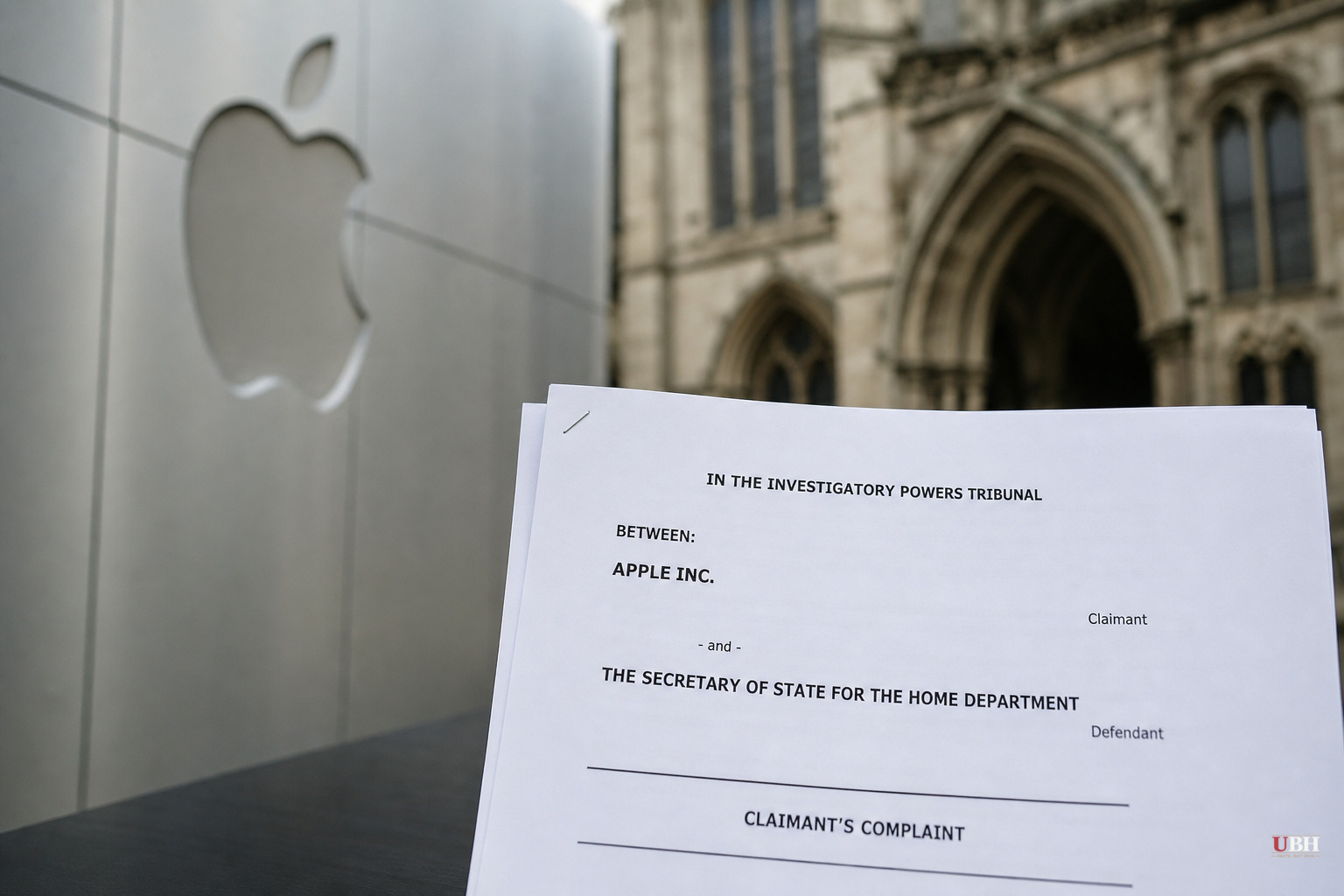
Apple is back in a UK courtroom fighting the British government over encryption again. According to the Financial Times, the company filed a legal complaint last month with the UK's Investigatory Powers Tribunal (IPT), a court that hears claims against British intelligence services.
The complaint challenges a "technical capability notice" the UK government issued to Apple in October 2025. That's a secret legal order that can compel a company to build government access into its products, even when the data is encrypted, according to reporting from TechCrunch and the Guardian.
Apple has fought similar battles before.
How we got here
In early 2025, the UK government secretly ordered Apple to provide access to iCloud backups protected by Advanced Data Protection, Apple's optional end-to-end encryption feature. That order applied worldwide, covering American users too, according to 9to5Mac.
Apple's answer was blunt: it pulled Advanced Data Protection for new UK users rather than build a backdoor. The company has said publicly, repeatedly, that it has never built and will never build a master key or backdoor into its encryption, according to 9to5Mac's reporting.
The original order triggered a genuine diplomatic fight. US officials, including people in the Trump administration, pushed back hard on London over a demand that reached American citizens' data, and the UK eventually dropped that version of the order, according to the Guardian and TechCrunch.
But the UK didn't drop the underlying push. It came back in October 2025 with a narrower technical capability notice aimed only at British users' data, according to the Financial Times reporting cited by all three outlets. Apple is now challenging that one.
What Apple is actually arguing
According to the Guardian, Apple isn't just contesting this one notice. The company is challenging the UK government's underlying legal authority to issue these notices at all under the Investigatory Powers Act.
The Investigatory Powers Act lets UK authorities compel companies to hand over data in cases involving terrorism and child sexual abuse, including data protected by strong encryption. Apple's position is that the law itself, and the secrecy built into how these notices work, goes too far.
Neither Apple nor the UK Home Office has commented, and both are legally barred from discussing technical capability notices publicly, according to the Guardian. That gag order is itself part of what privacy advocates object to.
The privacy groups piling on
Apple isn't fighting alone. Privacy International and Liberty, two UK civil liberties groups, already had a separate complaint pending at the IPT challenging technical capability notices generally. The tribunal notified Privacy International of Apple's new complaint, and the groups have asked that Apple's case be heard in public given the public interest, according to the Guardian.
A Privacy International spokesperson said the group is "happy to learn that Apple is once again challenging the UK's regime of secret orders," adding that if Apple's claim relates to the previously reported orders targeting iCloud security, "Apple's claim, alongside ours and Liberty's, is crucially important to preserving all of our privacy and security."
A case management hearing to sort out how the parallel complaints will proceed was scheduled for next month, according to Privacy International.
Why this matters beyond Apple
The UK government's argument, to the extent it's been made publicly by officials in the past, is that law enforcement and intelligence services need a way to access data in cases involving terrorism and child exploitation, and that encrypted platforms create investigative dead ends. That's a real and serious concern. Child safety and counterterrorism investigators do run into cases where encryption blocks evidence they'd otherwise have legal authority to obtain.
Apple and the privacy groups counter that there's no way to build a backdoor that only lets in the good guys. Any access mechanism built for UK police is a vulnerability that can be found and exploited by criminals, hostile states, or anyone else who gets hold of it. Apple has held this line since the original 2025 order and hasn't budged.
None of this has been resolved by a court yet. No ruling has been issued on either Apple's new complaint or the Privacy International and Liberty case. The case management hearing next month will determine how these overlapping challenges move through the IPT, a tribunal that itself has the power to hold sensitive national security matters behind closed doors. That secrecy is part of what the privacy groups are pushing to change.
Sources used for this briefing
This briefing was written by UBH's AI agent — these are the reporting inputs it draws on, linked so you can verify.


