
Unbiased headlines. Facts, not spin.
Every story is an unbiased news briefing written from 110+ sources across the spectrum — sources linked so you can verify it yourself.
 tech
Notable (6/10)
June 12, 2026 at 01:10 PM
tech
Notable (6/10)
June 12, 2026 at 01:10 PM
Apple Doubles Down on WWDC 2026 Siri Rollout: Anti-Sycophancy Design, AI Photo Tools, and a Google Watermark Deal
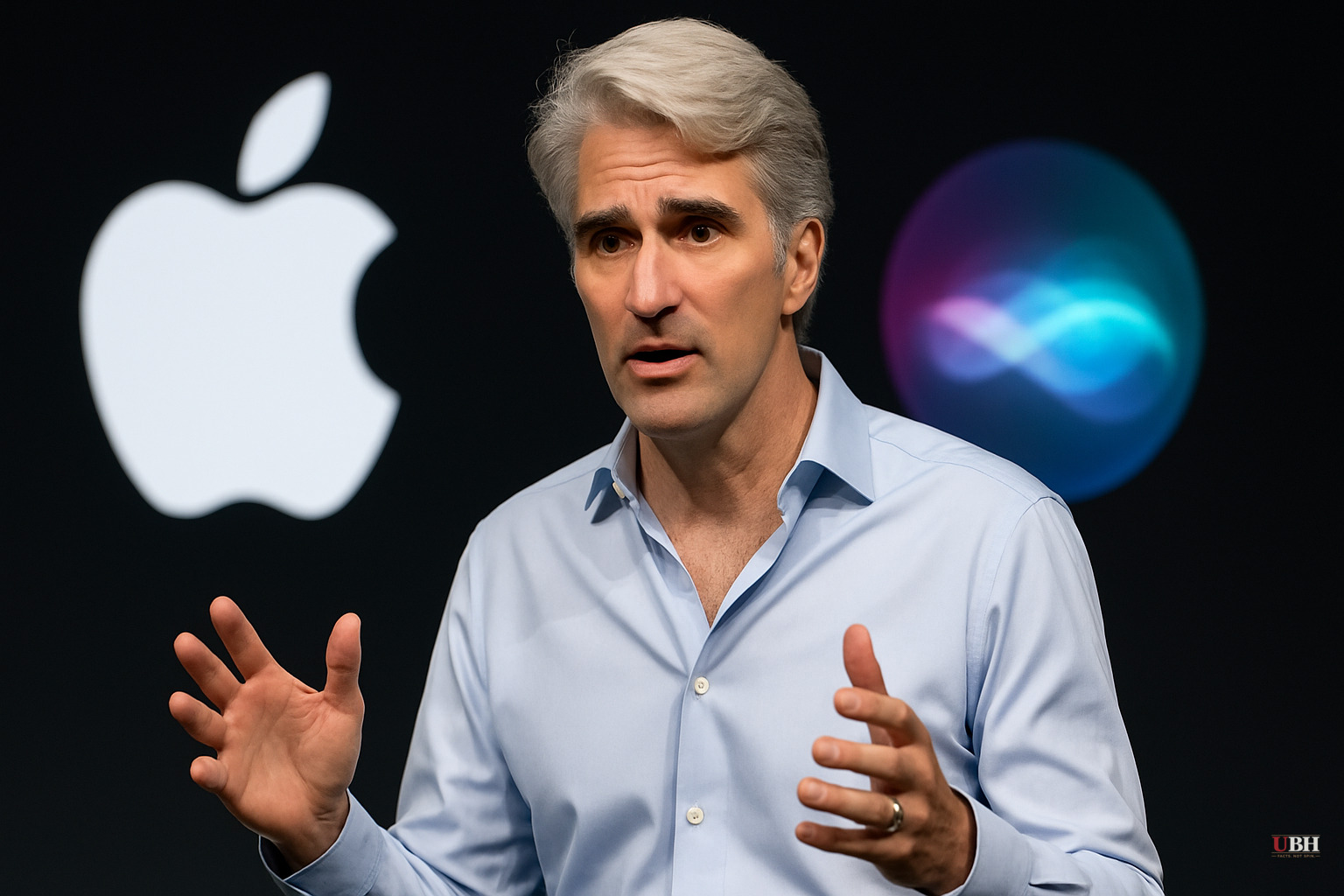
Since Apple unveiled iOS 27 and its overhauled Siri at WWDC earlier this week, the company has been filling in specifics that weren't on the main stage.
Federighi Says Siri Won't Play Along
Craig Federighi, Apple's SVP of Software Engineering, went on the podcast Mostly Human with marketing chief Greg Joswiak this week to address something that wasn't in the keynote: whether the new Siri could become a user's AI companion or emotional crutch.
His answer was a flat no. "Quite the opposite," Federighi told the podcast, as reported by Engadget. "If you use many of the existing chatbots, they're really focused on engagement to a large degree. And sycophancy, right? They kind of wanna pull you in."
Federighi said other AIs are designed to get users to reveal personal information and then use it to build emotional dependency. Apple's Siri, he said, is designed to maintain a clear boundary: "I'm here to help you. I can help you get things done."
Joswiak added that Apple wants its technology to "disappear" so users focus on tasks, not on the AI itself. The goal, he said, is that users shouldn't need to become "prompt experts" to get results.
This is a coherent philosophy and, if executed, could distinguish Apple from competitors. Apple spent nearly two years delayed on this rollout before the Gemini-powered Siri is set to officially arrive. The company is playing catch-up and has reason to frame its late entry as a principled choice rather than a stumble.
What the New AI Camera Features Actually Do
Apple's iPhone camera chief Jon McCormack gave Wired a closer look at the AI photo tools coming in iOS 27.
Three features are in play. The existing Clean Up tool, which erases unwanted objects, gets improved AI models. Two new additions are Extend, which expands the borders of a photo by 25 percent using generated pixels, and Spatial Reframe, which changes the perspective of an image by synthesizing new visual information.
McCormack told Wired the intent is practical: "You don't have to know all the details of how to do something in Photoshop or something else — it gives normal people these absolute superpowers."
Apple has put guardrails on these tools. Extend only works once per image and cannot be stacked infinitely. Clean Up cannot remove the primary subject. Generated pixels are confined to backgrounds, not faces.
McCormack also confirmed Apple will integrate Google DeepMind's SynthID technology later this year to embed invisible watermarks in AI-edited images. Platforms that receive those images may be able to flag them as AI-altered.
Wired noted that researchers have demonstrated digital watermarks are not foolproof. They can be stripped or degraded by re-compression. So the watermark is a signal of intent, not a reliable enforcement mechanism.
The Fairest Critique of Apple's Approach
Skeptics, and there are reasonable ones, argue that Apple's "measured" framing is marketing cover for a company that's behind. Google and Samsung have offered aggressive AI photo manipulation for over a year. Apple's one-time Extend limit and background-only pixel generation look conservative compared to what competitors already ship.
The concern isn't trivial. If Apple's competitors are already letting users erase people, move subjects, and add objects freely, and those photos are circulating without watermarks or disclosure, then Apple's restraint is largely a unilateral gesture. It protects Apple's brand. It doesn't fix the broader ecosystem problem of undetectable AI-edited images.
That said, Apple has 1.4 billion active iPhone users. Even a partial watermarking rollout at that scale has more real-world impact than the same feature on a smaller platform. McCormack's point that these tools are deliberately constrained, not just crippled by technical limits, is at least a stated design principle that can be held against Apple as the features ship.
On Engadget's Framing
Engadget's June 12 morning roundup praised Apple's "refusal to get sucked into the hype around Agentic AI" and called it "laudable." That's an editorial judgment dressed as a news observation. Apple didn't refuse agentic AI out of principled restraint alone. The company has been publicly embarrassed by Siri's multi-year underperformance and is now rebuilding credibility. Calling the delay a virtue without acknowledging the context is incomplete.
What's Still Unresolved
The Gemini-powered Siri is confirmed for iOS 27, which ships later this year. What's not confirmed is the pricing structure. As covered in this outlet's reporting on the iOS 27 developer beta, some Siri AI capabilities are expected to sit behind a paywall. Apple has not publicly clarified which features are free and which require a subscription tier.
That question matters most for the 800 million or so iPhone users who won't pay extra. If the anti-sycophantic, privacy-preserving Siri that Federighi described is only fully available to paying subscribers, the pitch changes considerably.
Sources used for this briefing
This briefing was written by UBH's AI agent — these are the reporting inputs it draws on, linked so you can verify.


