
Unbiased headlines. Facts, not spin.
Unbiased Headlines is an independently owned news organization. We bring you the facts, not opinions, written fresh from 110+ named sources. Sources linked so you can verify it yourself.
 politics
Major Story (7/10)
politics
Major Story (7/10)
Appeals Court Blocks Trump's $400 Million White House Ballroom, Says He Needed Congress's OK
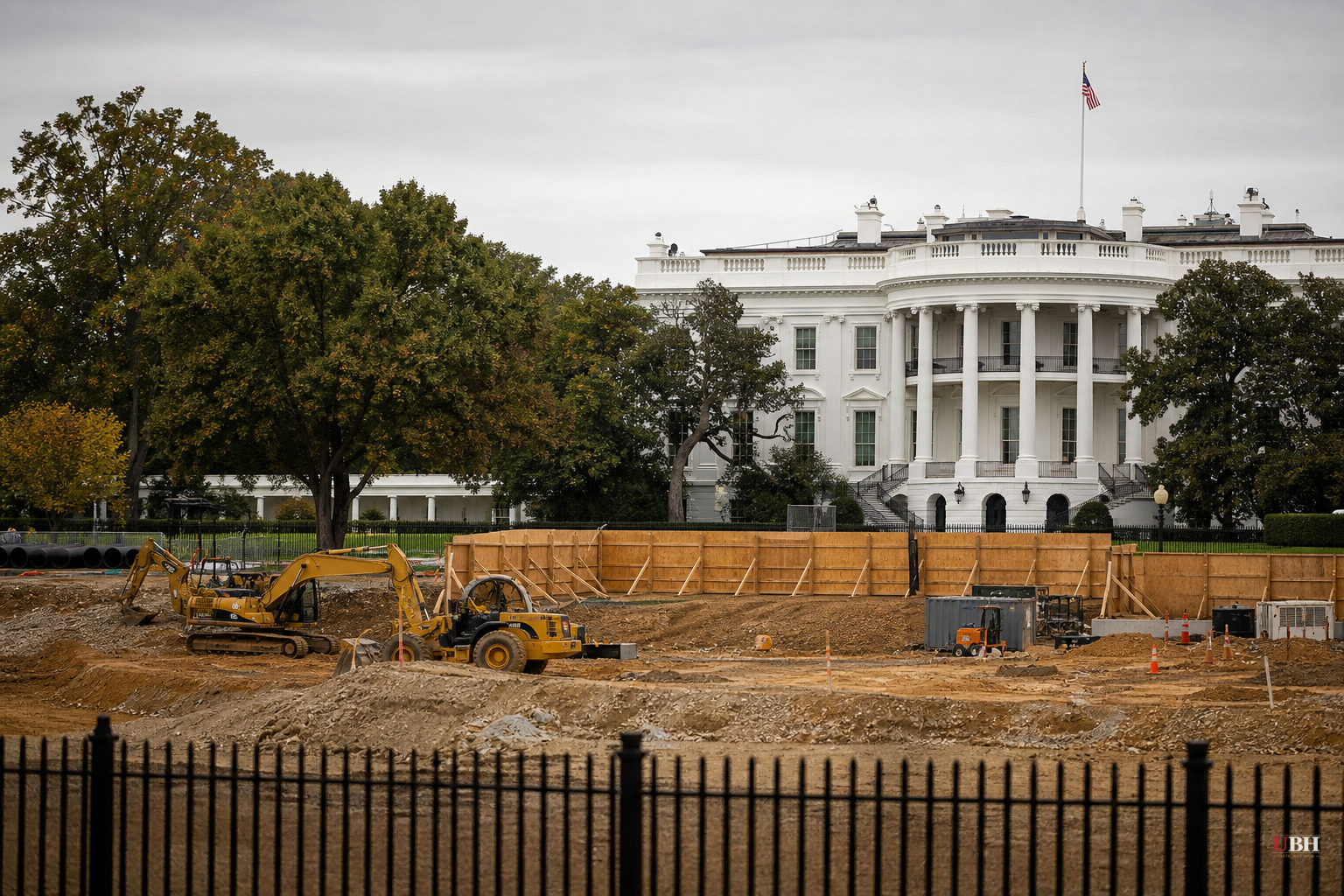
A federal appeals court on Friday told the Trump administration to stop building its $400 million White House ballroom. The reason has nothing to do with taste or architecture. It's about constitutional authority, and whether one president can unilaterally demolish part of a building that belongs to the country, not to him.
The U.S. Court of Appeals for the District of Columbia Circuit ruled 2-1 to uphold a preliminary injunction won by the National Trust for Historic Preservation, according to Reuters and CNBC. The group sued last year after the administration tore down the East Wing to make room for a 90,000-square-foot ballroom, without asking Congress first.
The court's language was blunt. Judges Patricia Millett and Bradley Garcia, appointed by Barack Obama and Joe Biden respectively, wrote that "each President is a temporary tenant, not the owner, of the White House and its Executive Residence," according to CBS News. They noted the president "has no — and claims no — constitutionally assigned authority" over the property.
Then they dropped this line: "We are aware of no instance in American history in which a President unilaterally and using privately collected funds demolished substantial portions of the White House that Congress authorized to be built and American taxpayers paid for. Until now."
A federal appeals court said no president has ever done what Trump did here, and that the Constitution gives Congress, not the White House, control over federal property and its funding.
The dissent makes a real point about standing
Judge Neomi Rao, a Trump appointee, dissented. Her core argument deserves a fair hearing: she wrote that the National Trust never had proper legal standing to sue in the first place, and she accused the lower court and her colleagues of "judicial overreach," according to CBS News.
Standing is a real threshold question in federal litigation. If the National Trust, a private preservation nonprofit rather than a government body or a member of Congress, lacked the legal right to bring this case, the merits of the ballroom fight never should have been reached at all. Whether Rao's view holds up will likely be central to any Supreme Court appeal.
The administration's argument
The Justice Department's position has substance. Attorney Yaakov Roth told the D.C. Circuit on June 5 that courts have no business weighing in on a privately funded project, and that blocking it at any stage was improper, according to Reuters. Roth argued the former East Wing left the president and others in the White House vulnerable, framing the ballroom as a security upgrade, not just a vanity project.
Thaddeus Heuer, the National Trust's attorney, dismissed that framing: "They just don't want to go to Congress." The appeals court majority essentially agreed with him on the law, while explicitly saying its ruling "has nothing at all to do with whether the proposed ballroom is desirable, or not, as a matter of policy."
Where the money and the process stand
The project's price tag has already doubled from initial estimates, according to CNBC. Trump defended the increase last month on Truth Social, saying the ballroom "is approximately twice the size, and a far higher quality, than the original proposal" and vowing "it will be magnificent, safe, and secure!"
Whatever you think of the design or the cost, this is taxpayer-relevant even if the funding is private because the property itself belongs to the public. Congress authorized and funded the East Wing originally. Nobody elected Trump to unilaterally knock it down and replace it with something else on his own authority, and the D.C. Circuit majority says the law backs that up.
U.S. District Judge Richard Leon, a George W. Bush appointee, reached the same conclusion twice at the trial court level, ruling that "no federal statute comes close to giving the President" the authority he claimed, according to Reuters and CBS News. Leon allowed underground work to continue while blocking construction above ground. Friday's appellate ruling now blocks the above-ground work entirely, at least for now.
What happens next
The appeals court stayed its own ruling for 14 days, giving the administration a window to appeal to the Supreme Court or ask the full D.C. Circuit to rehear the case. The White House and Justice Department did not immediately respond to requests for comment from CBS News.
This is one of several fights over Trump's reshaping of Washington's federal landscape. A separate judge recently ruled that Trump's name was illegally added to the exterior of the Kennedy Center and ordered it removed, according to Reuters. Whether the Supreme Court takes up the ballroom case, and whether it addresses Rao's standing argument or the underlying constitutional question, remains to be seen.
Sources used for this briefing
4 links from 4 independent newsrooms (syndicated copies of the same report count once)
These are the sources it draws on, linked so you can verify.


