
Unbiased headlines. Facts, not spin.
Unbiased Headlines is an independently owned news organization. We bring you the facts, not opinions, written fresh from 110+ named sources. Sources linked so you can verify it yourself.
 finance
Major Story (7/10)
Apollo and Goldman Price $44 Billion in Notes to Fund SpaceX's Nvidia Vera Rubin Chips
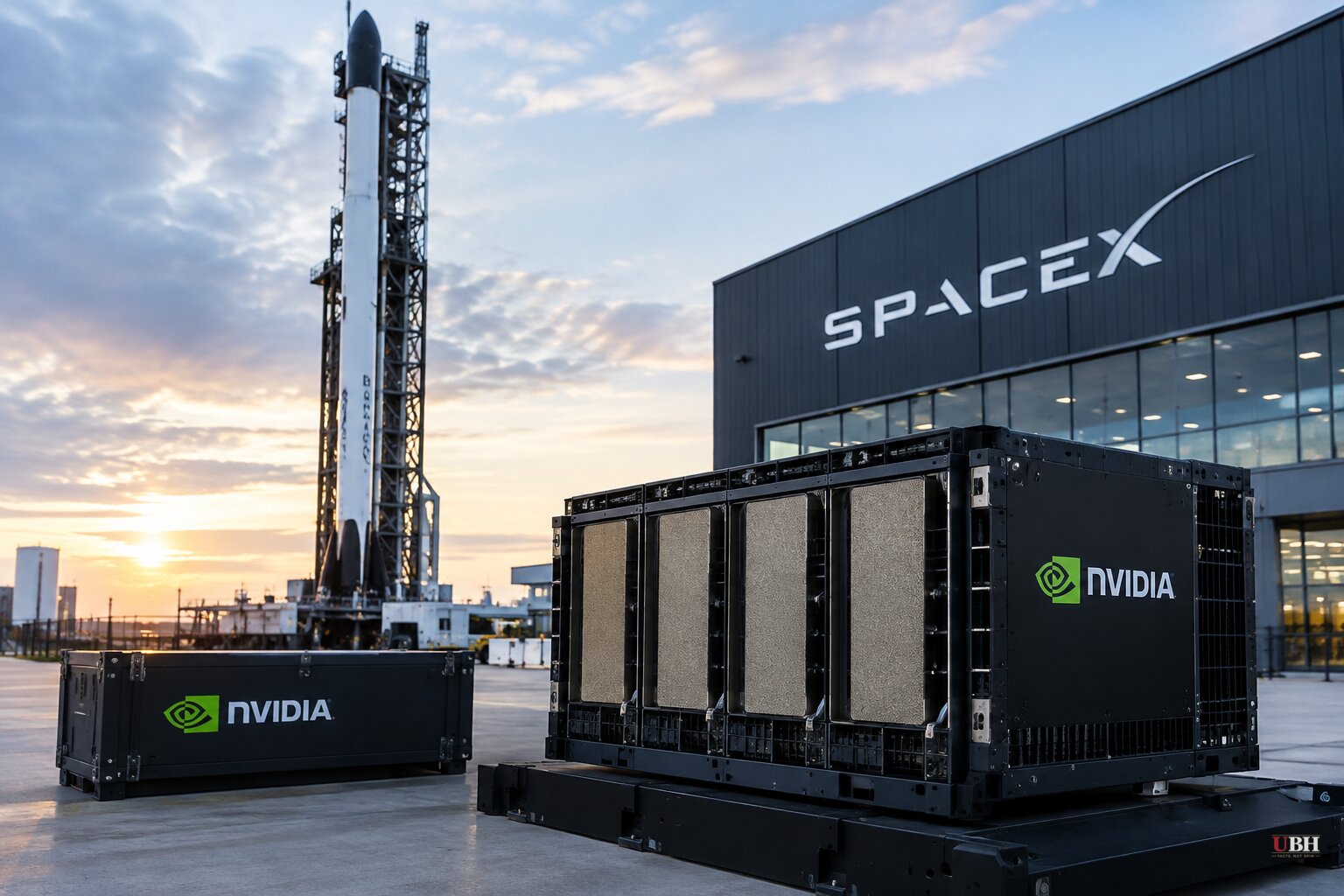
Apollo Global Management and Goldman Sachs announced Friday, Nov. 20, that they priced roughly $44 billion in senior and subordinated notes to fund SpaceX's purchase of Nvidia's next-generation Vera Rubin chips and related data center equipment. The firms call it the largest GPU financing executed to date.
Apollo said the deal was oversubscribed and upsized. Anchor commitments came from funds and accounts managed by BlackRock and Goldman Sachs Asset Management, plus accounts advised by KKR.
How the deal is built
The debt does not sit on SpaceX's books. It was issued through a special purpose vehicle, Saturn Funding Trust, managed by an Apollo-backed entity. The trust buys the hardware and leases it to SpaceX for about five years.
Bloomberg reported that SpaceX must keep making lease payments even if the equipment fails or a force majeure event such as a natural disaster hits. Moody's rated the notes A3, a notch above SpaceX's own corporate rating. KBRA rated them A-minus. Both cited those "hell-or-high-water" lease terms.
The structure is designed to protect SpaceX's investment-grade rating. SpaceX Chief Financial Officer Bret Johnsen pointed to the company's "strong investment-grade balance sheet" on an investor call after recent results, Bloomberg reported.
Apollo Partner Jamshid Ehsani said the deal "reflects our focus on downside-protected, asset-based structures." Apollo Global Securities and Goldman served as co-global coordinators, and Goldman was sole structuring agent.
The price of the paper
The largest slice is about $25 billion of investment-grade bonds. It priced at roughly 3.45 percentage points over Treasuries, a yield near 8.3%. Bloomberg put the Class A3 yield at 8.259%.
That is high for investment-grade debt. Bloomberg index data showed the average U.S. high-grade note yielding 5.95% the same day, a gap of roughly 230 basis points. SpaceX's own debt maturing in 2031 traded near 7.2% on Thursday, according to BigGo Finance.
Bloomberg reported that SpaceX sold $32 billion of bonds Thursday, Nov. 19, as part of a financing of more than $40 billion that also includes bank loans. About $26 billion had been committed earlier, with the last $6 billion of the A3 tranche offered Thursday. Apollo's $44 billion figure covers the full note package.
This follows an October announcement that SpaceX had made a binding commitment for an equipment lease of about $40 billion managed by Apollo. Lease payments start when the chips arrive, expected in the first half of 2027.
Keeping the collateral on Earth
Lenders sought provisions to keep the financed chips from leaving the planet. Moody's said SpaceX intends to deploy them in U.S. data centers that it majority-owns, controls and operates. This is a company that launches hardware into orbit for a living, and creditors wanted their collateral in Texas, not on a Starship.
The business case
SpaceX has been building out terrestrial compute fast. On Nov. 13 it announced more than $74 billion in planned supercomputing investment: over $24 billion at Starbase in Texas and about $50 billion in Cochise County, Arizona. The company said the Texas site will generate its own power without drawing from the public grid.
Basenor, citing figures from multiple outlets and Apollo disclosures, put SpaceX's third-quarter 2026 revenue at $14.6 billion, with $7.6 billion from its AI business. That is a secondary-source figure and not a SpaceX filing. The same report says Musk has described a payback period of under one year on AI infrastructure. That is Musk's claim, and no independent audit of it has been presented.
Nvidia's role, and the questions around it
The deal lands as Nvidia faces its own turbulence. Jensen Huang has resigned as CEO after 33 years. CNN reported he left amid revelations of extramarital affairs and a board investigation into whether he was the target of a "foreign intelligence effort." Rep. Ted Lieu, D-Calif., alleged on X that Alice Huang used her relationship with Huang to obtain advanced chips for China. Lieu offered no documents with the post, and the allegation is unproven. Fox News reported that some staff have called for Huang to be brought back.
CNN also detailed how deeply Nvidia is tied into AI financing. The company committed $105 billion in August to an OpenAI data center, holds a major stake in CoreWeave, and is expected to take a $10 billion stake in Anthropic's IPO.
Some analysts see risk in that web. Jay Goldberg of Seaport Research Partners told CNN the label "circular financing" is less accurate than "very aggressive vendor financing." Neil Wilson of Saxo said Huang was key to Nvidia being "the backer of last resort across the AI ecosystem." Nvidia's own quarterly filing warns that its commitments and guarantees "expose us to financial, counterparty and execution risks and may not provide anticipated benefits."
No source says Nvidia guaranteed the SpaceX notes. The SpaceX deal runs through Apollo, Goldman and outside investors, not Nvidia's balance sheet. Still, Nvidia is the supplier, and the chips are the collateral.
What comes next
The test is delivery. The hardware is due in the first half of 2027, and SpaceX's lease payments to the trust are scheduled to start as it arrives. Investors in the A3 notes are being paid roughly 230 basis points over the average high-grade bond to wait for that.
Sources used for this briefing
6 links from 6 independent newsrooms (syndicated copies of the same report count once)
These are the sources it draws on, linked so you can verify.


