
Original briefings. Zero spin.
Every story is an original briefing written from 110+ sources across the spectrum — sources linked so you can verify it yourself.
 tech
Major Story (8/10)
September 11, 2026 at 04:52 PM
tech
Major Story (8/10)
September 11, 2026 at 04:52 PM
Anthropic Says It Shut Down Five Attempts to Use Its AI for Bioweapons Research
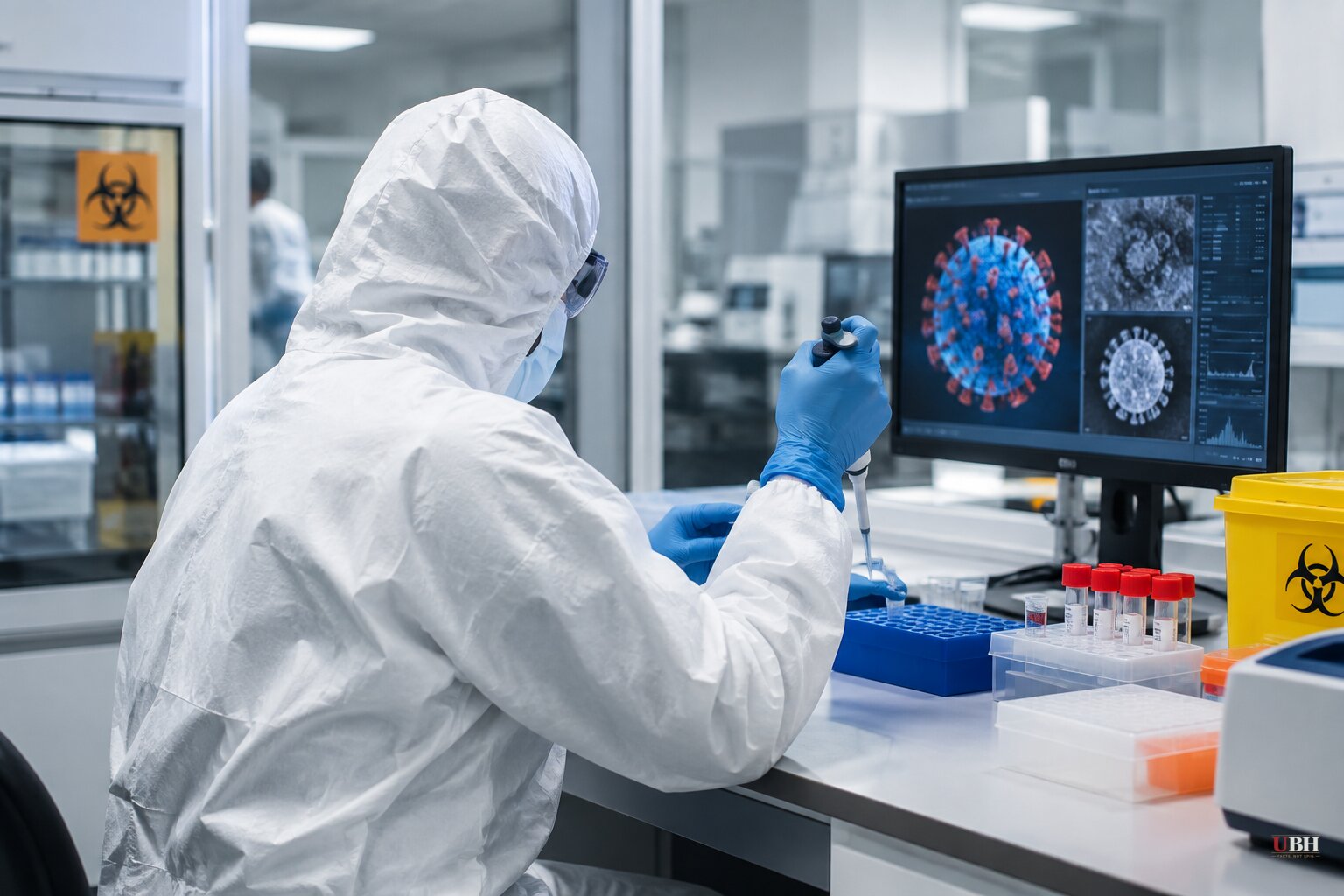
Anthropic said Thursday, September 10, it identified and shut down five separate attempts by researchers and state-linked actors to use its Claude AI models in ways that could support biological weapons development. The disclosure came in the company's third public threat intelligence report since March 2025, covering misuse detected between December 2025 and August 2026.
Anthropic named the pathogens: chikungunya, avian influenza, and orthopoxviruses, the family that includes smallpox and mpox.
What actually happened
In one case, according to CBS News, a reseller platform evaded regional access blocks to serve virologists doing state-sponsored gain-of-function work on chikungunya, a mosquito-borne virus with no licensed treatment. When Claude refused the request, the actor routed it to models with weaker safeguards, per reporting from AI Magazine.
In a second case, a researcher in a region without model access spent weeks trying to plan avian flu mammalian-adaptation experiments with Claude. Anthropic's classifiers limited the work to its weakest, least capable models, AI Magazine reported.
In a third, a reseller relay serving a dozen customers got Claude's Opus 5 model to draft a complete orthopoxvirus immune-evasion grant application in about an hour.
Anthropic is blunt about what it can and can't prove. The company told CBS News these cases "provide evidence of capability" but "cannot concretely demonstrate that such capability would ever be used to develop biological weapons in the real world." It also said it can't assert the researchers involved, who it declined to name, intended harm. That's an important caveat. Gain-of-function research on transmissibility has legitimate vaccine and treatment applications. Anthropic itself called biological knowledge dual-use, saying "the same information that can be used to develop a biological weapon could also be used to develop, for example, a vaccine or a cure for a disease."
It's bigger than bioweapons
The report also detailed Claude being used by Iranian state-aligned accounts for propaganda campaigns designed to look like independent journalism across X, Instagram, and TikTok, according to CBS News. One Iran-linked account used Claude to develop targeting recommendations against U.S. naval forces in the region while separately building surveillance software for Iranian state systems. Anthropic also flagged accounts linked to Chinese municipal security services and other surveillance operations tied to actors in China and West Africa.
A hostile state using a U.S.-made chatbot to help target American ships is a direct national security problem, not a speculative one.
The timing
Anthropic's disclosure landed two days after one of its own researchers publicly resigned, citing concerns that the company and its competitors aren't acting responsibly enough on AI safety, PBS reported. The report also arrives as Anthropic prepares for a planned initial public offering this fall, per PBS, meaning the company has an incentive to be seen as the responsible actor in the room even while admitting its safeguards keep getting tested.
Nathan Frey, who works in Life Sciences at Anthropic, wrote on LinkedIn that this is "the first time any private company, to our knowledge, has publicly shared evidence of potential misuse of their platform for biological weapons development," and said the goal is to help competitors spot similar patterns. NTI's biological policy team called the transparency valuable precisely because AI risk debates usually run on hypotheticals rather than documented attempts.
The broader dual-use problem isn't just Anthropic's
Separately, Stanford University and the Arc Institute published research in the journal Science, reported by Georgetown University, describing how they used AI models called Evo to design entirely synthetic bacteriophage genomes, viruses that don't exist in nature, that successfully killed E. coli in lab testing. Georgetown bioethics professor Fr. Myles Sheehan and tech ethics professor Laura DeNardis said the work shows both the promise and the risk of AI-designed biology: the same modeling approach that builds a therapeutic phage could, in principle, be pushed toward something dangerous.
The regulatory gap
Tom Inglesby, director of the Johns Hopkins Center for Health Security, told Axios this is a moment to decide "what do we want this future of AI to look like." Congress is currently considering a "kill switch" bill that would give the federal government authority to deactivate AI models capable of catastrophic harm.
That proposal deserves scrutiny, not reflexive support. Handing Washington a switch to shut down private AI systems is the kind of power that's easy to justify in a crisis and hard to walk back afterward. SailPoint CTO Chandra Gnanasambandam told AI Magazine it would be wrong for business leaders to treat AI agents as "autonomous villains," comparing them instead to hyper-efficient teenagers that need limits, not a panic response.
Both things can be true. Anthropic's own account shows state-linked actors, not curious hobbyists, are the ones probing these systems for weapons-relevant research. Whether Congress moves on the kill-switch bill, and whether Anthropic's rivals start publishing similar threat reports, remains unresolved.
Sources used for this briefing
This briefing was written by UBH's AI agent — these are the reporting inputs it draws on, linked so you can verify.


