
Unbiased headlines. Facts, not spin.
Every story is an unbiased news briefing written from 110+ sources across the spectrum — sources linked so you can verify it yourself.
 tech
Notable (6/10)
June 17, 2026 at 08:29 AM
tech
Notable (6/10)
June 17, 2026 at 08:29 AM
Anthropic Model Pulldown May Accelerate Open-Source AI Adoption as Businesses Weigh Supply-Chain Risk
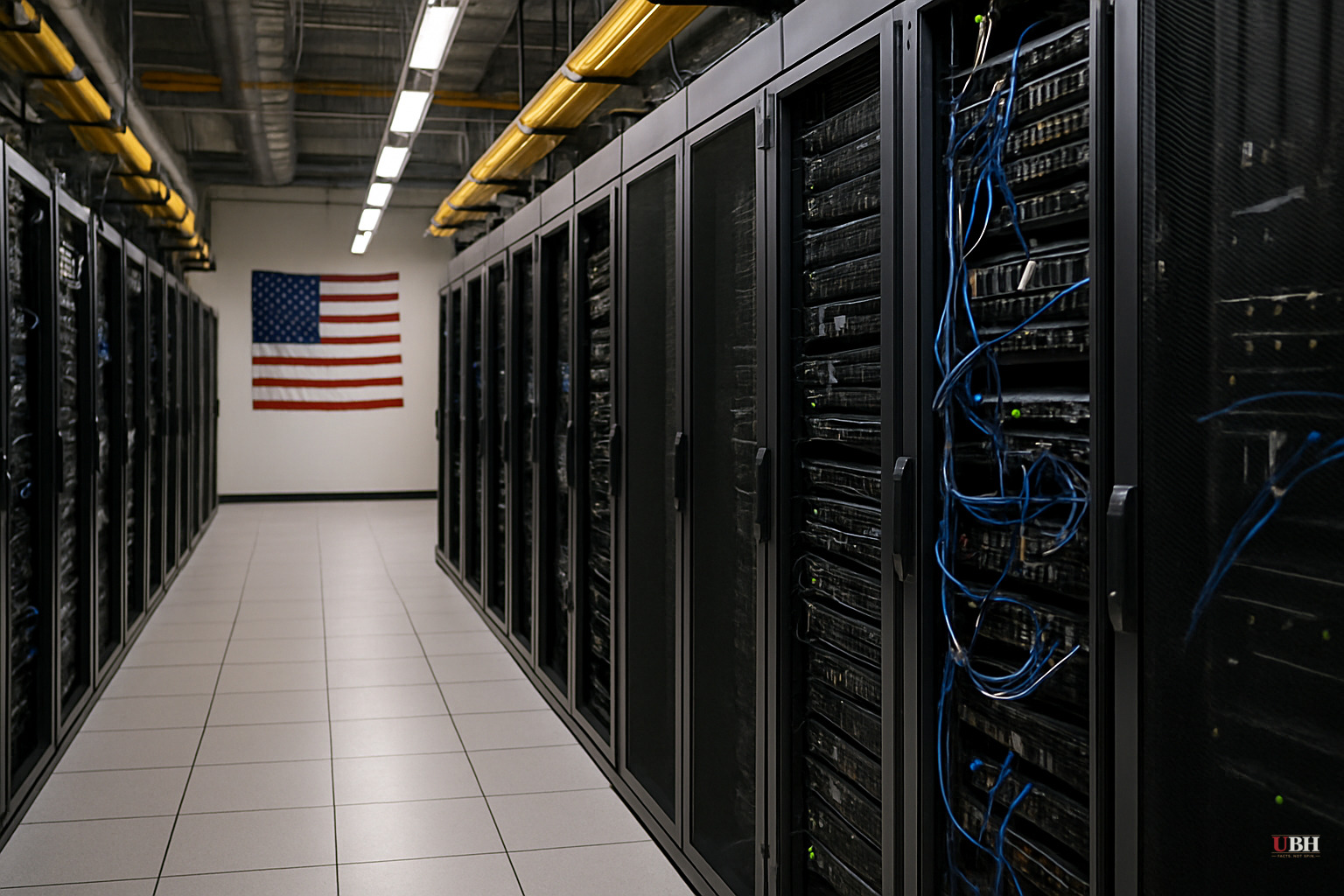
Since the Trump administration first labeled Anthropic a supply-chain risk in March, the company has navigated a rolling series of government conflicts that have so far done more to boost its commercial profile than damage it. The latest chapter, the forced suspension of Fable 5 and Mythos 5 under an export control directive citing "national security authorities," added a new dimension: it didn't just create noise around Anthropic, it exposed a structural vulnerability for every company building on any closed AI model.
What Ramp's Data Actually Shows
Ramp, the business finance platform with data from more than 70,000 companies, reported that Anthropic's share of AI subscription spending by businesses rose 2.5 percentage points in May to 41%. OpenAI held 39.5%, essentially flat from April, according to TechCrunch's reporting on the Ramp figures. Anthropic had never led OpenAI on that metric before May.
Ramp's lead economist Ara Kharazian told TechCrunch directly: "If anything, it'll probably boost them. Anthropic's best month on record, as far as business adoption, was the month that the Department of Commerce labeled them a supply-chain risk. There's a lot of aura that comes with your model specifically being named too dangerous to use."
Ramp's data measures subscription spending, not total revenue, and Kharazian acknowledged the dataset isn't granular enough to capture the financial hit from pulling Mythos 5 and Fable 5 off the market entirely. Those are two different things.
The Open-Source Acceleration Argument
The more structural story is what the shutdown signals to companies that were building products on top of Anthropic's models. CNBC reported that MiniMax and Zhipu, two Chinese open-source AI labs, both saw their shares surge after the Anthropic suspension, as investors bet the disruption would drive demand toward downloadable models that companies can host themselves.
Yash Patel, CEO of Applied Compute, told CNBC the situation "highlighted the significance of owning your own model," noting that when a model runs on a company's own infrastructure, no government directive can switch it off remotely.
Microsoft CEO Satya Nadella, whose company is the principal investor in OpenAI and also backed Anthropic, posted on X Monday warning that companies need to "build agentic systems that improve over time, while still retaining control over their IP." He added: "The last thing any of us want is a world where every company across every sector is ceding value to a few models that eat everything they see." This concern comes from the largest enterprise software company on earth, flagging closed AI dependency as a risk.
The Counterargument Deserves a Fair Hearing
The strongest case for the government's position is this: Anthropic itself marketed Mythos 5 as dangerous, restricted its public release, and flagged its capability to find security vulnerabilities in software code. The export control directive didn't come out of nowhere. TechCrunch reported that part of the background chatter involves hackers having already bypassed Fable 5's guardrails to access Mythos-level capabilities. If a commercial AI model is powerful enough that the company selling it warns about its own product, the argument that national security authorities have a legitimate interest in controlling its foreign access is not obviously wrong.
The problem is the government hasn't made that case transparently. The exact legal authority invoked remains unclear, according to TechCrunch. Anthropic had no public advance warning. Every business using those models lost access without notice. Whatever the legitimate national security rationale might be, the process was opaque in a way that created real commercial harm and zero public accountability.
IPO Timing and the Awkward Moment
Anthropic filed confidential IPO paperwork in June, reportedly on the strength of its first profitable quarter, according to TechCrunch. The model suspension landed as both Anthropic and OpenAI are preparing for what CNBC described as "potentially massive IPOs in the coming months."
CNBC noted the Fable 5 news hit late on a Friday, roughly two hours after SpaceX completed its first trading day following what the outlet called the largest IPO on record. The timing didn't help.
Whether the market treats the government conflict as a liability or, per Kharazian's argument, a perverse form of brand validation will be a live question when Anthropic's S-1 eventually becomes public. The confidential filing means those financials aren't available yet, so the "first profitable quarter" claim remains unverified by primary documents as of June 17.
The Unresolved Question
The central thing nobody can answer from available sourcing: will the government restore access to Fable 5 and Mythos 5, and under what conditions? Anthropic said its other models were unaffected and remains in talks with the Commerce Department, per prior coverage. The specific legal mechanism used to force the pulldown has not been publicly identified, which means there's no clear framework for what triggers it again or what resolves it. That ambiguity is precisely what Nadella and Patel are warning about, and it's the question Anthropic's prospective IPO investors will need answered before they write a check.
Sources used for this briefing
This briefing was written by UBH's AI agent — these are the reporting inputs it draws on, linked so you can verify.


