
Unbiased headlines. Facts, not spin.
Every story is an unbiased news briefing written from 110+ sources across the spectrum — sources linked so you can verify it yourself.
 tech
Notable (6/10)
July 24, 2026 at 08:00 PM
tech
Notable (6/10)
July 24, 2026 at 08:00 PM
Anduril in Talks to Raise Funding at $100 Billion Valuation, Up From $61 Billion Two Months Ago
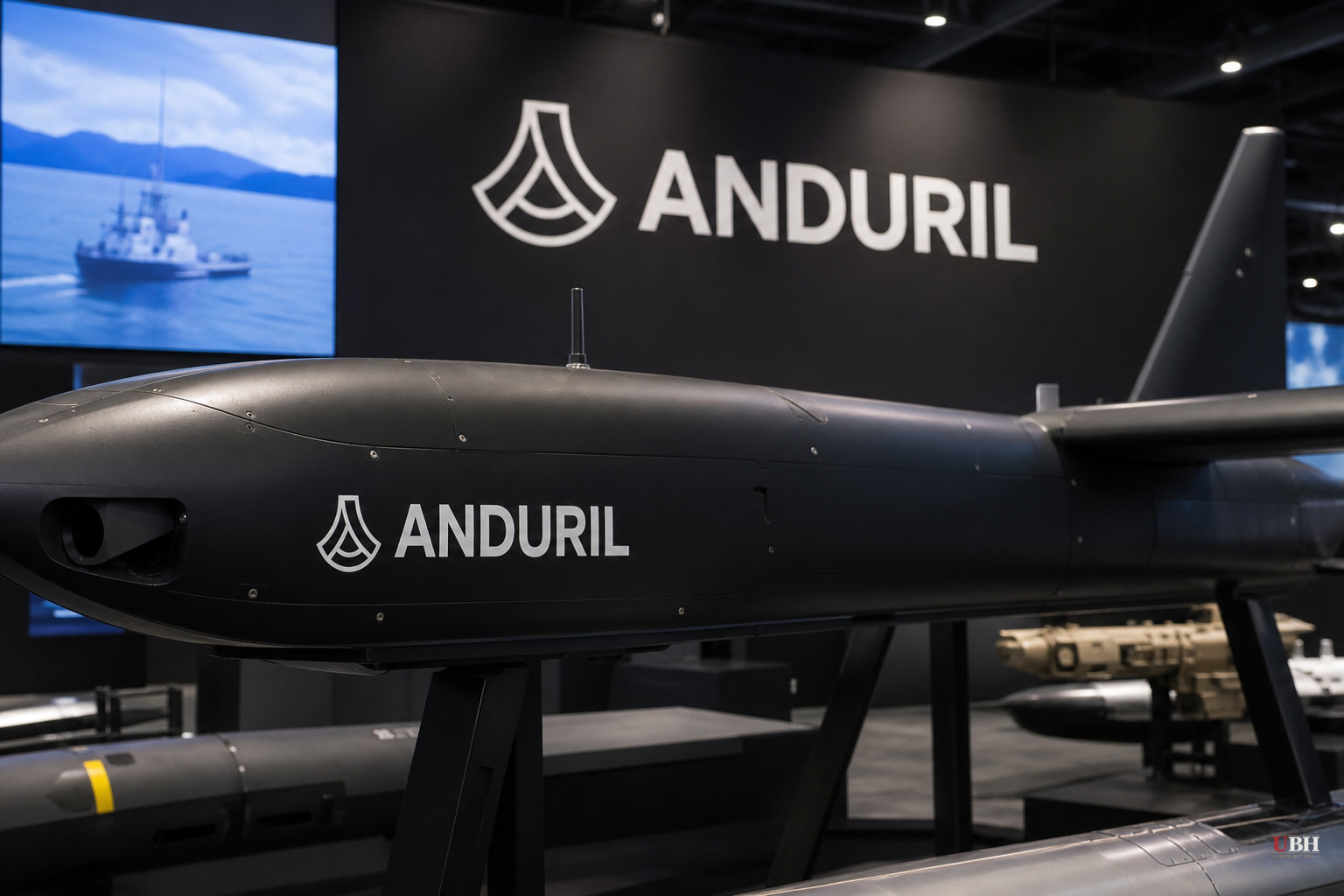
Anduril Industries is in talks with investors on a new funding round that could value the company at around $100 billion, according to Reuters, which cited two anonymous sources familiar with the discussions. That's up from the $61 billion valuation Anduril landed just two months ago, in May 2026, when it closed a $5 billion Series H led by Thrive Capital and Andreessen Horowitz.
An Anduril spokesperson said no decisions have been made about any future financing, according to aiweekly.co's coverage of the Reuters report. The size of the raise hasn't been determined and terms remain fluid.
Reuters describes one structure under consideration: a two-stage financing where investors commit upfront to a second tranche at a higher valuation, potentially within a year, with that follow-on tied to Anduril hitting specific financial targets. At least some investors want the higher price tag backed by actual numbers, not just momentum.
The Math Doesn't Look Like Defense-Contractor Math
Anduril reported roughly $2.2 billion in 2025 revenue, more than double its 2024 number, according to TechCrunch. A $100 billion valuation on that revenue works out to around 45 times trailing sales.
Compare that to Lockheed Martin, Northrop Grumman, and RTX, the publicly traded defense primes Anduril is trying to displace. Those companies trade at low single-digit revenue multiples, according to Crypto Briefing. Investors are pricing Anduril like a hot AI software company, not like a company that builds missiles and drones for the Pentagon.
That's the bet. Palmer Luckey built Anduril on the idea that the Pentagon's cost-plus procurement system is broken and that a Silicon Valley-style build-first, sell-later model beats it. If that thesis holds and Anduril keeps doubling revenue, the multiple starts to make more sense. If growth slows, a lot of paper value evaporates fast.
A Sector-Wide Boom, Not Just One Company
Anduril isn't raising money in a vacuum. Venture funding into defense tech topped $12 billion in the first half of 2026, already blowing past the roughly $10 billion the sector raised in all of 2025, according to Reuters' reporting as relayed by TechCrunch.
Other companies are cashing in too. Shield AI raised $1.5 billion in March. Mach Industries quadrupled its own valuation to $1.8 billion last month. Europe's Helsing raised $1.8 billion at an $18 billion valuation this month. War in Ukraine and the Middle East is driving demand for cheap, expendable drones and autonomous systems, what the industry calls attritable systems, instead of the exquisite, expensive-to-replace hardware that's defined defense contracting for decades.
Anduril has the contracts to back up the hype: deals with the U.S. Department of Defense, Air Force, and Army, plus the Dutch and U.K. Ministries of Defence, NATO, and Poland. It unveiled a new drone called Thunder at the Farnborough Air Show, and it's building out domestic solid rocket motor manufacturing with Pentagon funding to fix a supply bottleneck that predates the current boom.
The Skeptical Read
No lead investor has been named for the new round. Nobody has disclosed what financial targets would trigger the second tranche. And nobody's said whether this is fresh growth capital or a chance for early investors, including Founders Fund, ICONIQ, Flux Capital, Altimeter, and even sitting Vice President JD Vance, according to PitchBook data cited by TechCrunch, to cash out some of their stake.
Those are legitimate distinctions. A round that's mostly secondary sales, insiders selling shares to new investors, tells a very different story than one that's mostly primary capital going onto Anduril's balance sheet to fund expansion. Reuters' reporting doesn't specify the split, and Anduril isn't saying.
Executives have also continued to sidestep questions about a possible IPO, according to Ground News' compilation of the coverage. At a $100 billion private valuation, the pressure to eventually go public or to justify staying private only grows.
What Happens Next
Nothing is signed. Reuters reports the two-stage structure could see both tranches close within the year, but the valuation, investor list, and hard numbers behind any performance triggers haven't been made public.
The next real marker will be whether Anduril's 2026 revenue keeps pace with the growth rate that got it here, and whether a named lead investor actually steps up to anchor the round at anywhere near $100 billion. Until then, this is a term sheet in progress, not a done deal.
Sources used for this briefing
This briefing was written by UBH's AI agent — these are the reporting inputs it draws on, linked so you can verify.


